Kyryll DmytrenkoLondon, UK --:--:--
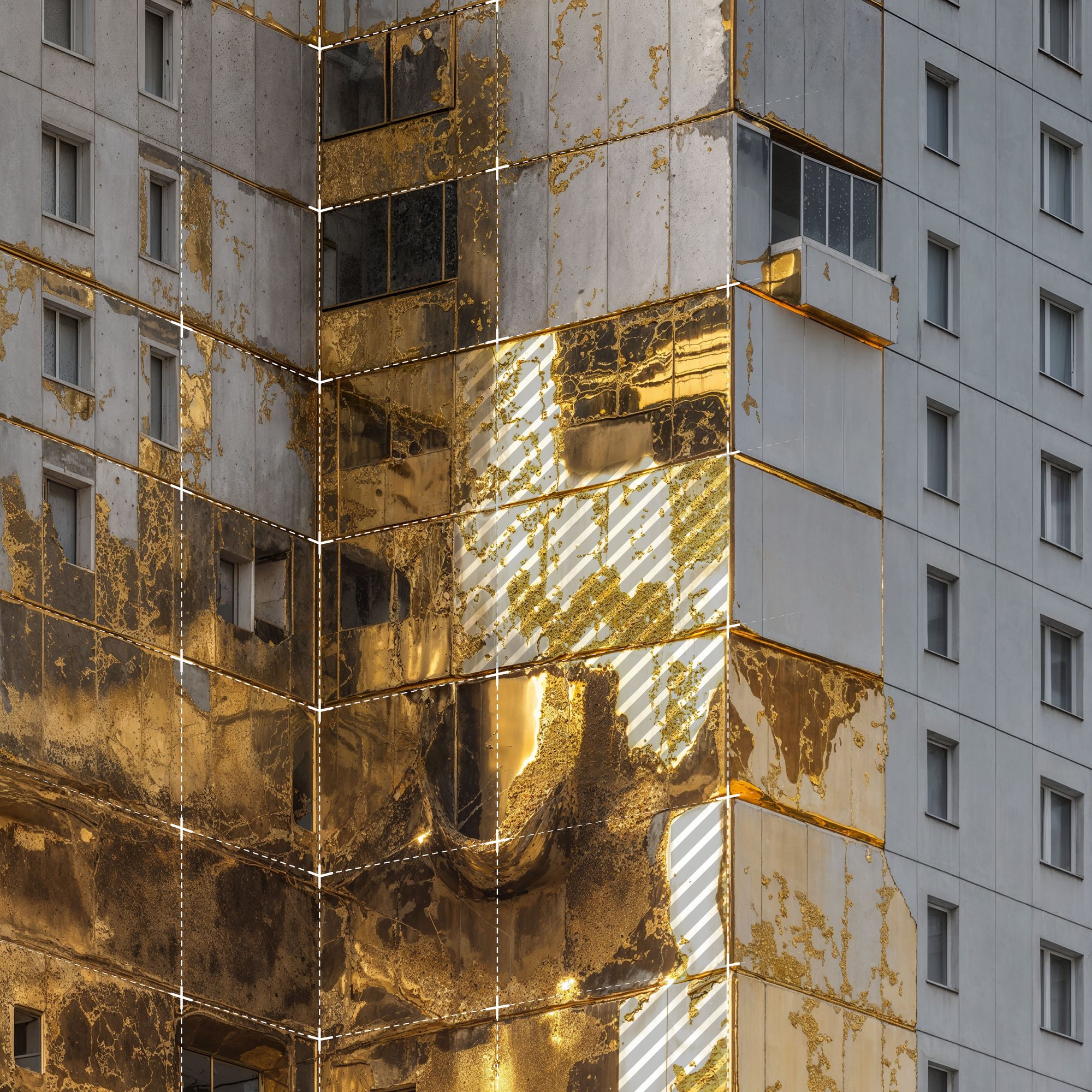
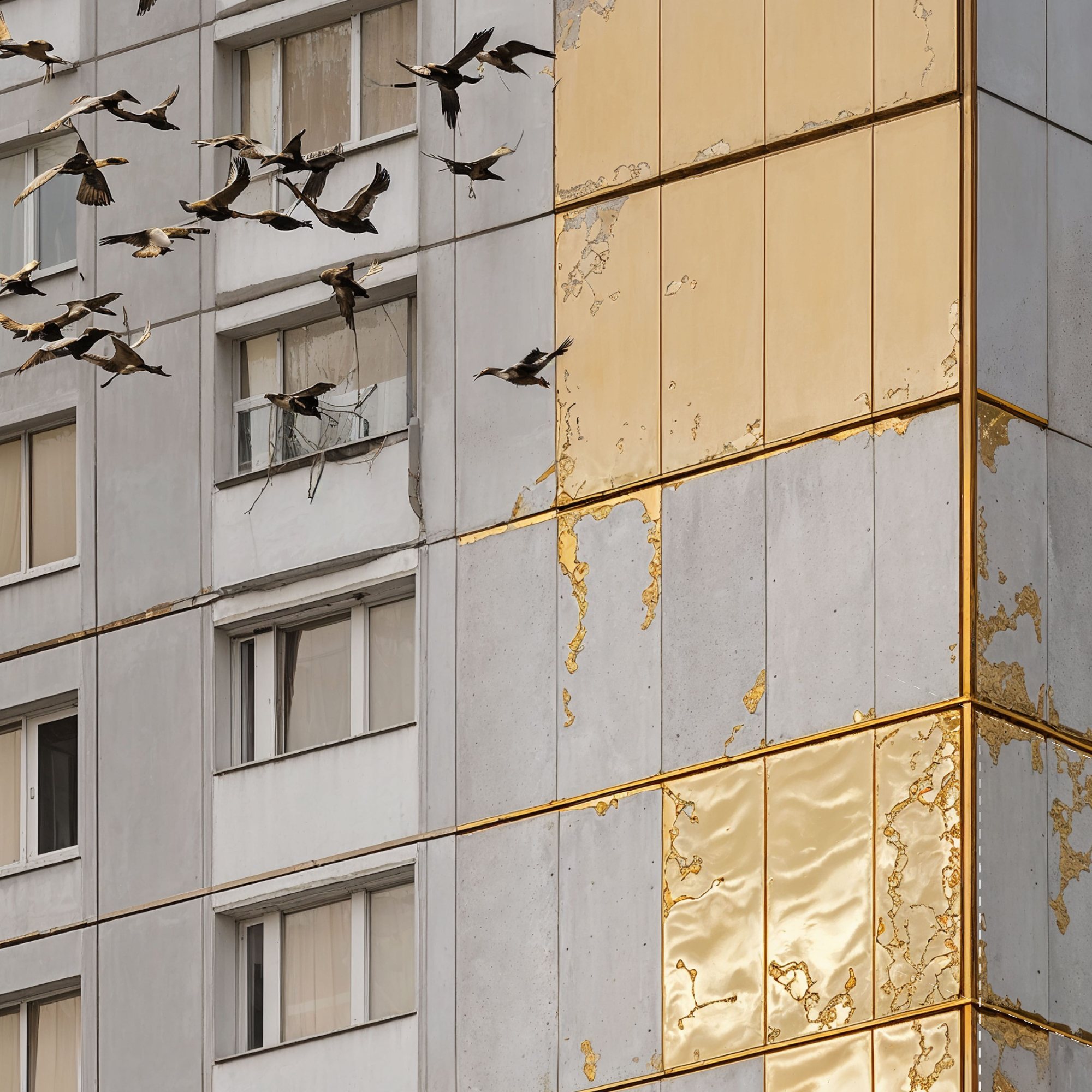
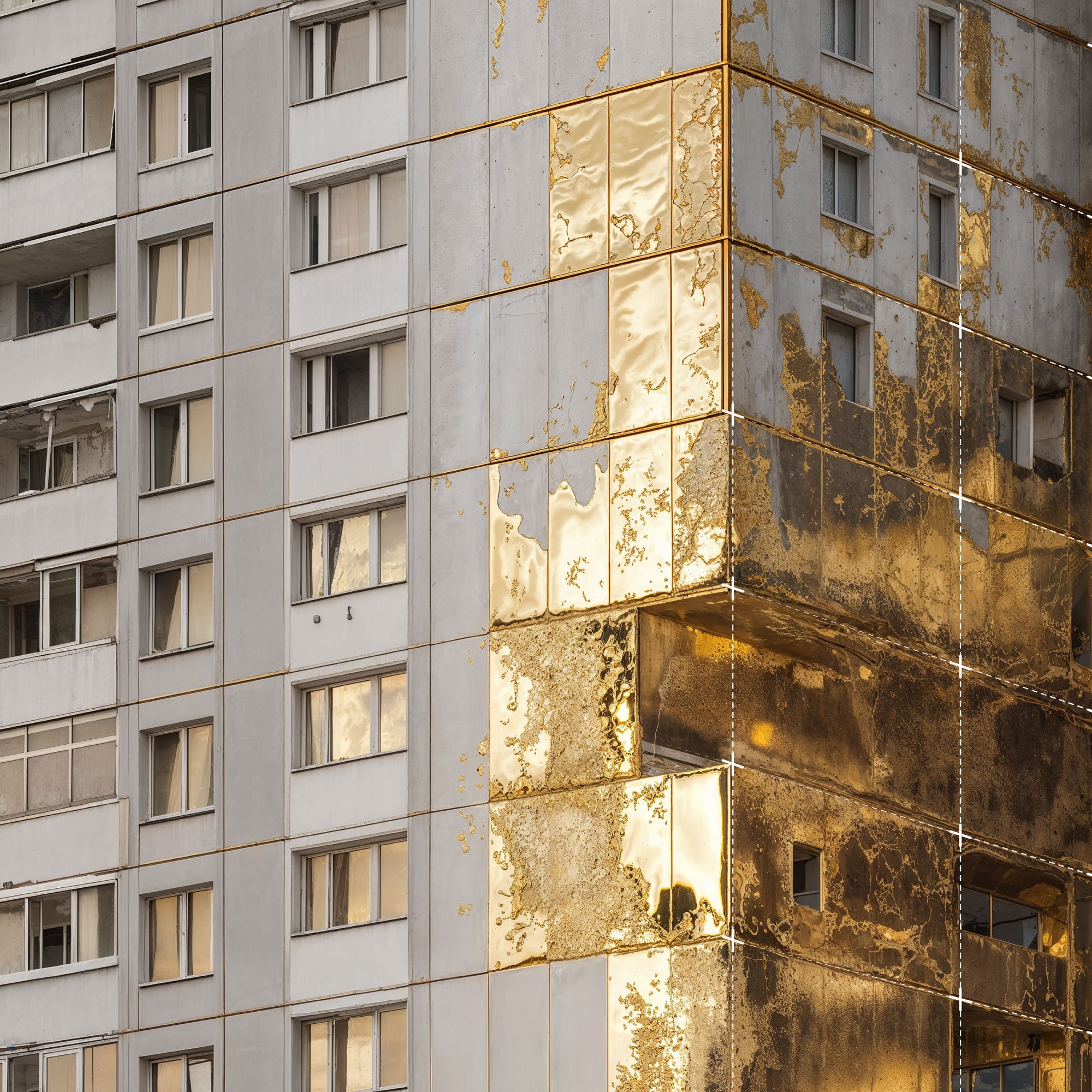
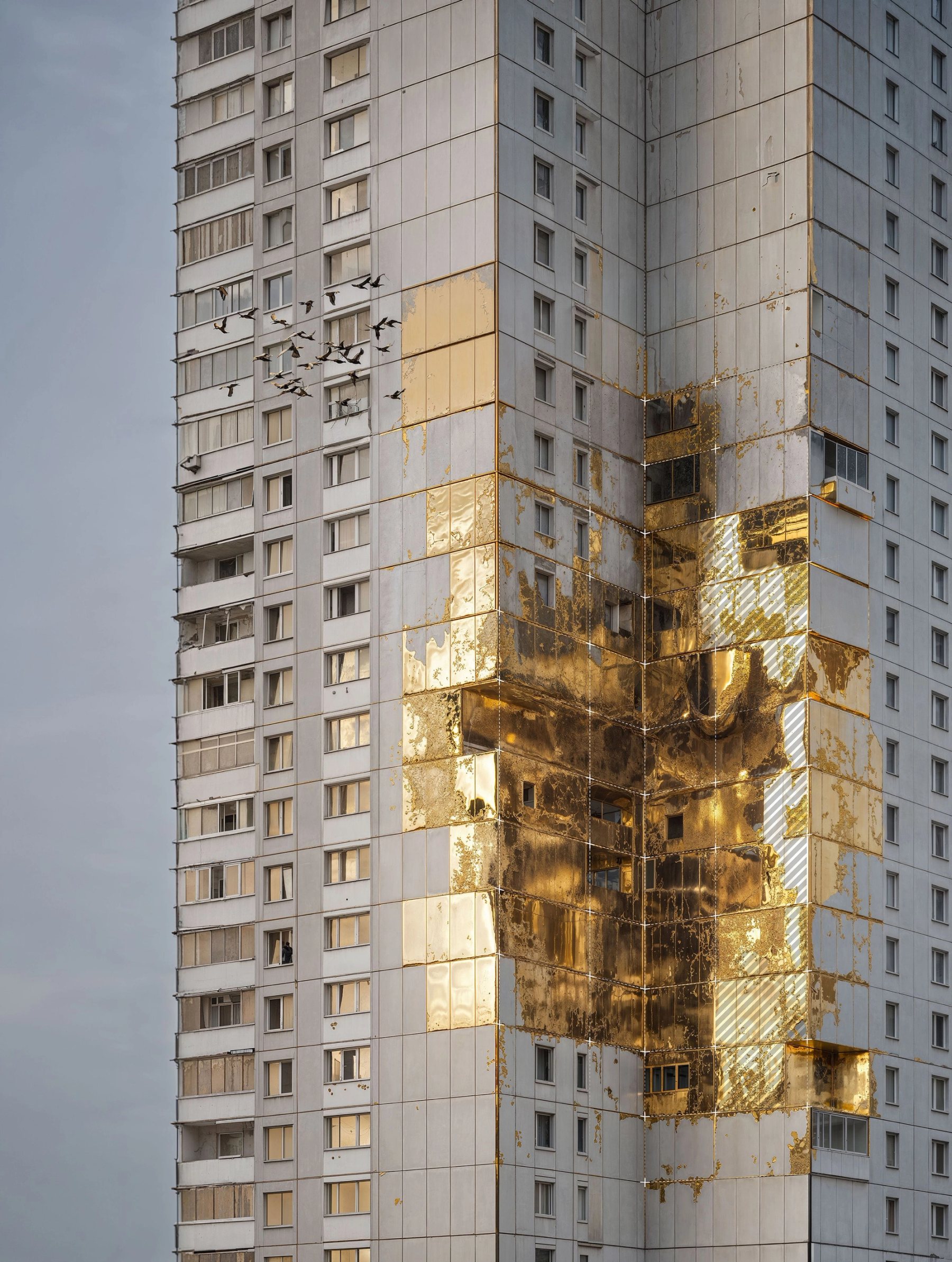
Damaged building with golden scars, golden ruins, zoom in
01 / 06

Reframing Post-War Recovery

Ruination Decoded explores how post-war architecture can evolve from a passive witness of destruction into an active narrator of memory, identity, and possibility. Following devastation, reconstruction is often presented as an act of erasure, an attempt to replace ruins with a "clean slate."

This tabula rasa approach dominated post-war Europe, where reconstruction strove for normality through unification and efficiency, often sacrificing the complexity and multilayered nature of memory

This project poses a different question: What if the ruins themselves could inspire recovery?
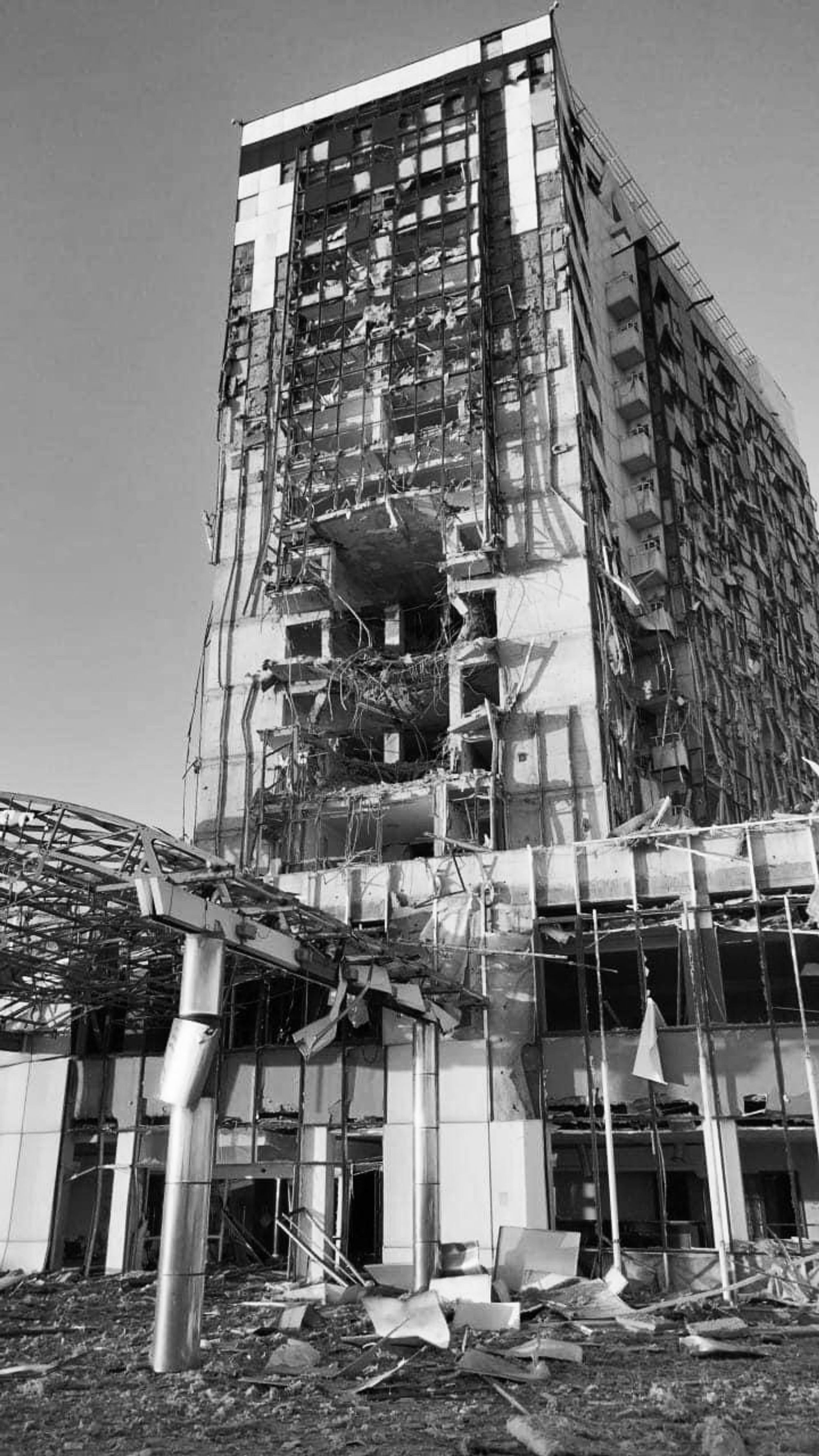
Damaged hotel in Odessa, Ukraine
photo (c) Andriy Stavnitser
02 / 06

The Paradox of Ruined Mass Housing

At the center of the project lies a profound paradox arising from the materiality of war. When destruction strikes massive, repetitive Soviet residential blocks, symbols of standardization and anonymity, it unexpectedly transforms them.

Once criticized for monotony, these structures acquire an "unplanned irregularity" through fragmentation. Their ruined facades resolve the very issues for which they were condemned: the mass-produced becomes bespoke, and the standardized becomes site-specific.

On a political level, this reimagines the legacy of Soviet modernism in Ukraine as a cultural asset. In their damaged state, these buildings become raw testimonies to survival, possessing an authenticity that simple restoration would erase.

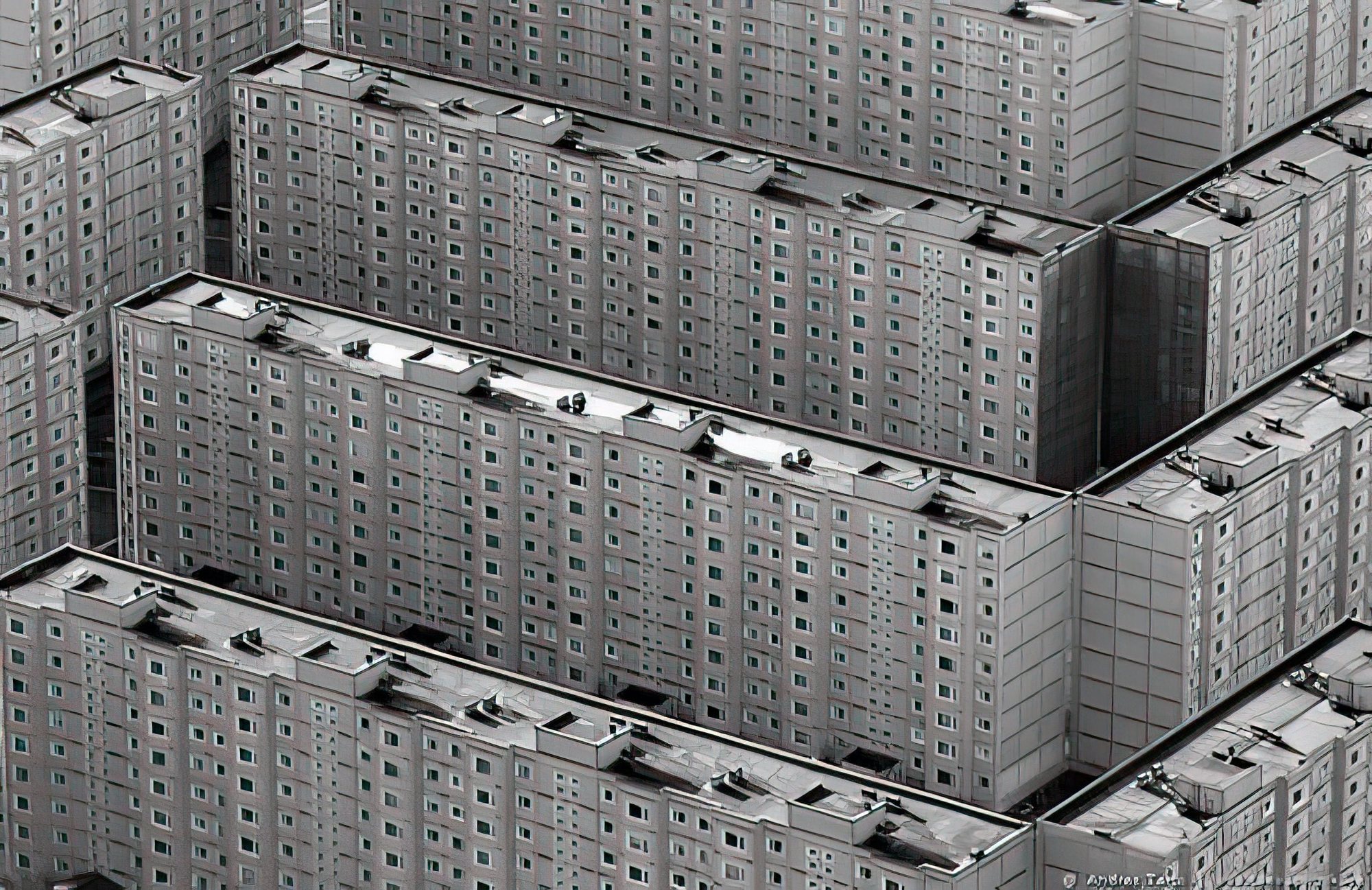
Repetitive housing block, Soviet Union, Estonia
photo (c) Andres Tarto
03 / 06

Designing Truthful Futures

By treating the ruin as a vital architectural condition, Ruination Decoded advocates for a reconstruction strategy that integrates the past rather than rewriting it.

True urban resilience relies on translating lived memory into form, texture, and space. For the reconstruction of Ukraine, this imperative is urgent: to build environments that are not only safe and functional, but profoundly truthful.

Cities designed through this lens honor the genuine history of their sites while carving out new, transformative possibilities from the debris

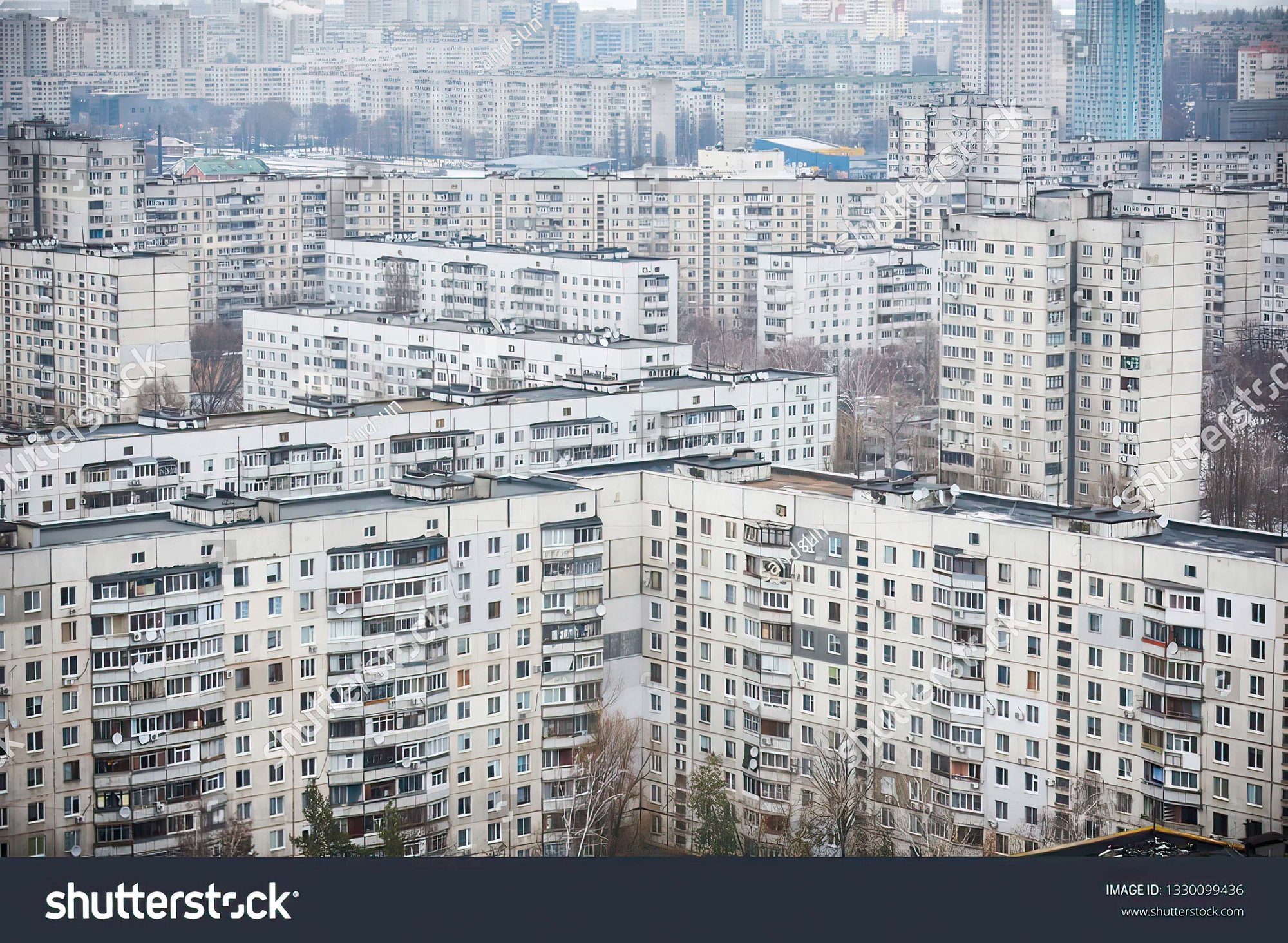
countless repetitive soviet blocks, arial
04 / 06

Artwork

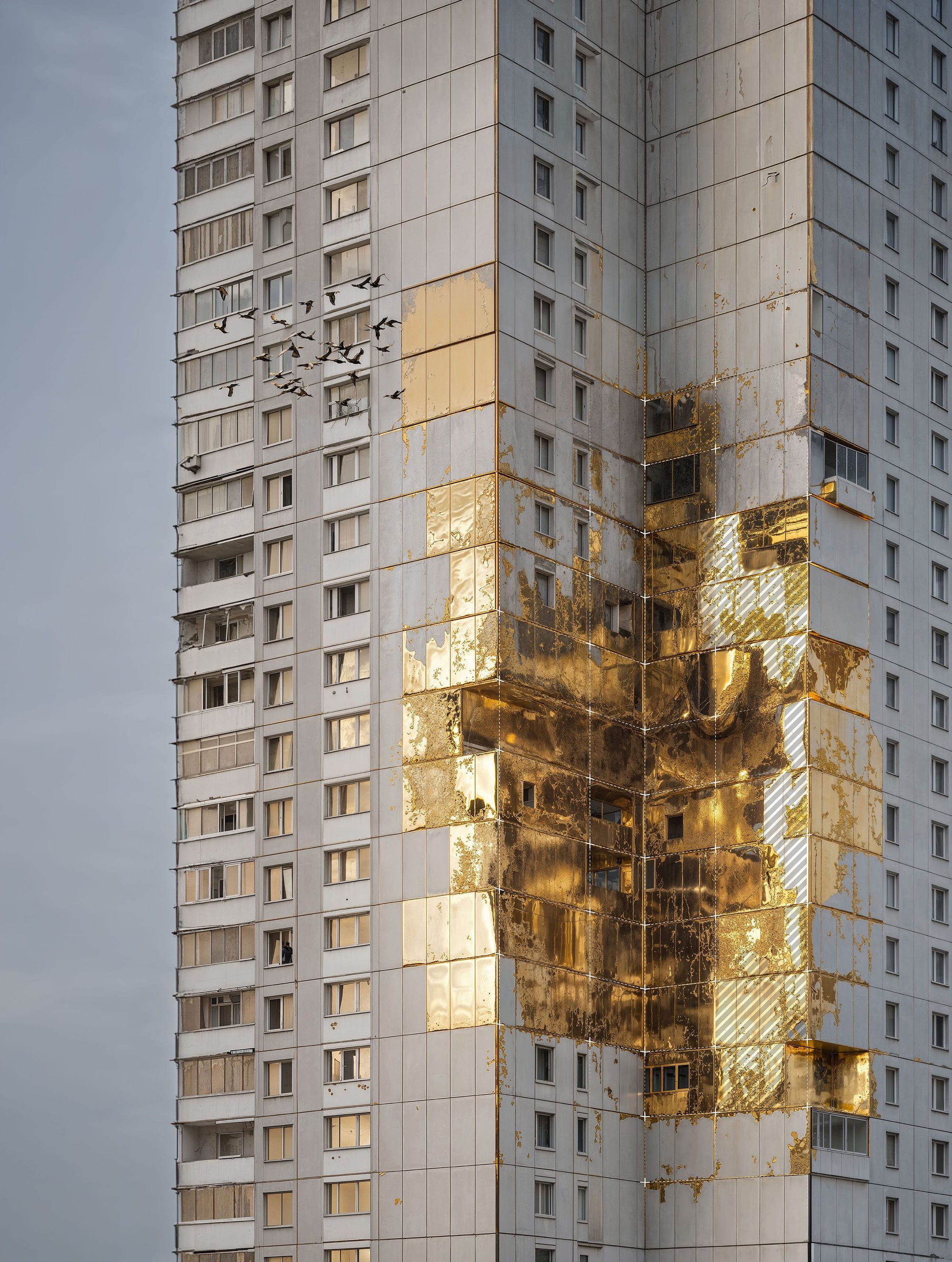
Ruination decoded: Key image, showing the repetitive soviet block with golden scars.
Soviet block with damaged part made in gold, conceptual collage by Kyryll DmytrenkoSoviet block with damaged part made in gold, conceptual collage by Kyryll DmytrenkoSoviet bloc with damaged part made in gold, conceptual collage by Kyryll Dmytrenko
details
05 / 06

Physical Model

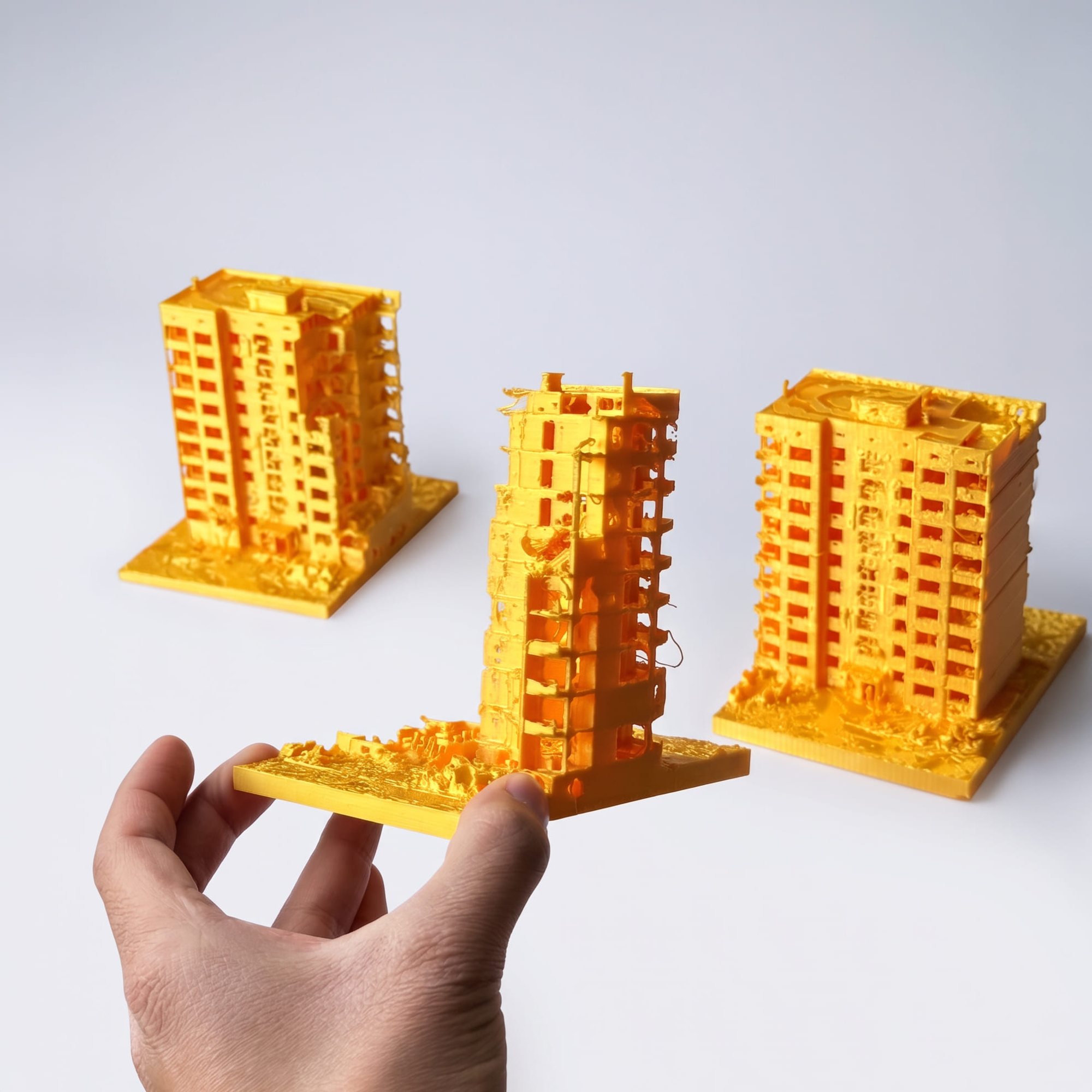
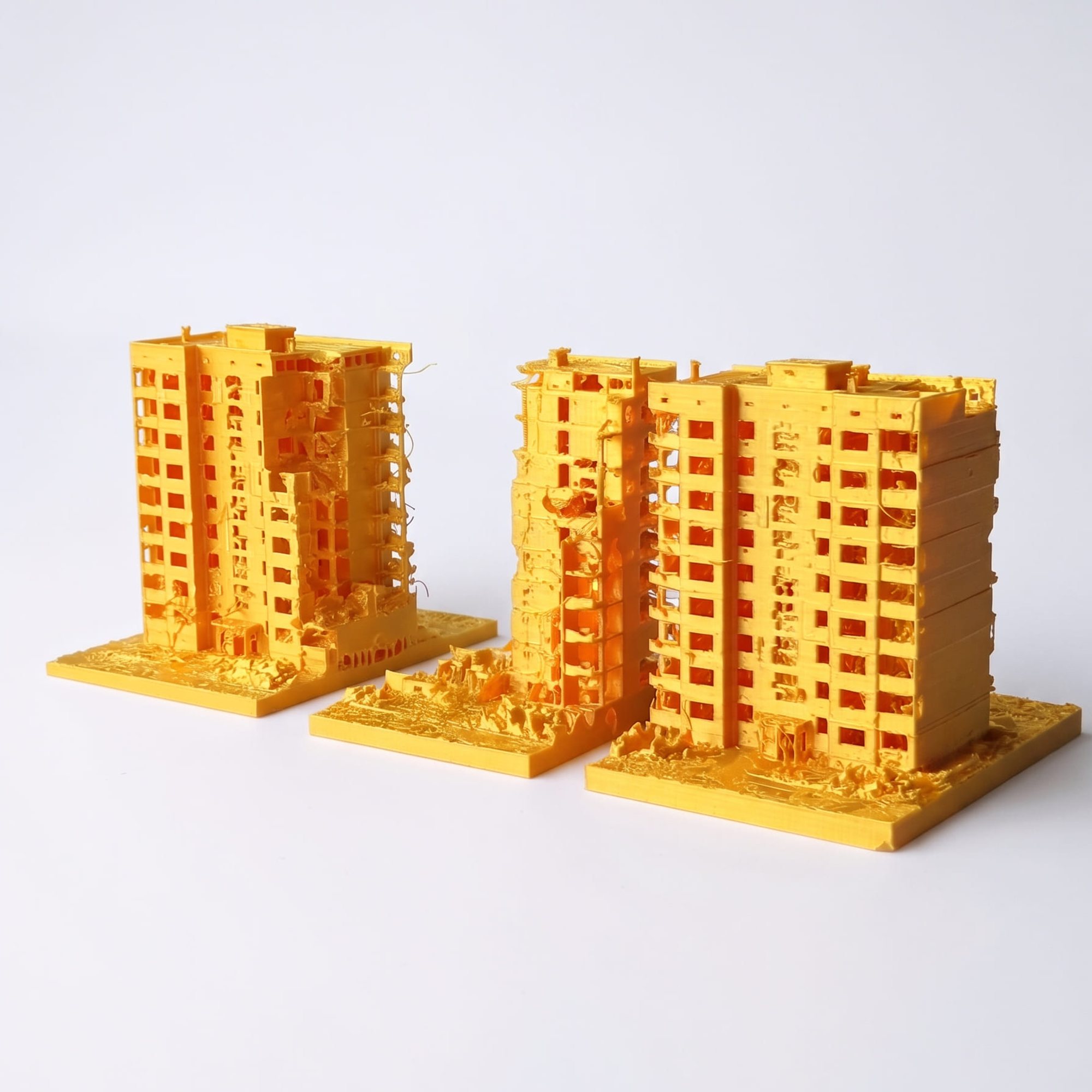
Physical scale model (1:250) representing a destroyed residential structure in Borodyanka, Ukraine, fabricated in gold PLA to highlight its fractured geometry

The digital model was derived from a 3D scan of a destroyed building in Borodyanka, Ukraine, acquired with technical support from Aero 3D

https://sketchfab.com/3d-models/abandoned-destroyed-building-in-borodyanka-e417365ba4454dcca487034b3070b842

Physical model of destroyed building in Ukraine, 3d 3drinted in GoldPhysical model of destroyed building in Ukraine, 3d 3drinted in Gold
06 / 06

RD: Public Furniture

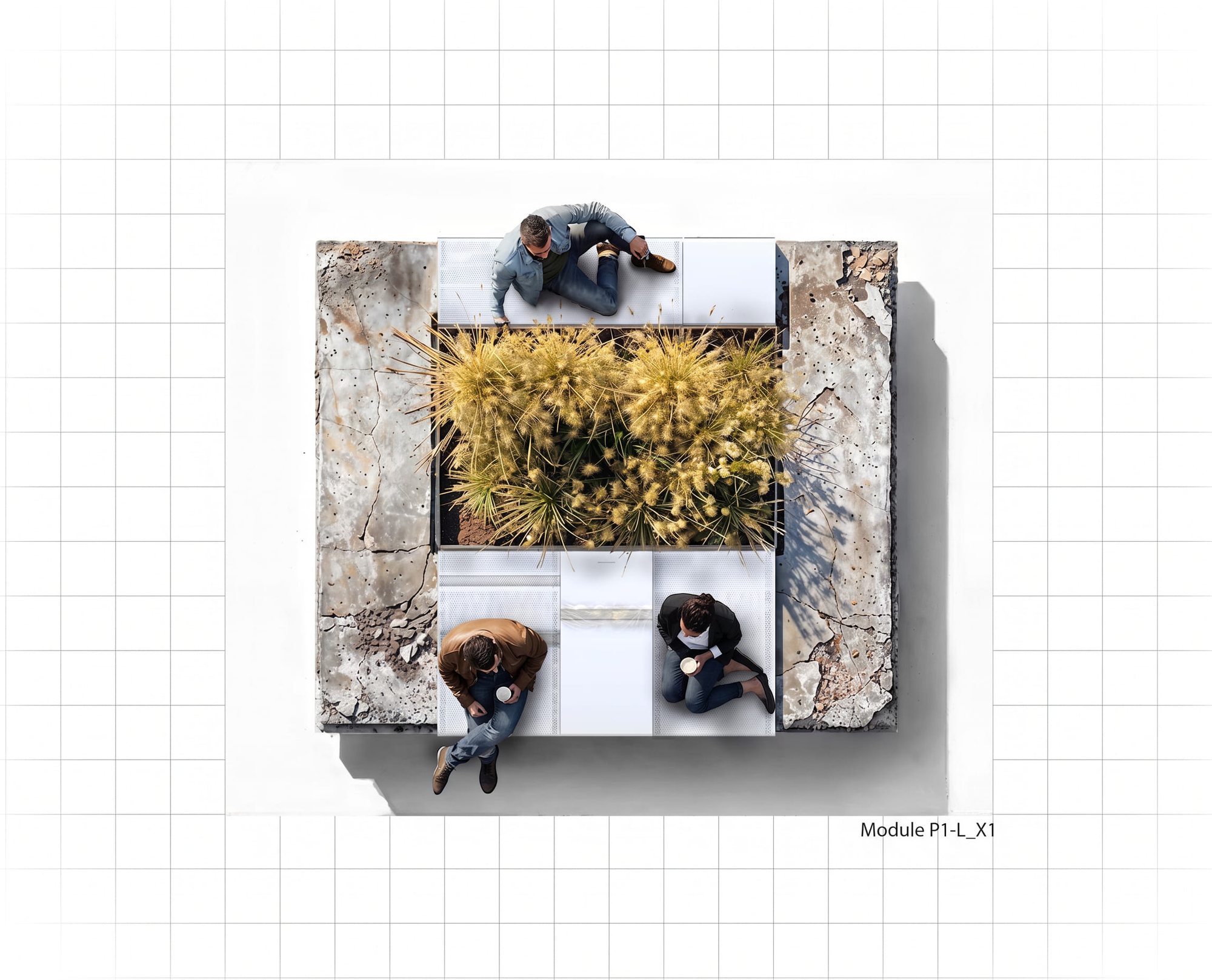
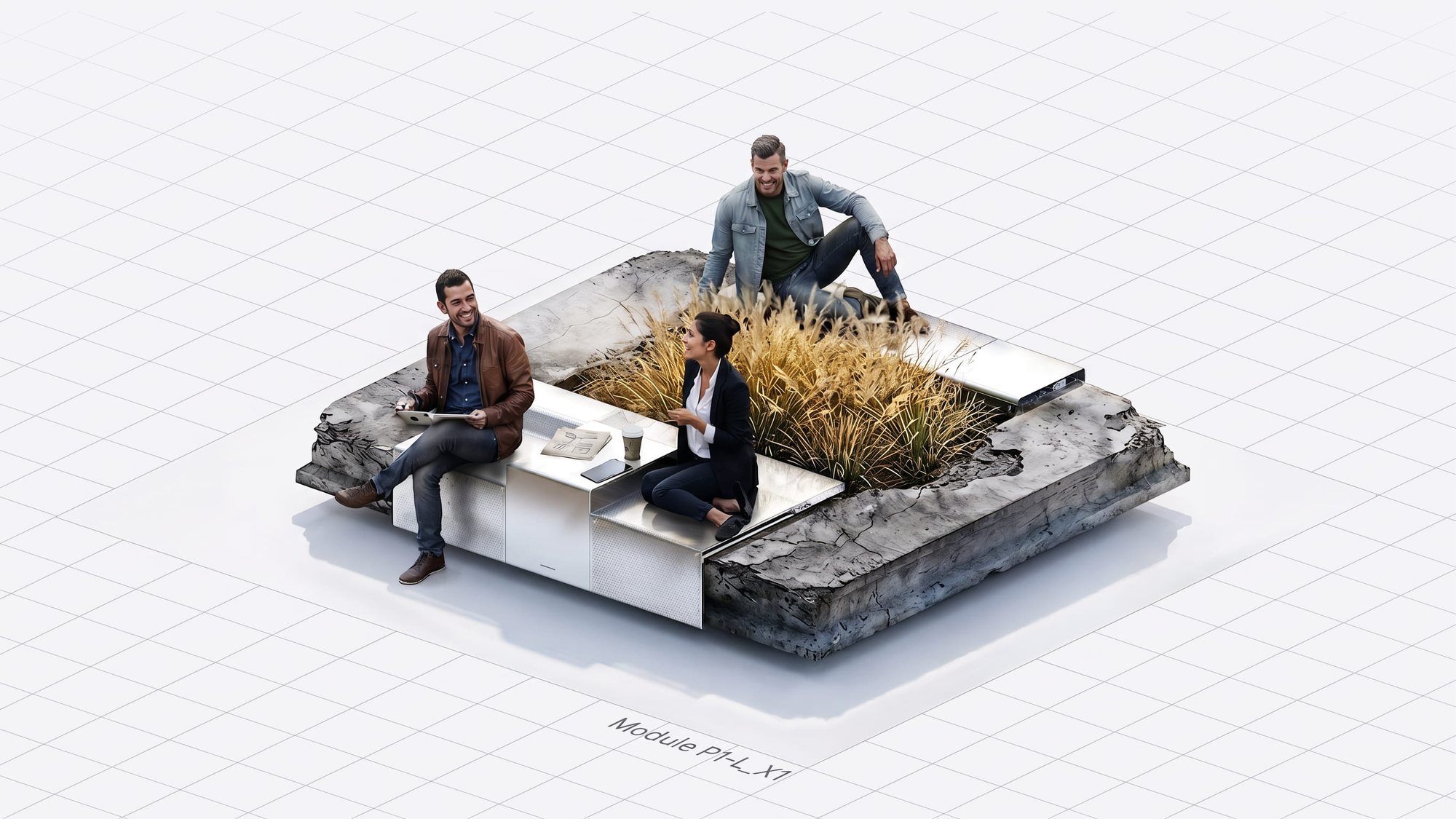
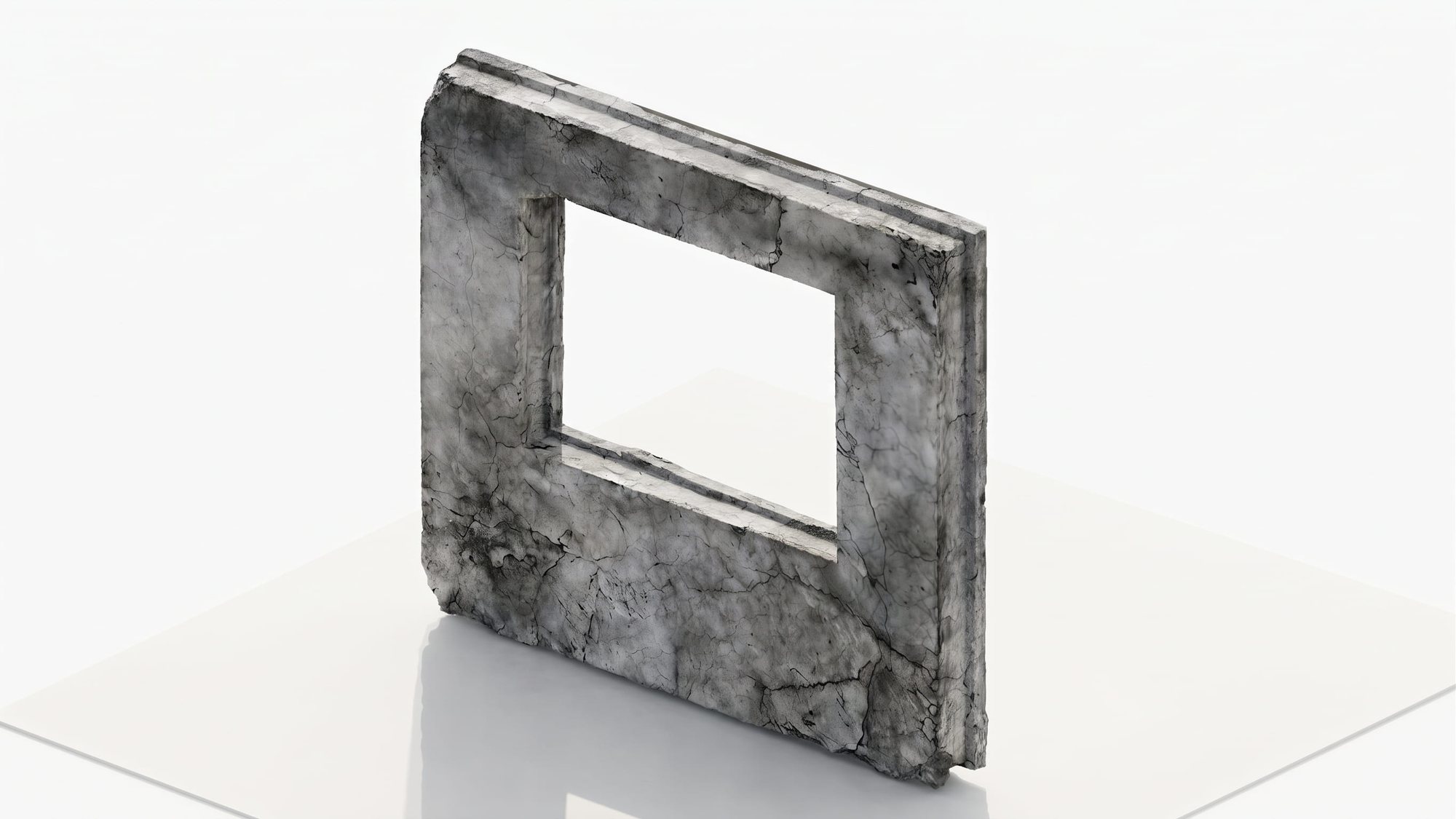
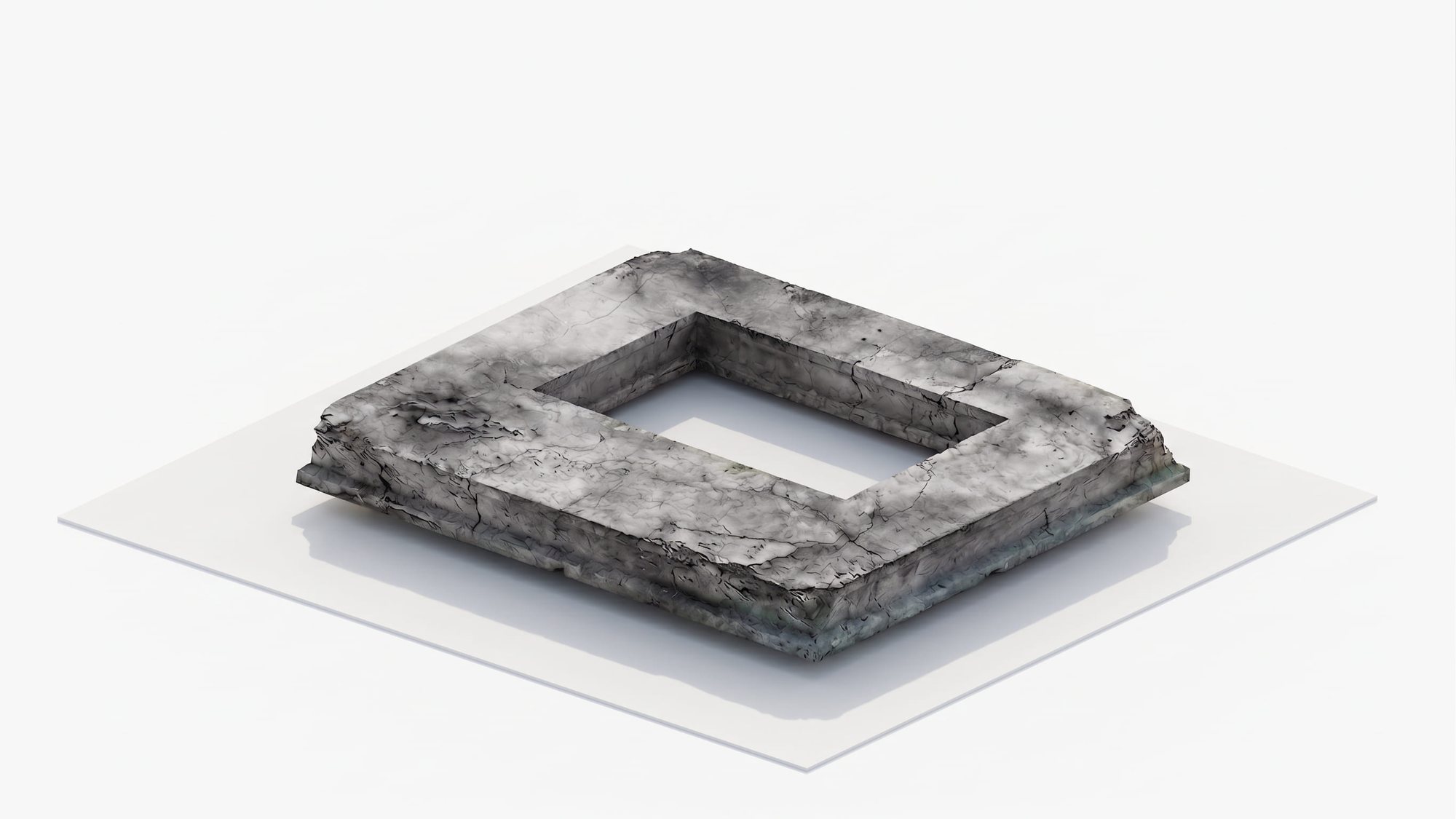
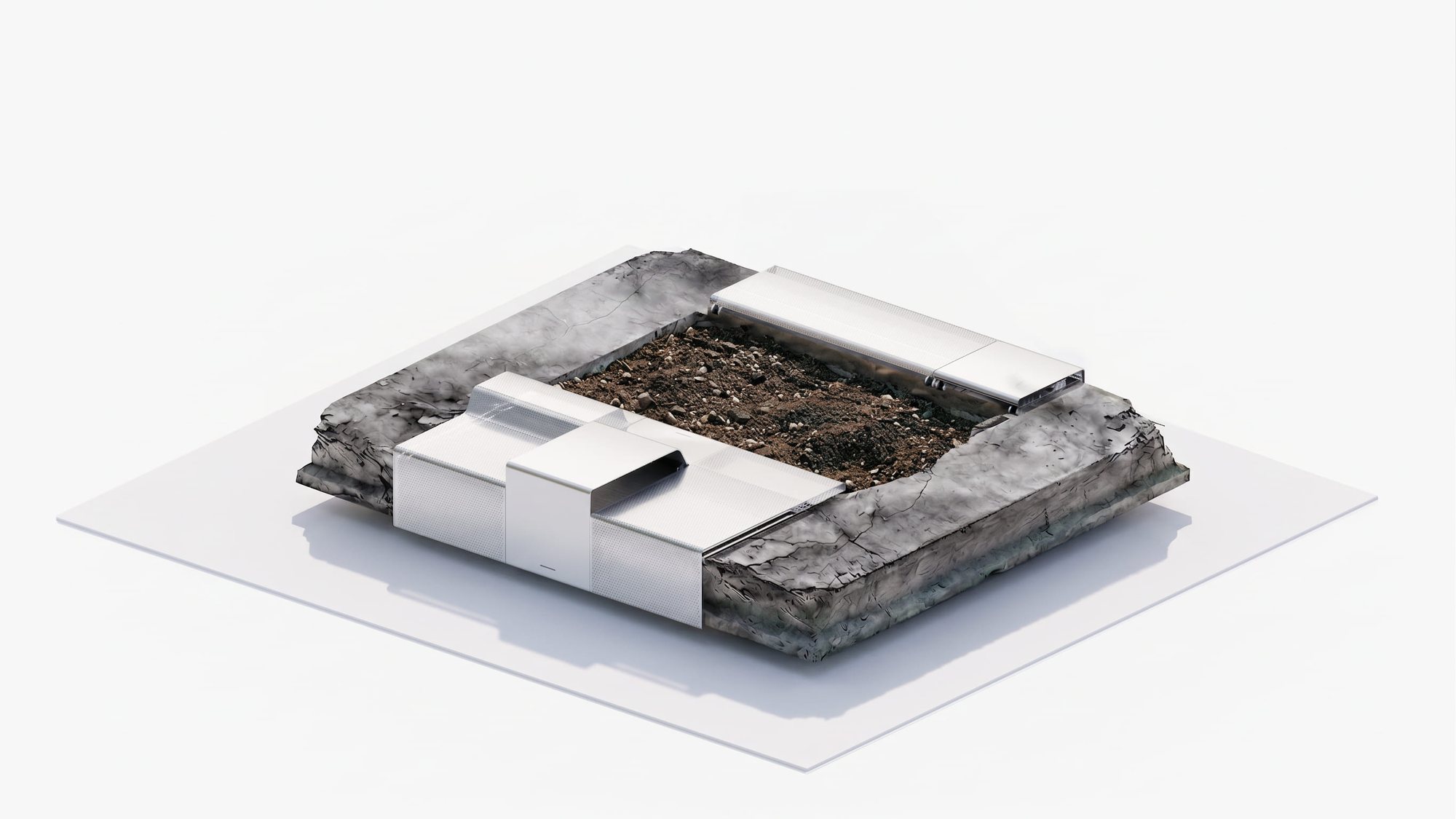
Spatial intervention into post-war sites across Ukraine that salvages damaged concrete panels - stripped of their structural integrity and destined for scrap - and repurposes them as site-specific public furniture.

Rather than silencing the past by sweeping away the debris, the project allows the ruins to speak up at the street scale, telling the story of the place exactly where the history happened.

Flipping a vertical piece of a Soviet facade into a horizontal plane carries a profound political meaning. It is a deliberate decontextualization and a departure from the weight of the old regime. Yet, it keeps that page of history intact, refusing to erase the scars and instead transforming a structural wound into a defining civic feature.

top view of the public furniture mounted on a damaged panel reused from Soviet Block
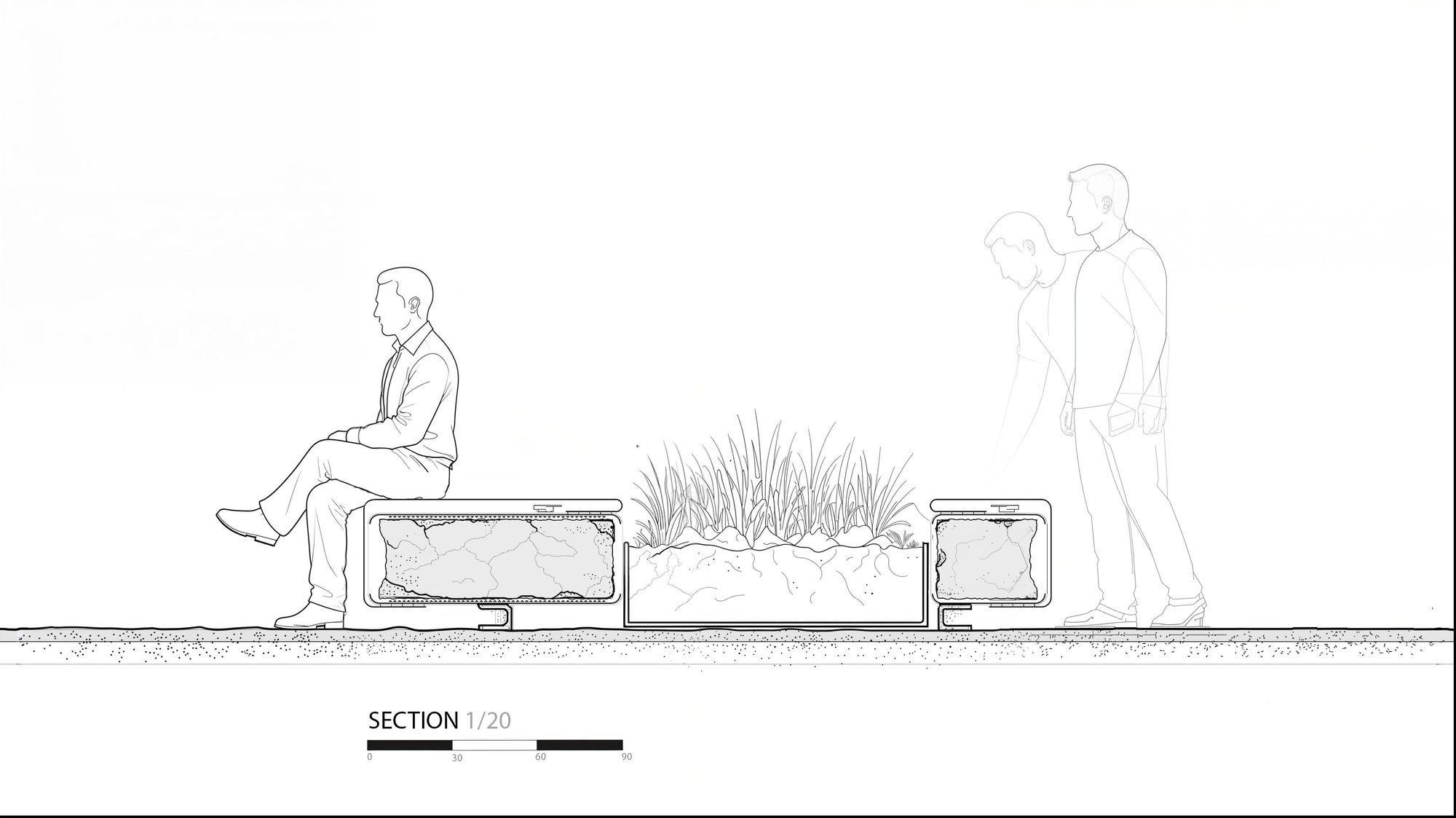
Section view of the public furniture mounted on a damaged panel reused from Soviet Block
Soviet panel housing, single panelSoviet panel housing, single panel, rotated 90 degreesSoviet panel housing, single panel reused as public furniture and planter
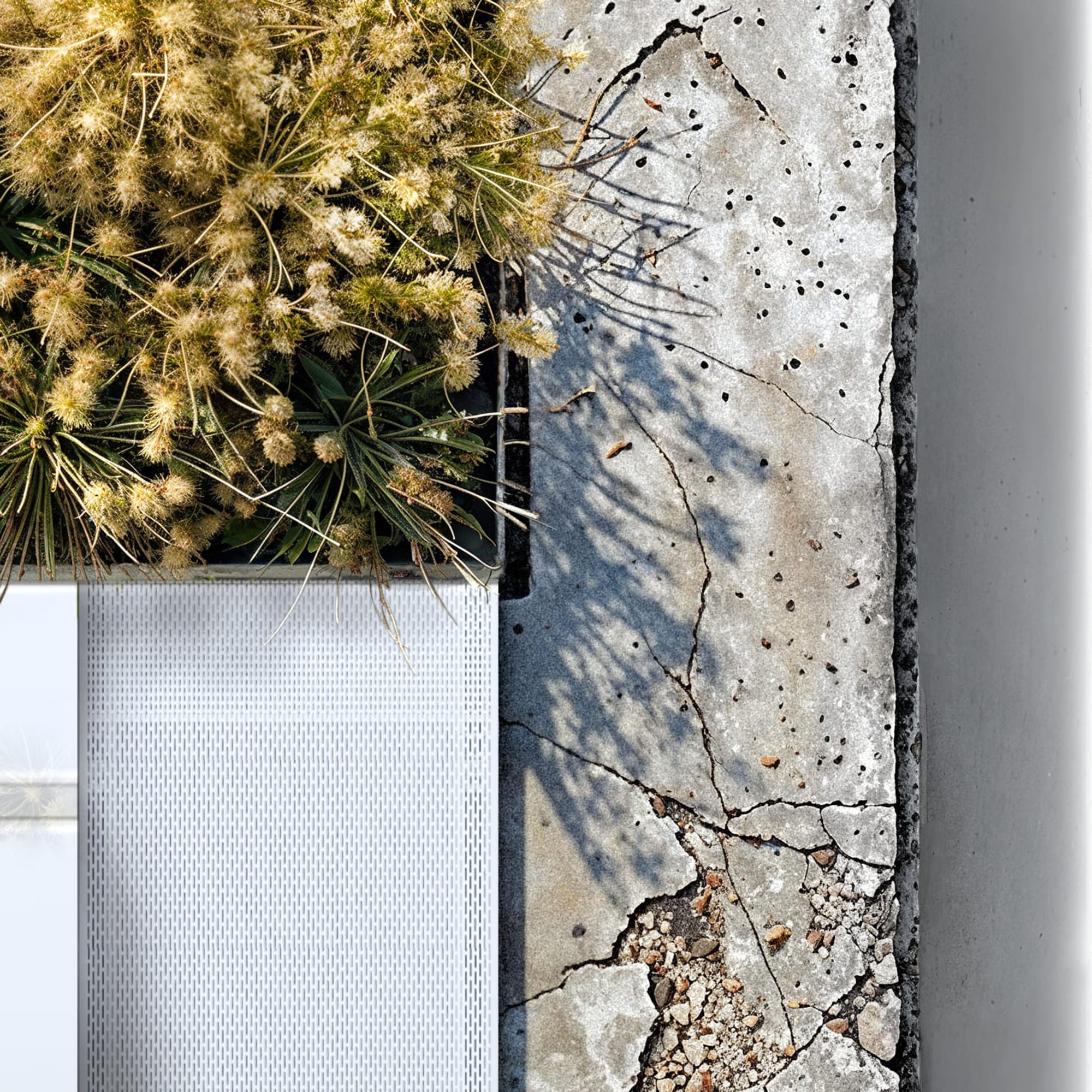
Soviet panel housing, single panel reused in public furniture, close up of decay texture vs stainless steel vs plant
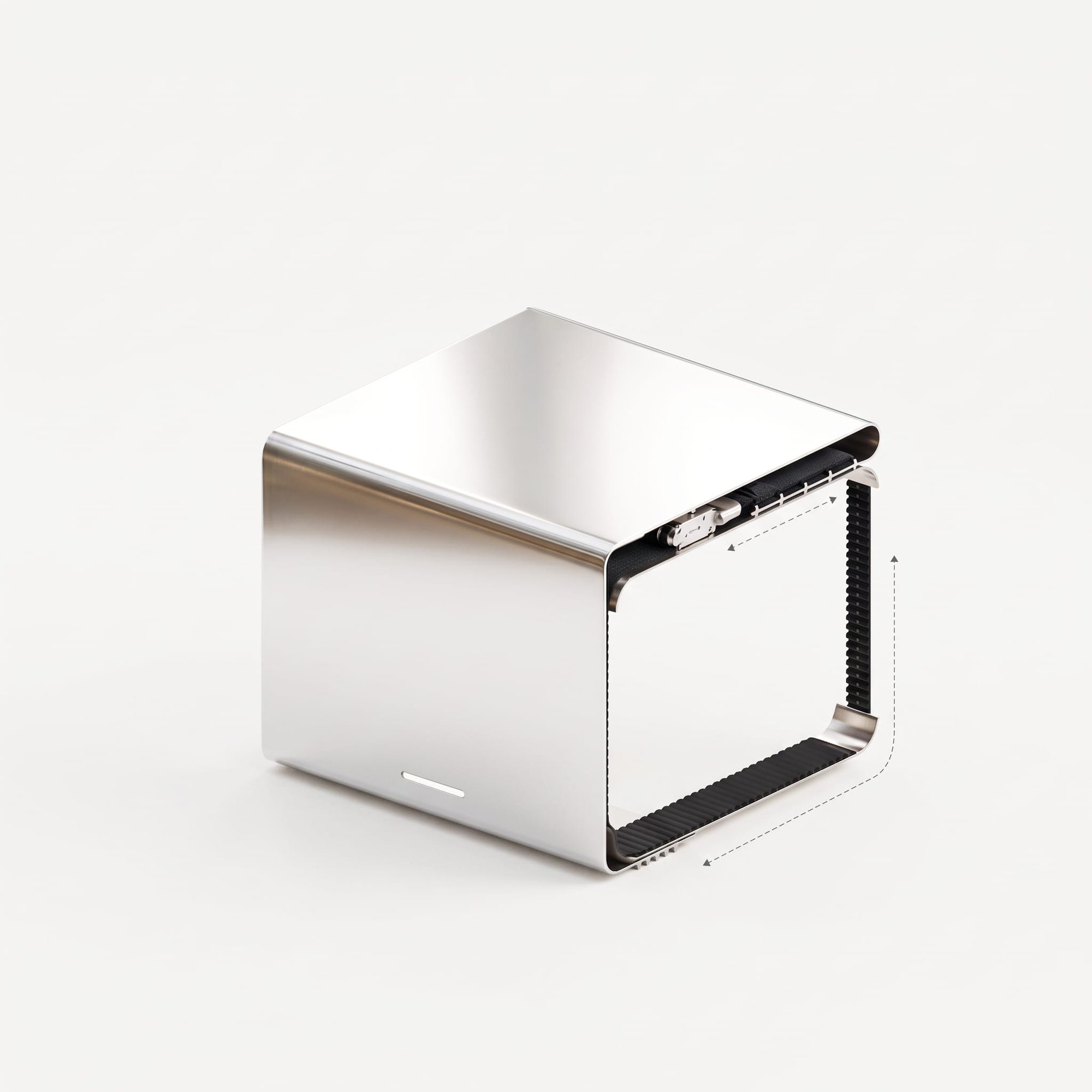
Public furniture component, stainless steel with a strap
Modular stainless steel public furniture element, secured to a concrete panel via a specialized strap attachment mechanism.