Kyryll DmytrenkoLondon, UK --:--:--
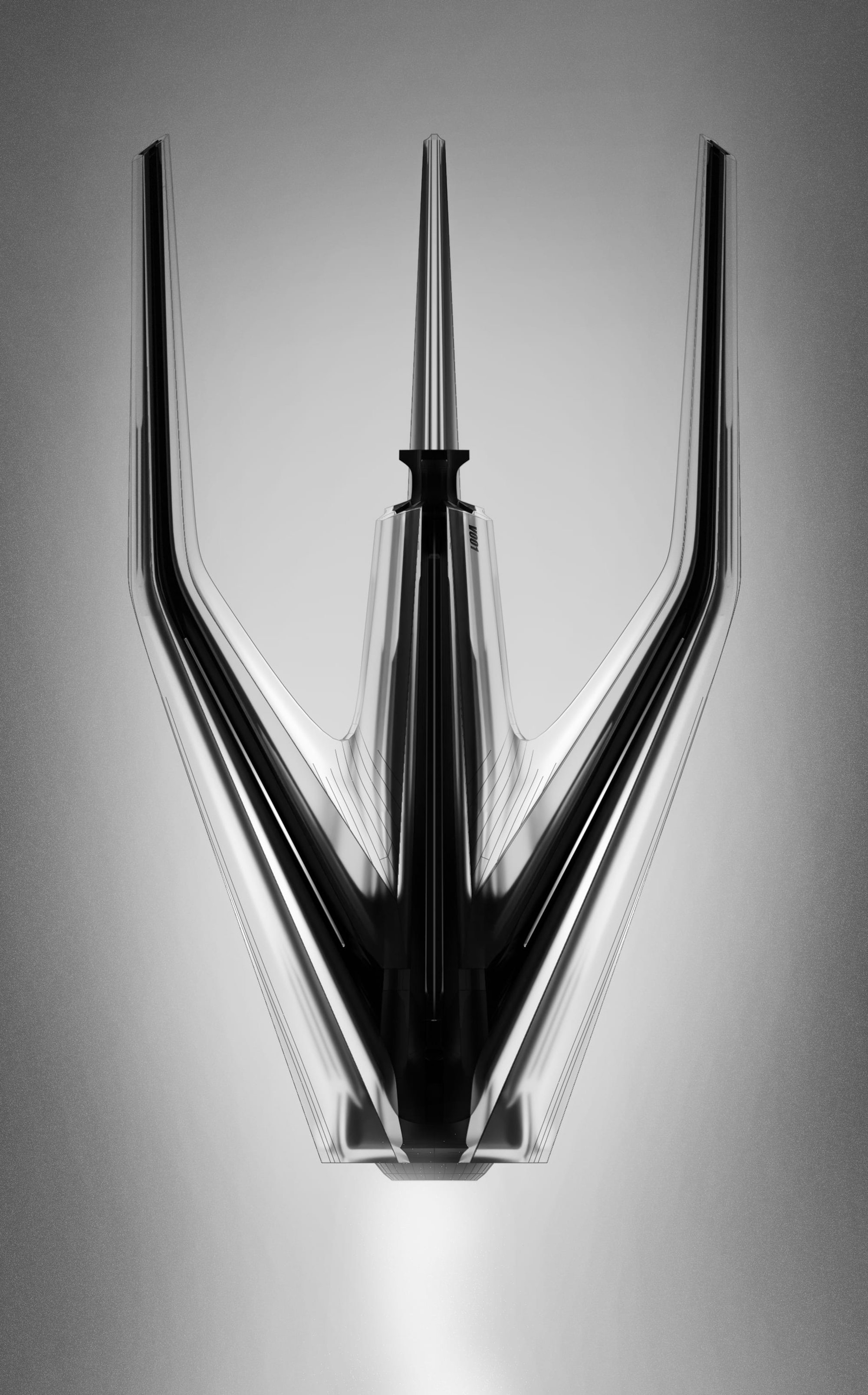
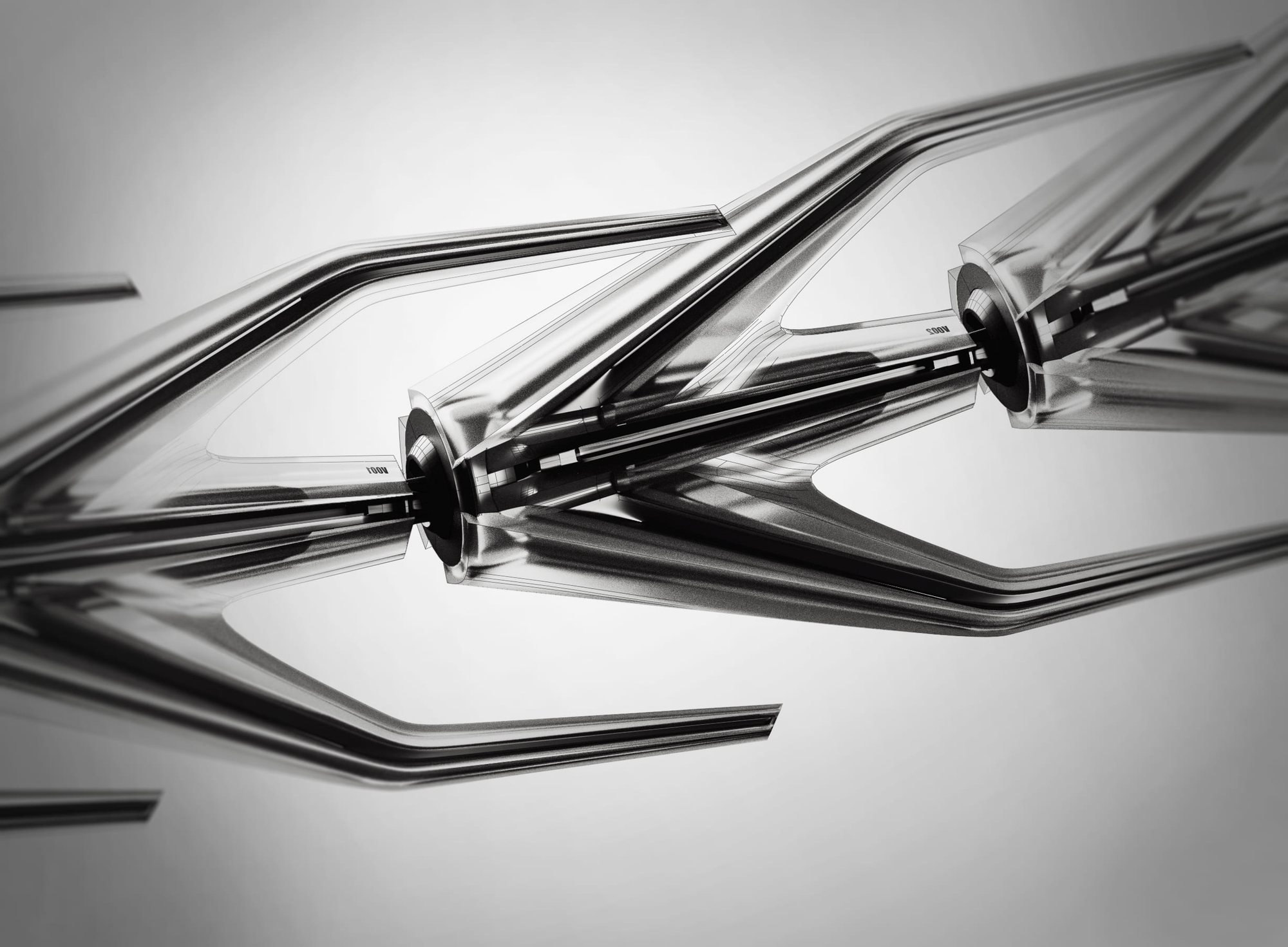
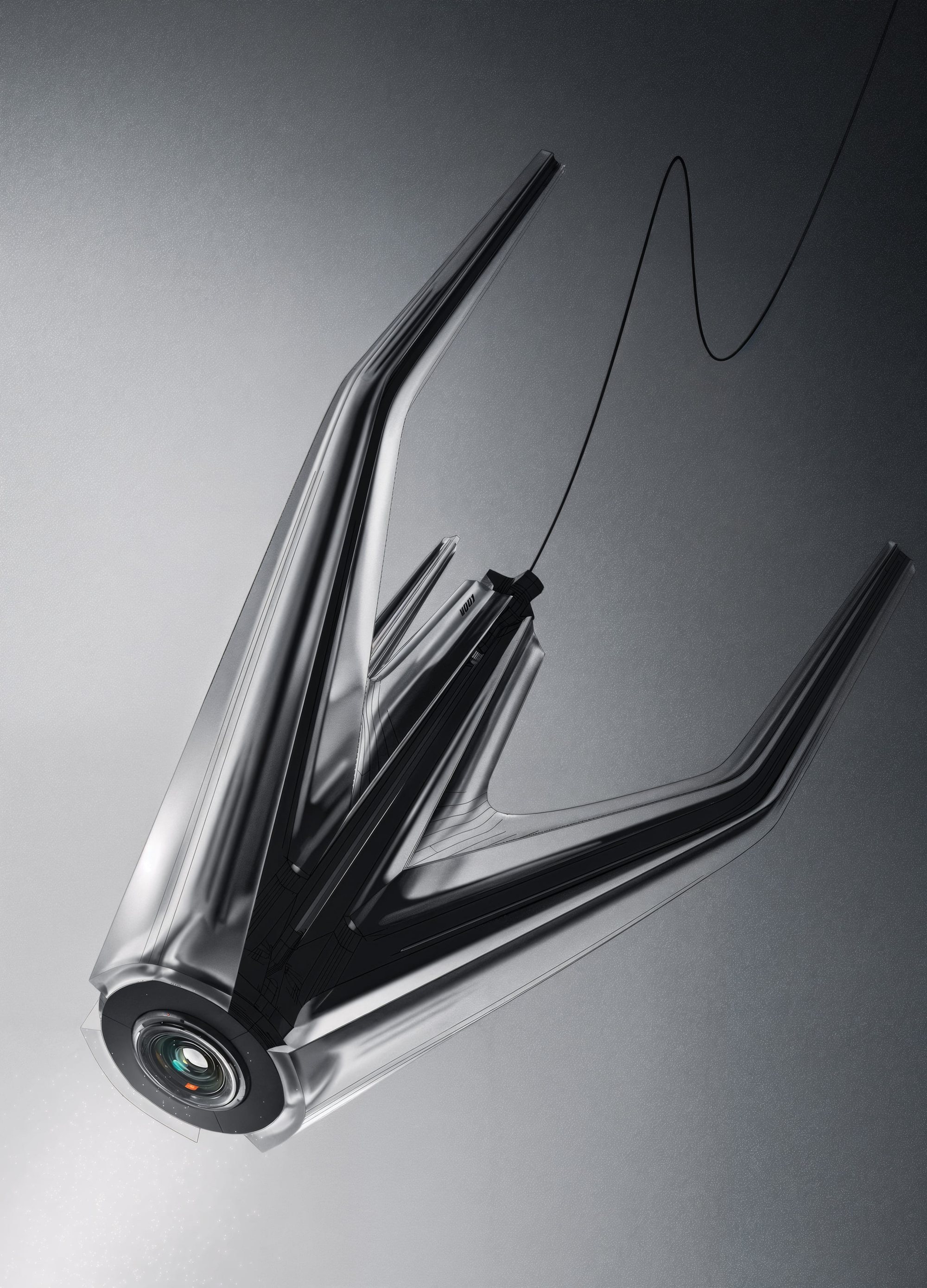
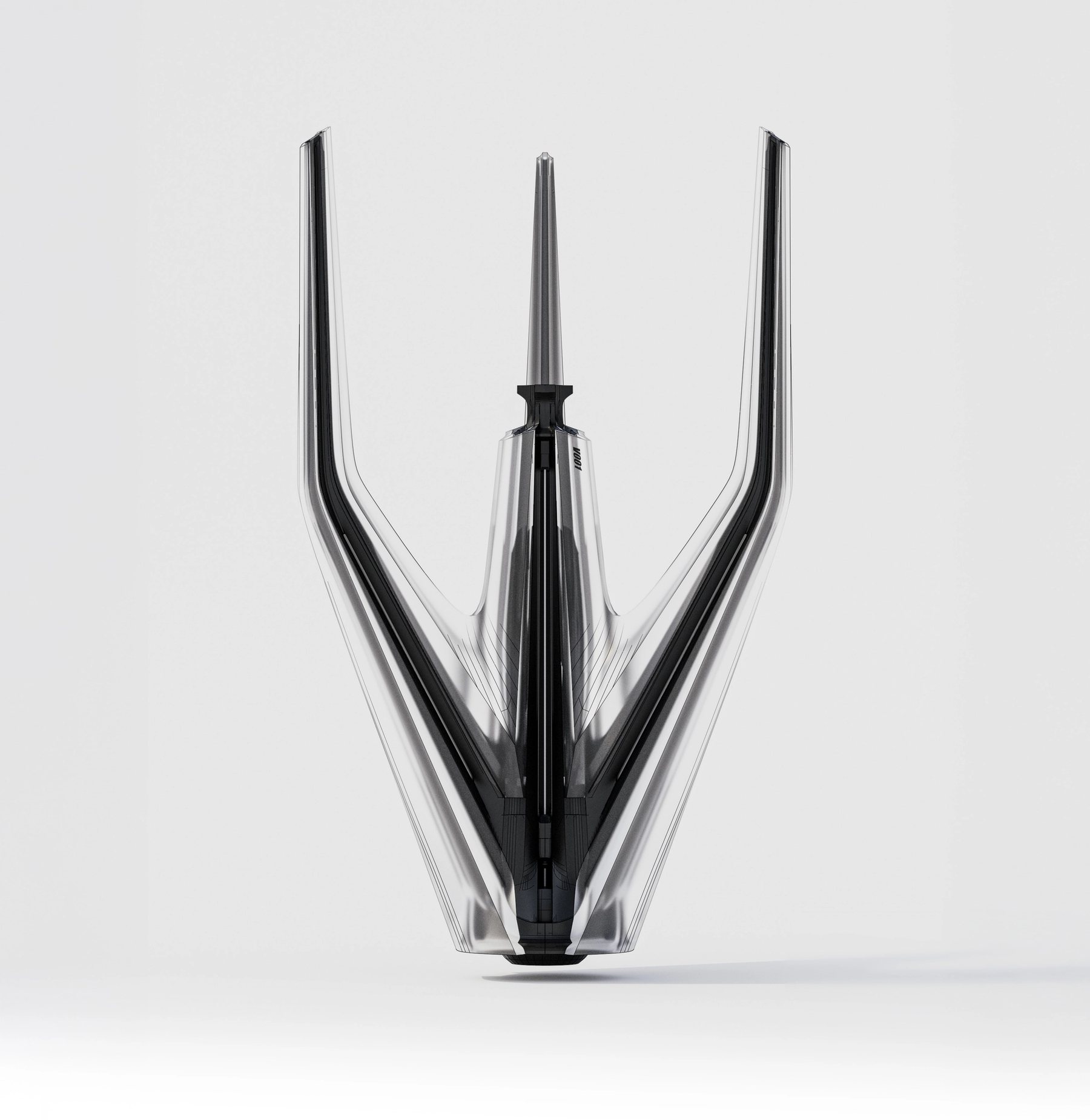
VERTEBRAL — the vertebral module, seen from the front, rendering
01 / 07

Form concept

The initial concept for this project originated after a visit to the Natural History Museum (NHM) in Vienna. I was captivated by many of the exhibits, but one in particular held my attention with unusual intensity.

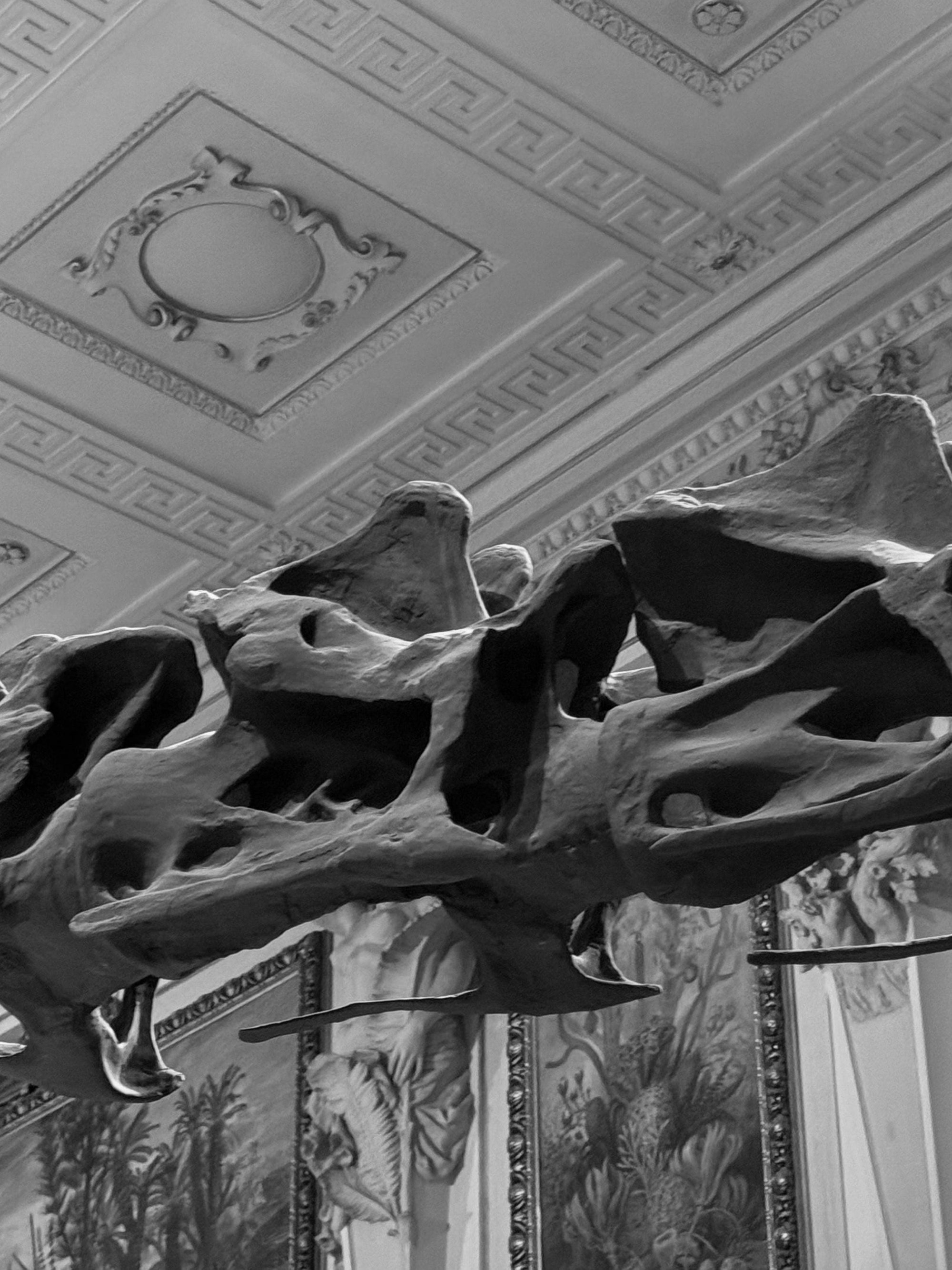
In the grand hall dedicated to dinosaurs - where full-scale skeletal reconstructions spanned the room - one specific skeleton intrigued me: that of a sauropod (see Image A). I was mesmerized by the intricate proportions of these massive creatures that once roamed the Earth. Among their many distinctive features, the elongated neck stood out as an icon of their species.

What fascinated me most was the structure of the vertebrae - bones of the neck - whose shapes are unique to sauropods. Vertebrae in general have complex geometries, but the repetition and flow created by the sauropod's cervical spine were especially striking. The lateral projections - almost wing-like in appearance - created a rhythmic visual movement, like a sculptural sequence frozen in time.
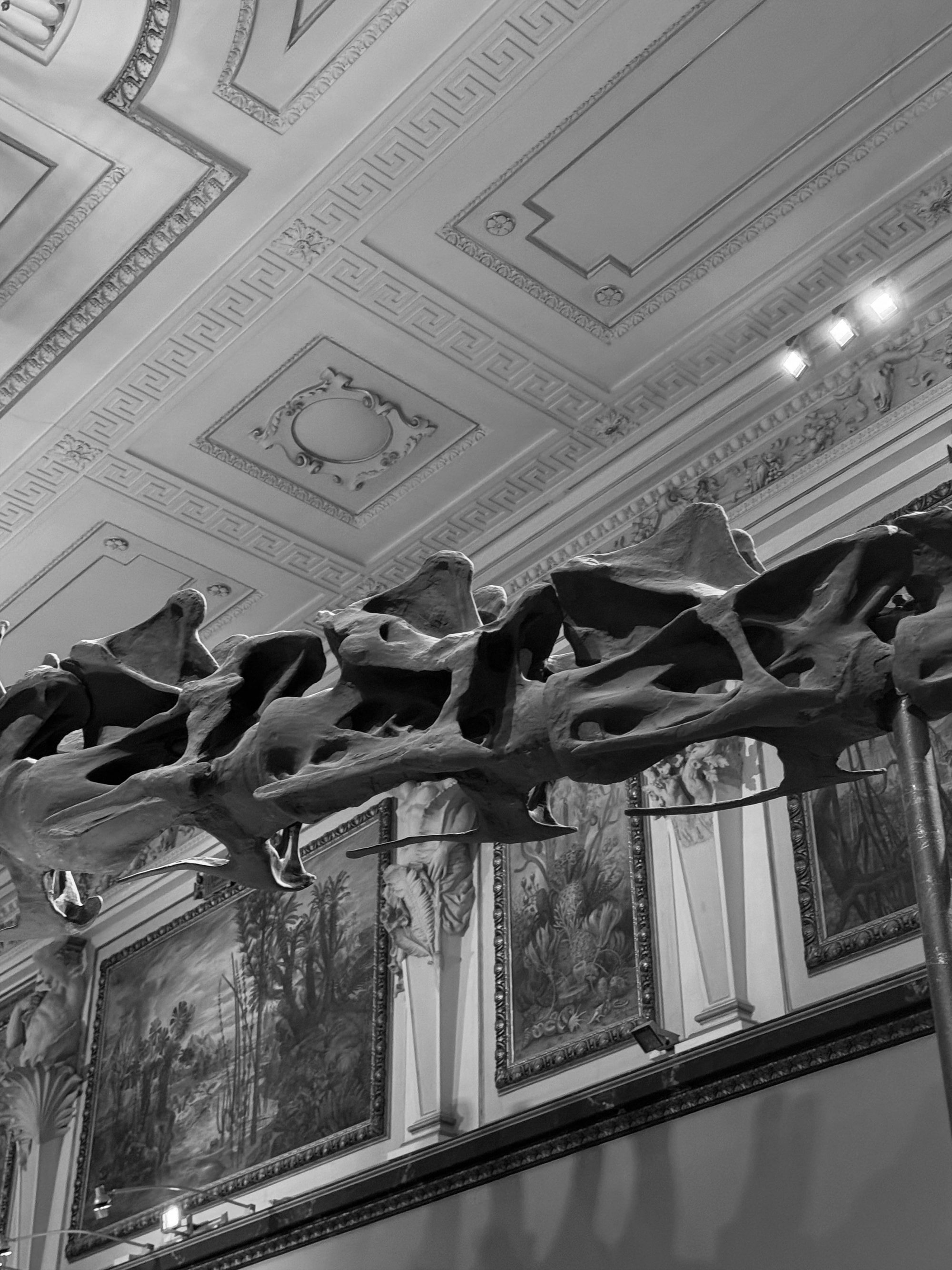
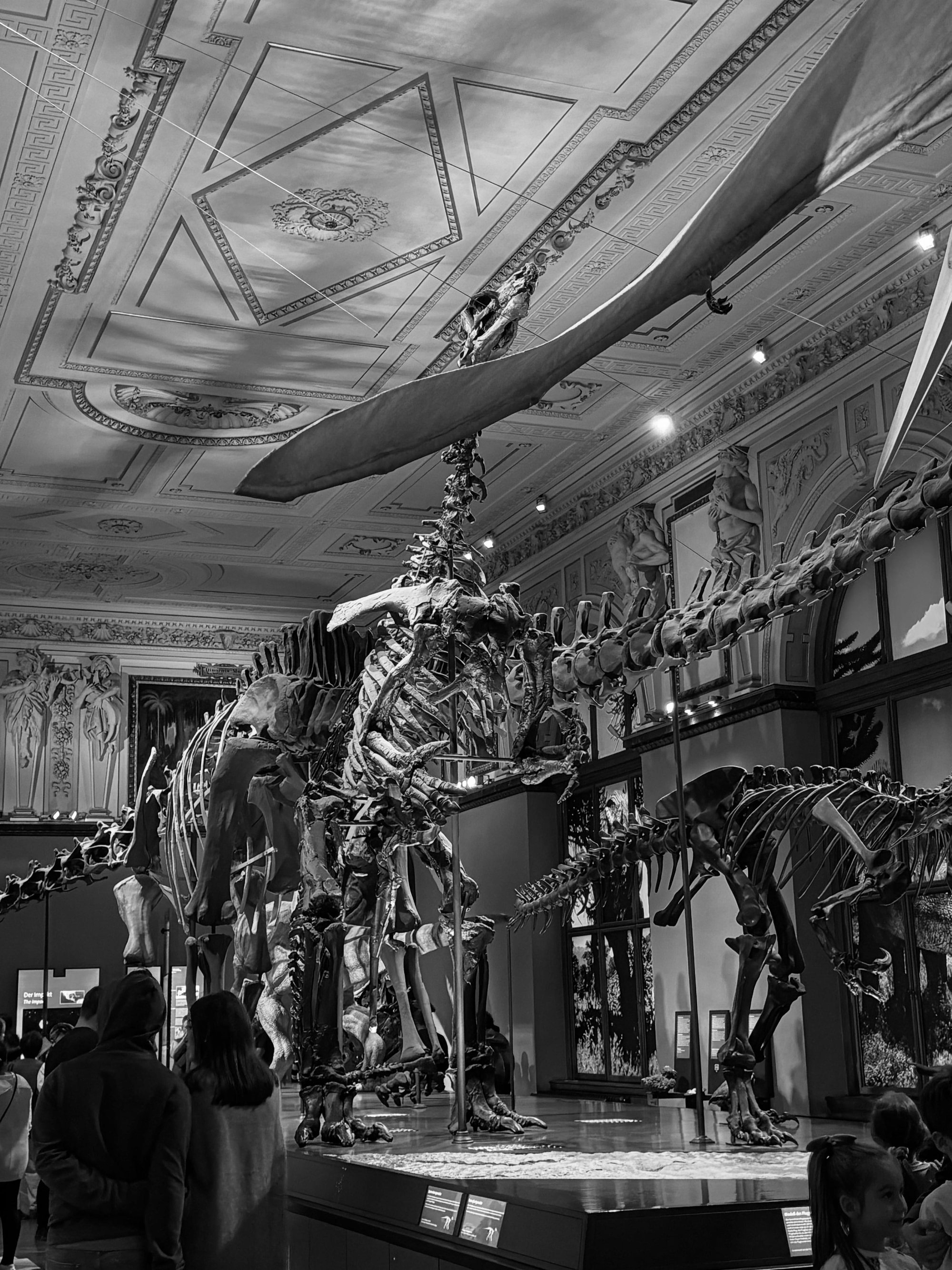
Sauropod in Natural History Museum Vienna, as an inspiration for Vertabral project.Natural History Museum Vienna, Dinosaur Hall
02 / 07

Bone and skin

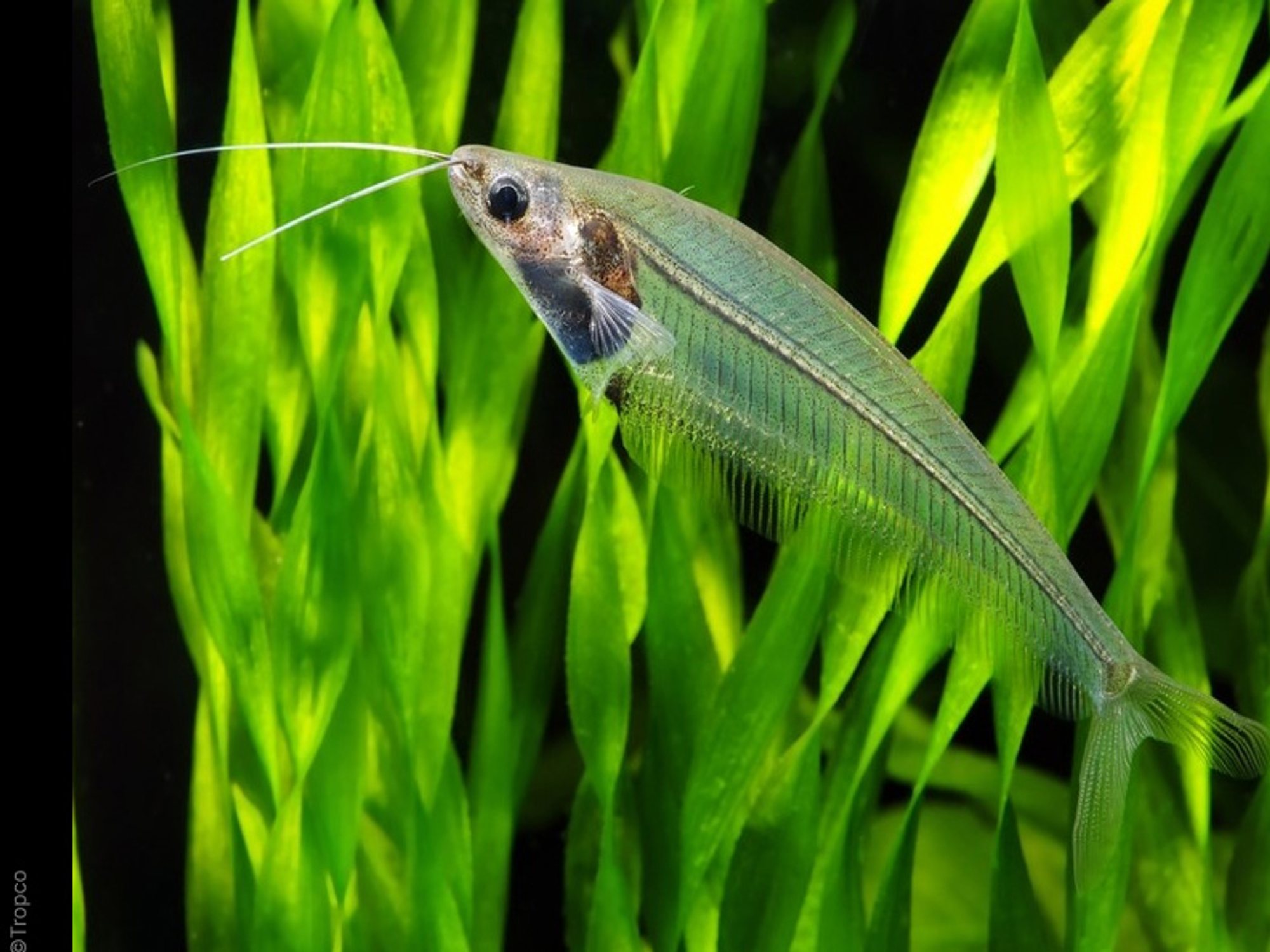
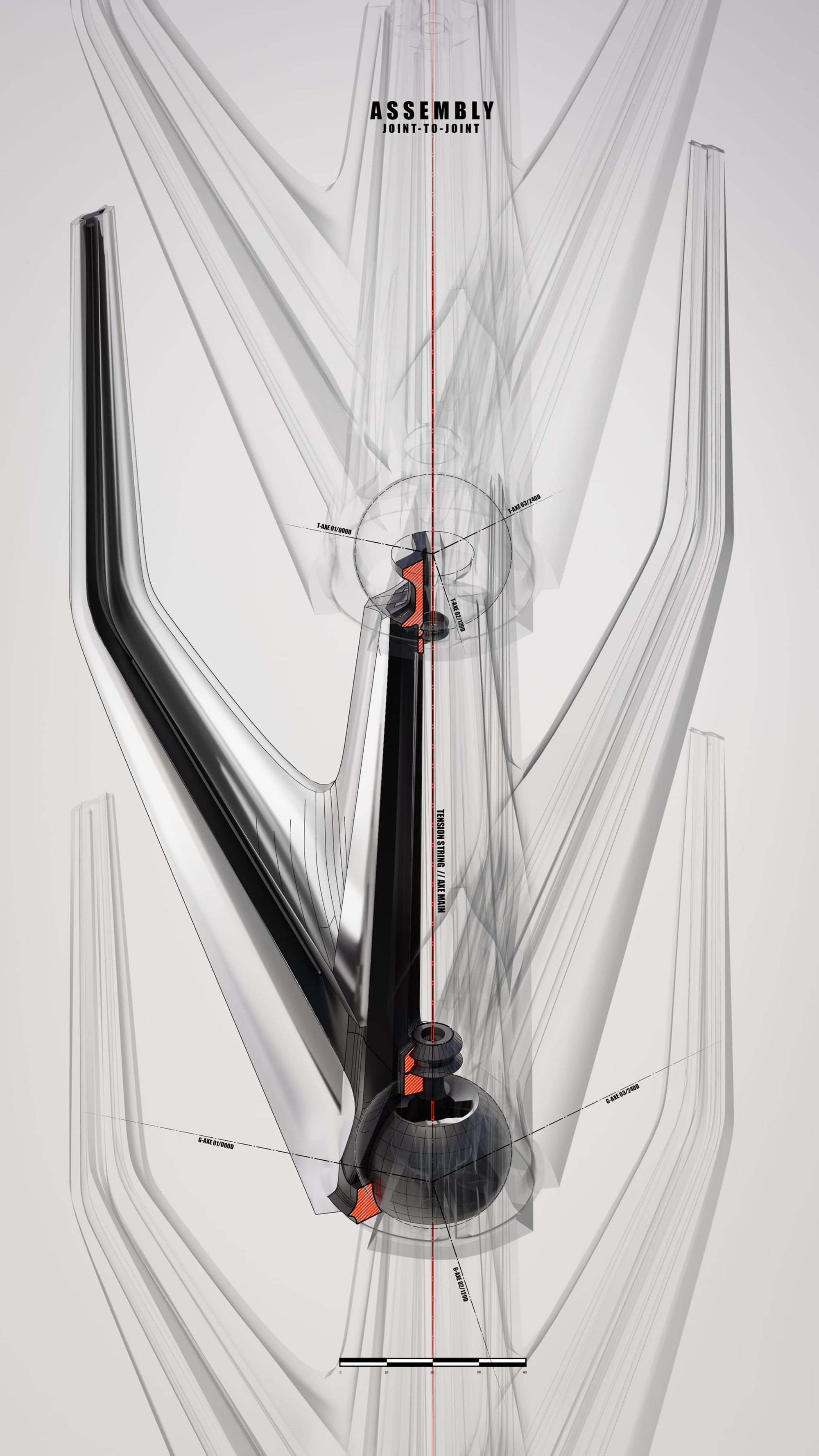
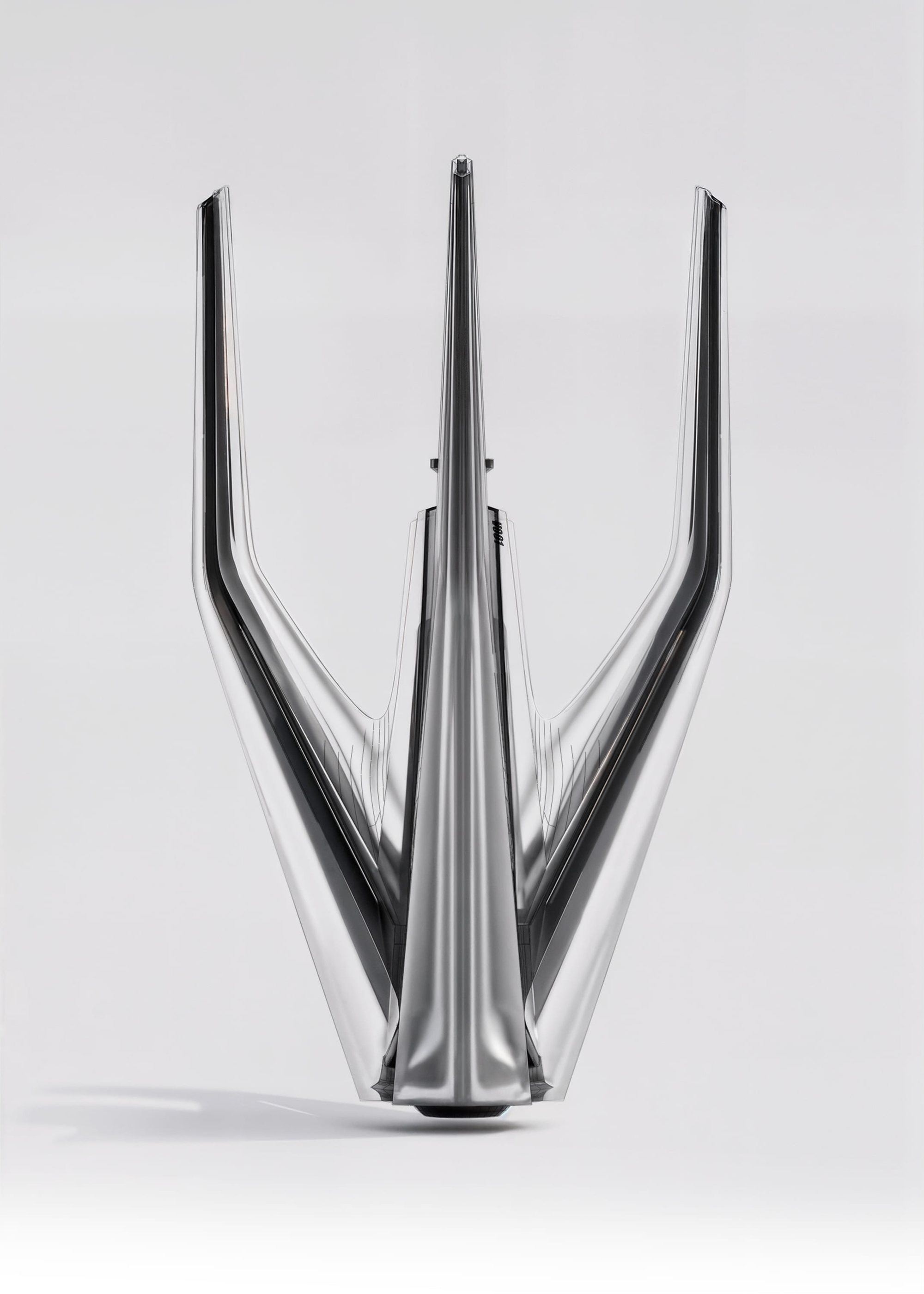
At its core, the object adopts a bone–skin schema: a solid internal skeleton — assembled from interlocking segments — supports a partially translucent outer shell. This outer layer draws inspiration from species like the glass catfish, whose skin allows interaction between the environment and the inner structure rather than concealing it completely.

The form creates a material gradient where the shell thins toward the solid base and, together with strategically applied cuts, allows light to move between darker, solid and lighter, transparent surfaces — emphasising the tension between structure and shell, solid and spectral, in and out.

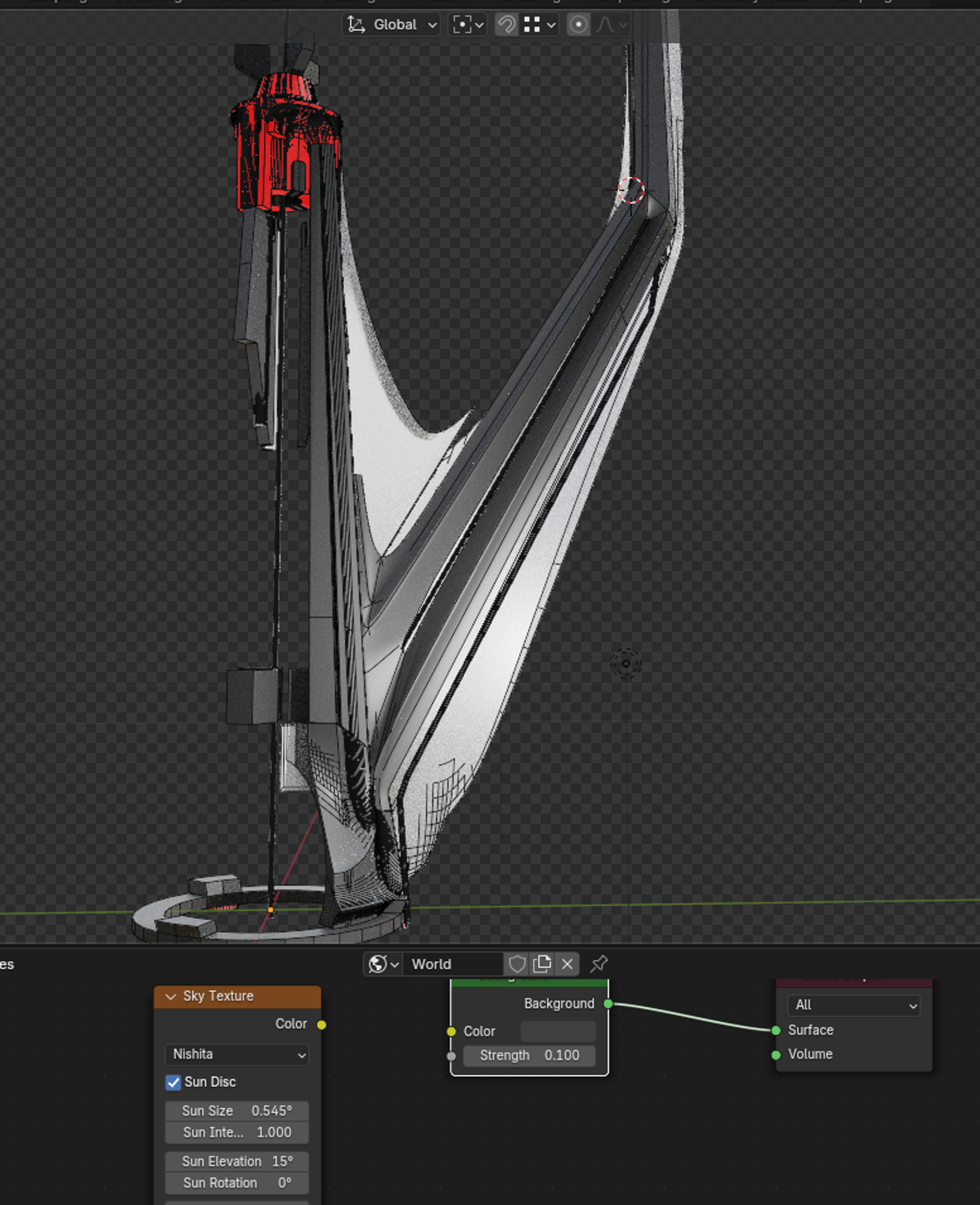
Transclucent fish as a formal and material inspiration for the Vertebral project by Kyryll DmytrenkoDraft model of Vertebral, blender viewportSauropod Vertebral reference
A third of the stack, showing bone and shell
03 / 07

The object

The object seen head-on, full height
The full object from the front and side
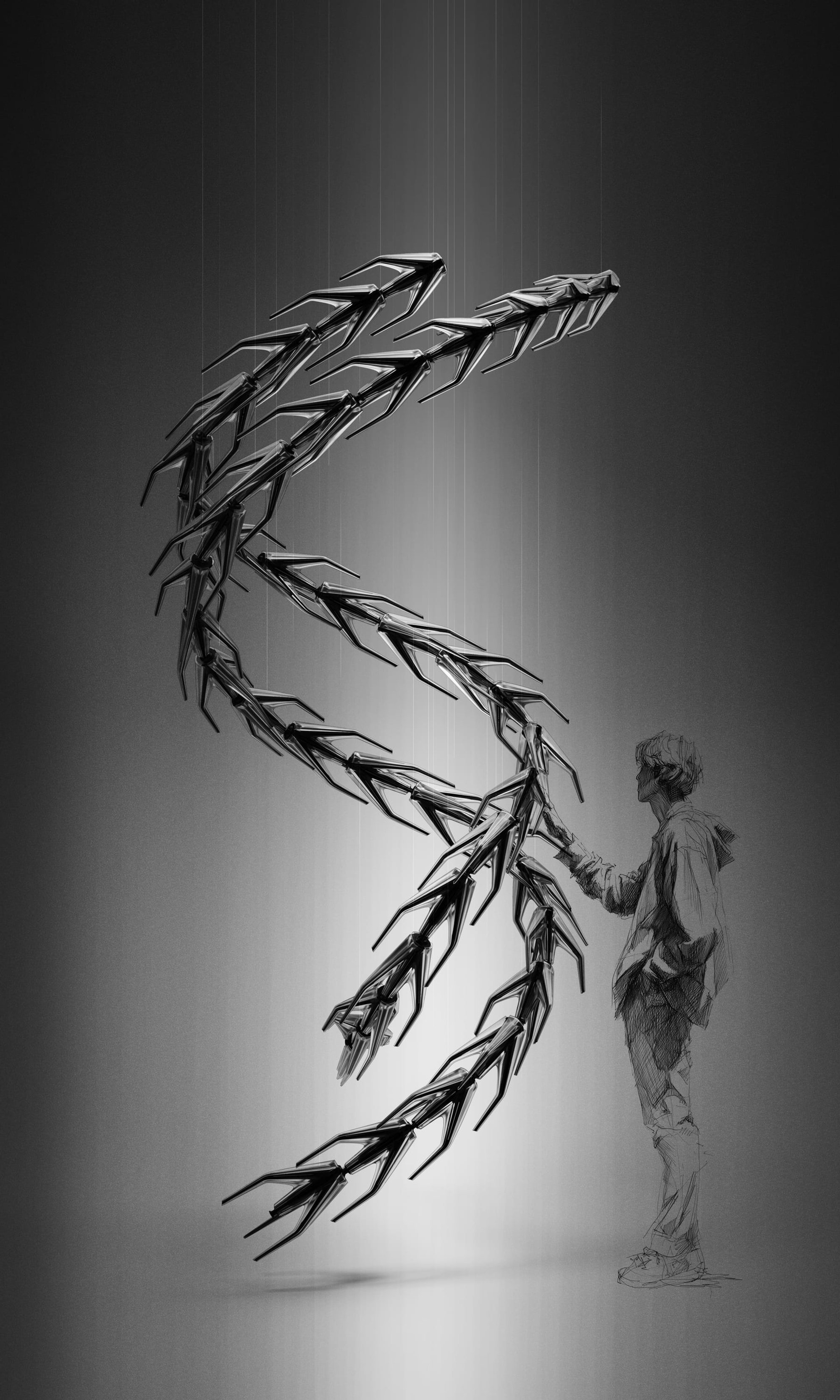
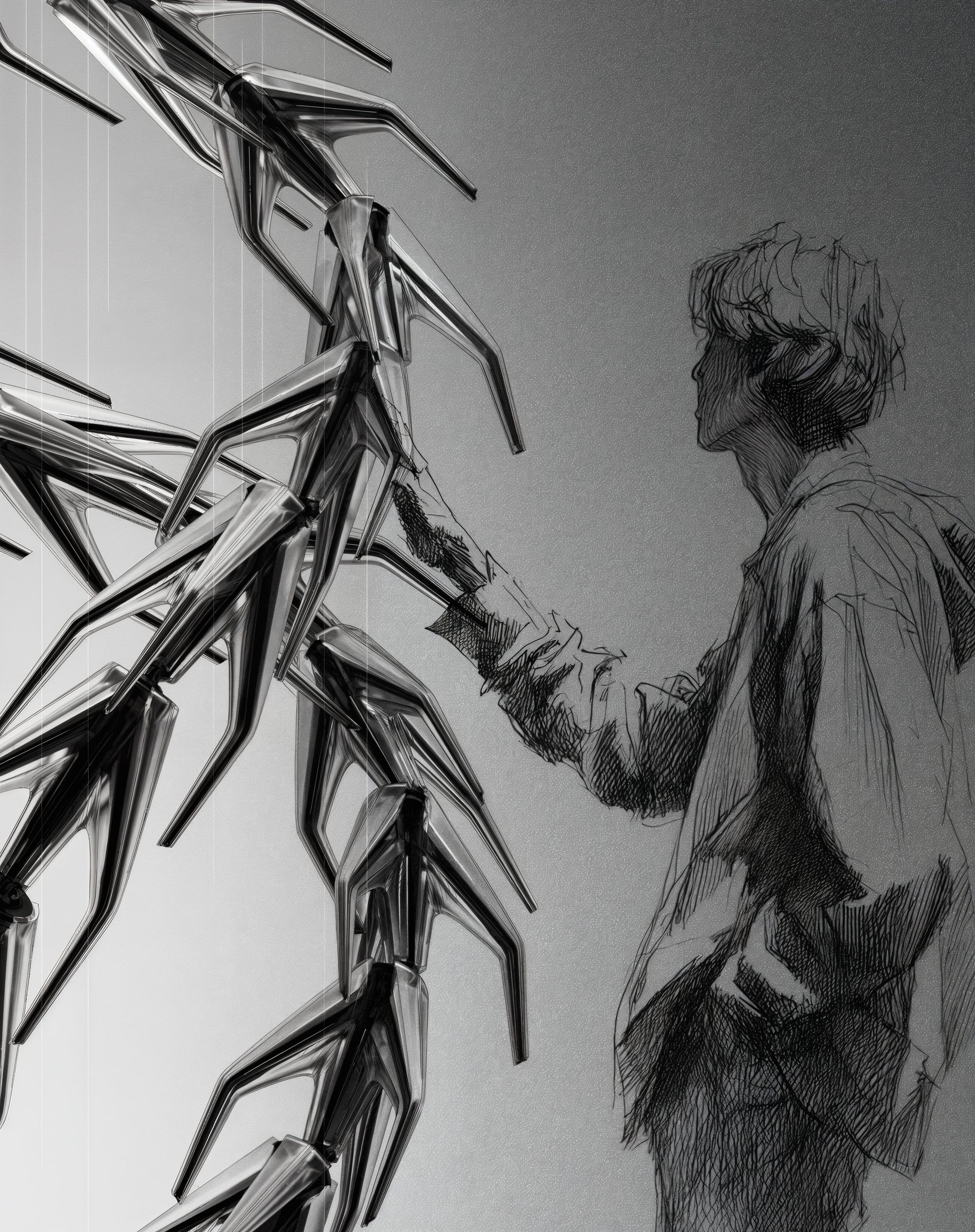
The installation at full height beside a figureDetail of the installation beside a figure
The joint between two vertebrae, in white
04 / 07

Placement

The context of the Naturhistorisches Museum in Vienna is already a compelling contradiction: a lavish neo-Baroque building from the late 19th century, housing remnants of deep natural time, fossils, minerals, and, most strikingly, the monumental skeletons of dinosaurs. This tension between the ornamental grandeur of the interior and the raw, almost decaying presence of ancient bones became a central inspiration for the project's location

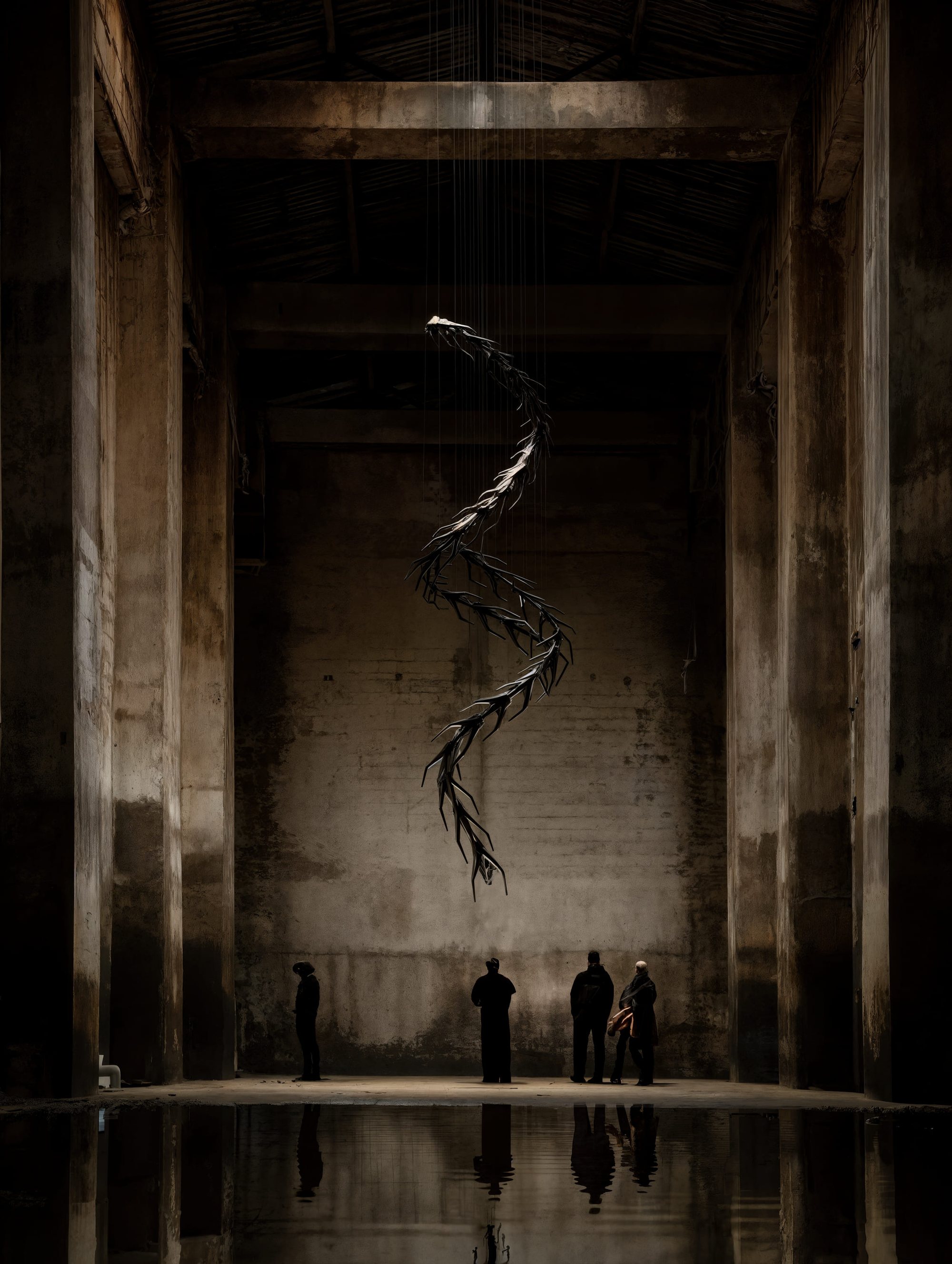
In imagining a site for the exhibition of VERTEBRAL, I sought to invert that juxtaposition, retaining the friction between worlds, but flipping its direction. Rather than placing ancient objects in opulent surroundings, the piece itself becomes futuristic and otherworldly, constructed from materials like polished steel and resin or glass, and is instead set within a derelict industrial environment.

This reversal intensifies the contrast: the sculpture's sleek, alien materiality appears detached and enigmatic, yet becomes more legible when layered against the textured decay of its setting. In this way, the installation conjures a dialogue between old and new, organic and engineered, ruin and future, each amplifying the other's presence through their shared estrangement.

The installation hanging in a barn-like hall
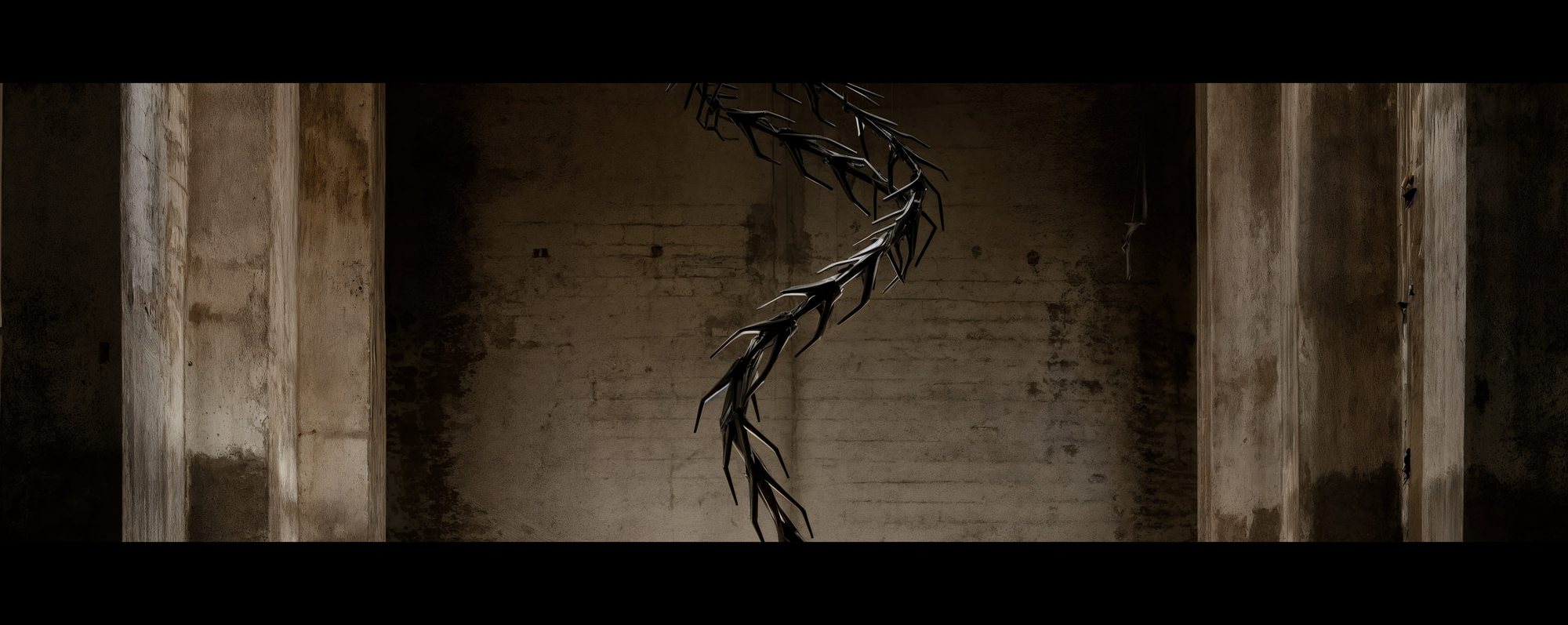
The hall with the installation, cinematic crop
05 / 07

The gaze

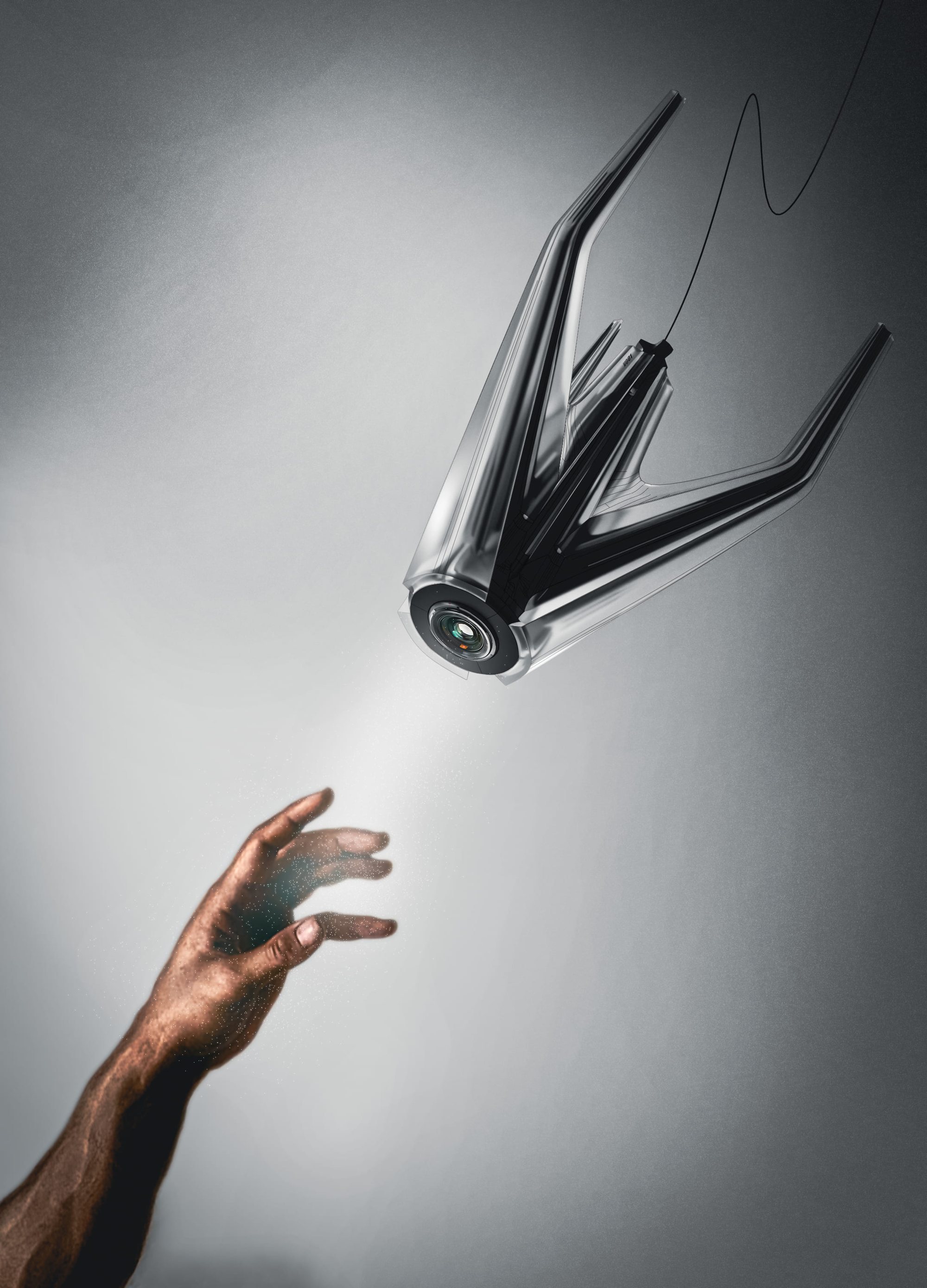
But VERTEBRAL is not just a static form. Embedded in its foremost vertebra is a camera that captures its surroundings in real time. Rather than surveilling or classifying, this AI-enabled gaze interprets movement through neural networks, generating poetic, shifting visualisations that speculate on how machines might see.

Through this layered interaction, the installation blurs the boundary between object and observer, presence and perception.

If a machine begins to watch, remember and interpret — who holds the power of meaning? And when it looks back… what does it see?

The object seen at an angleClose detail of the shell and segments
Loop
The sculpture turning, watched and watching
06 / 07

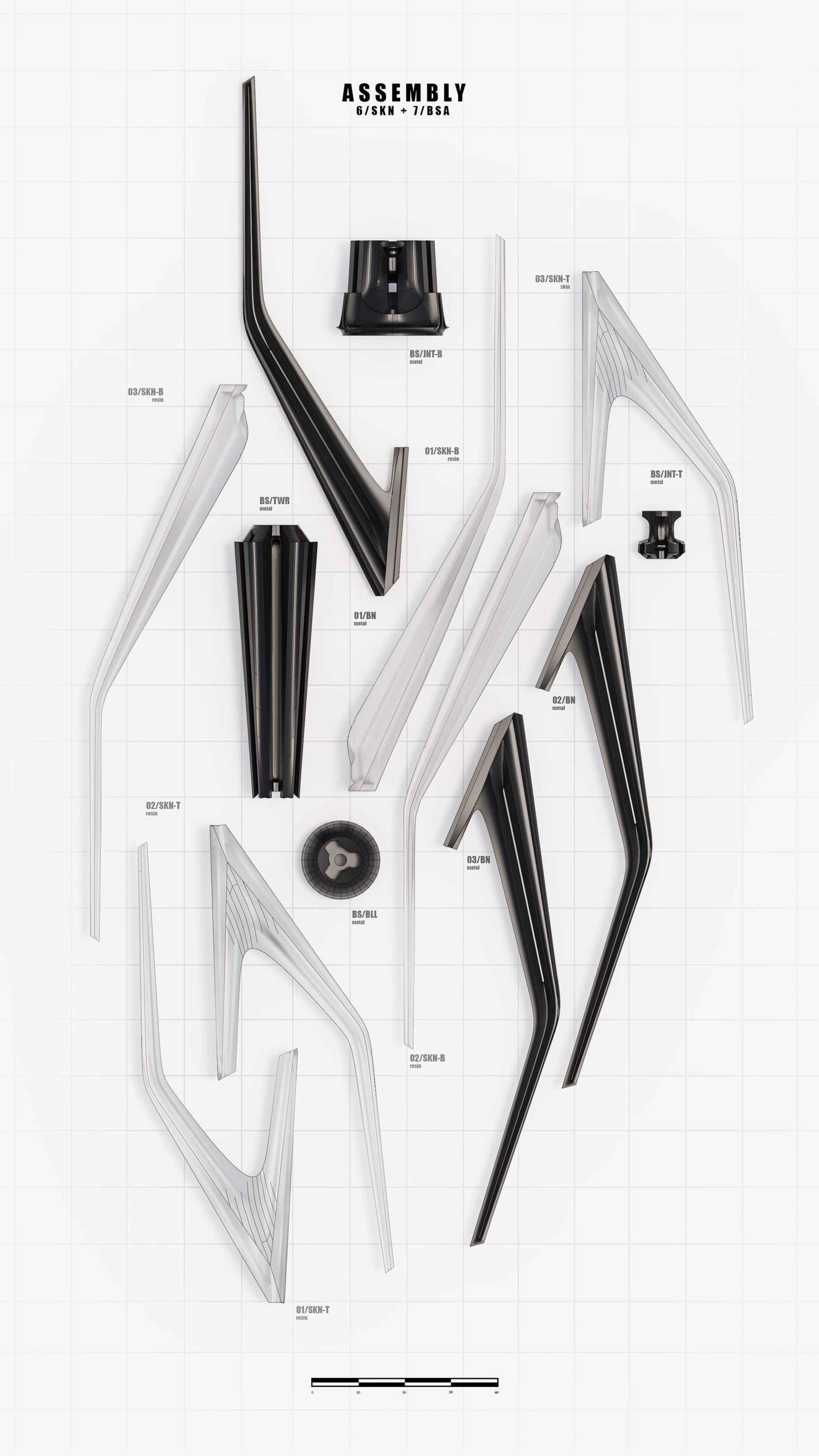
Fabrication

Loop
All segments laid out before assembly
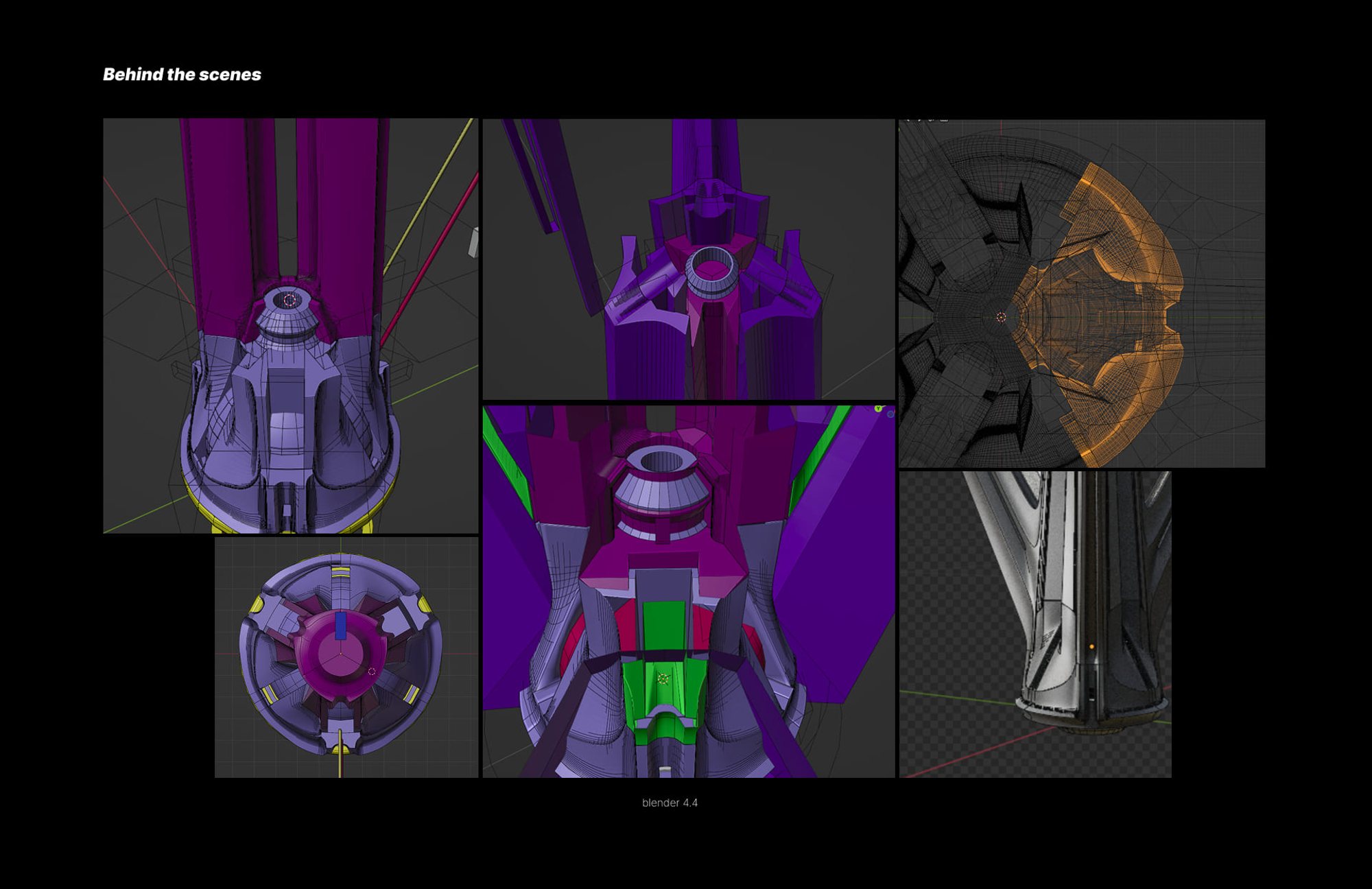
Board showing the work behind the renders
07 / 07

Prototype

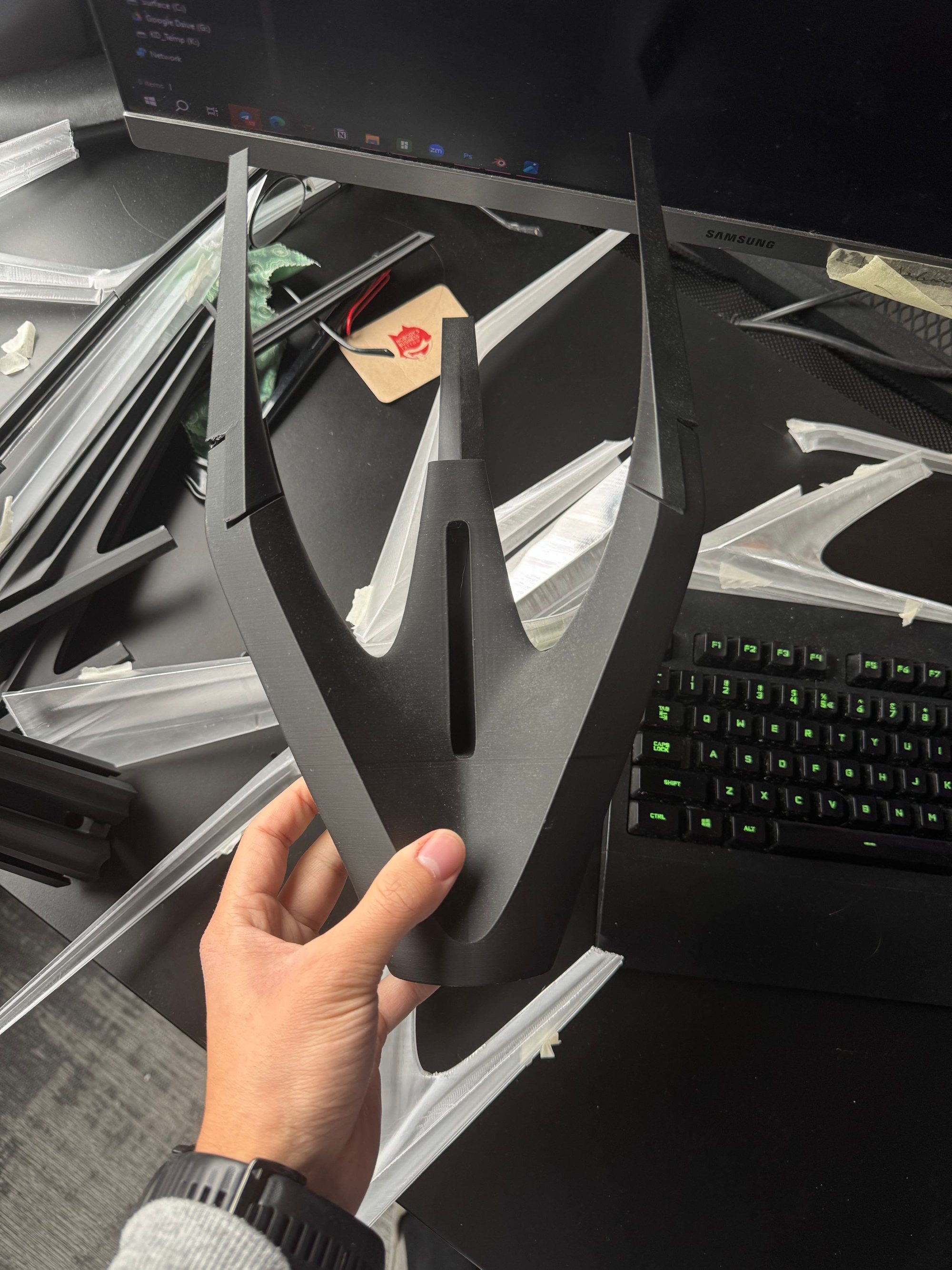
The project was initially desiged with fabrication methods in mind.

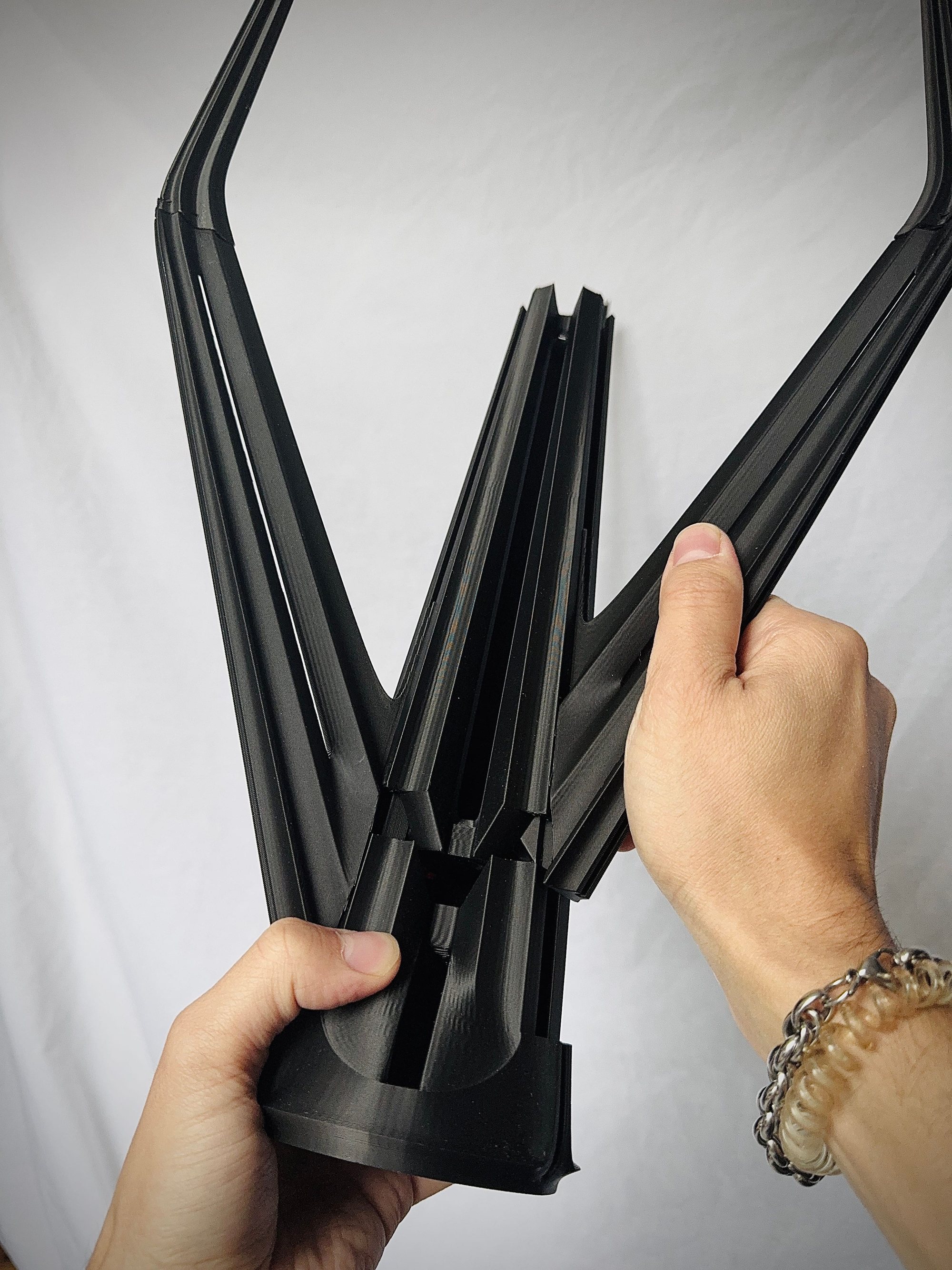
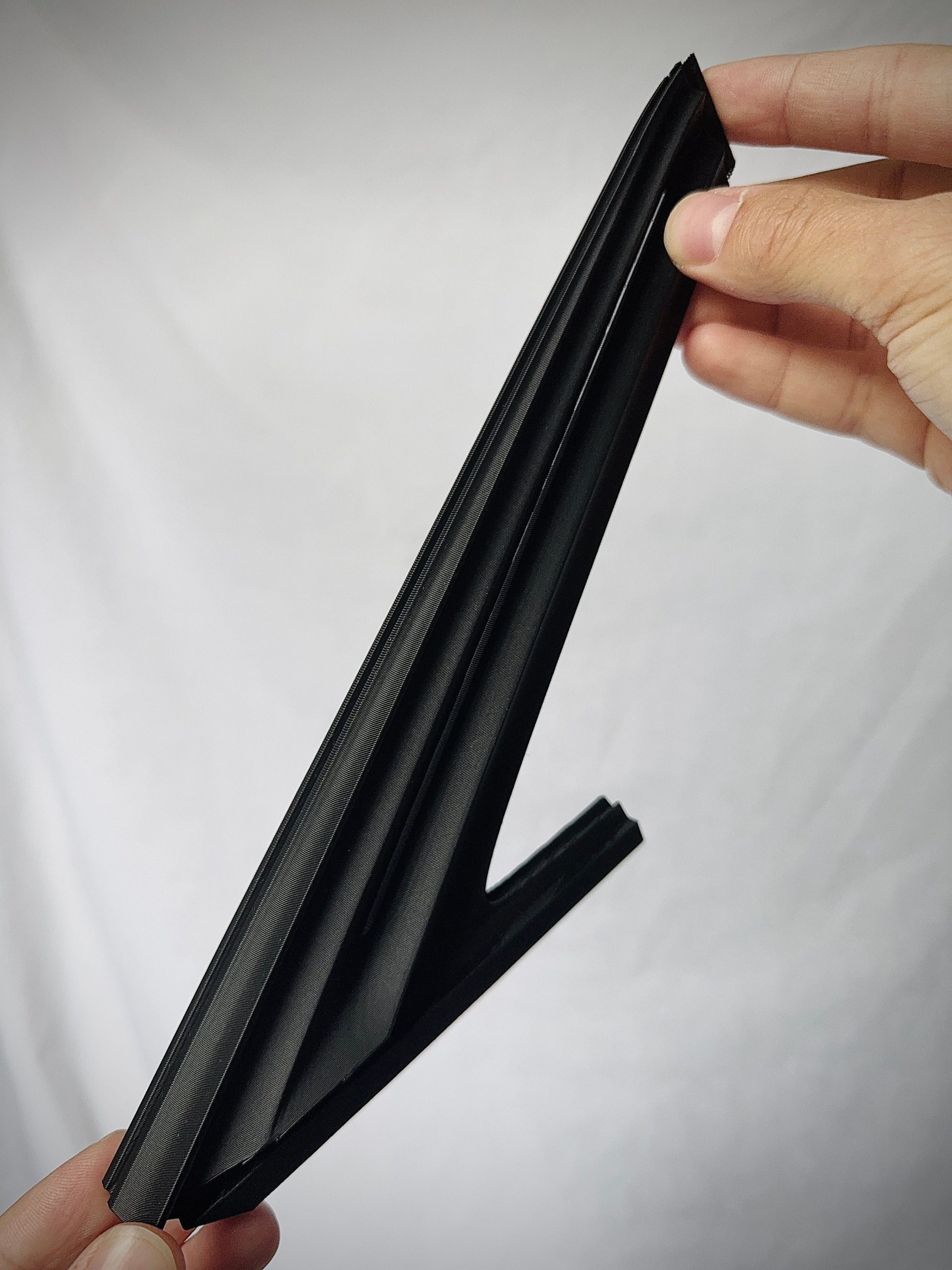
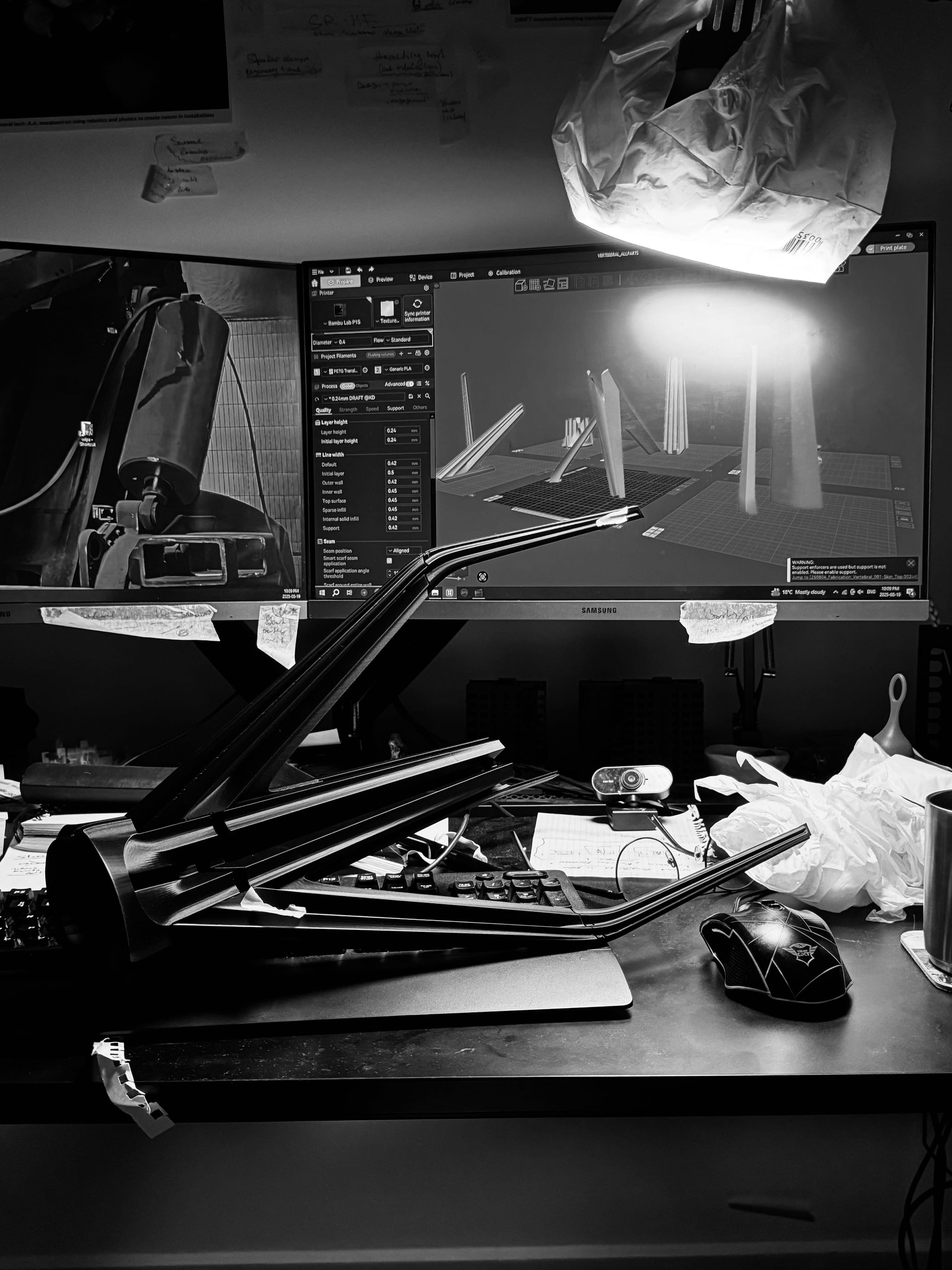
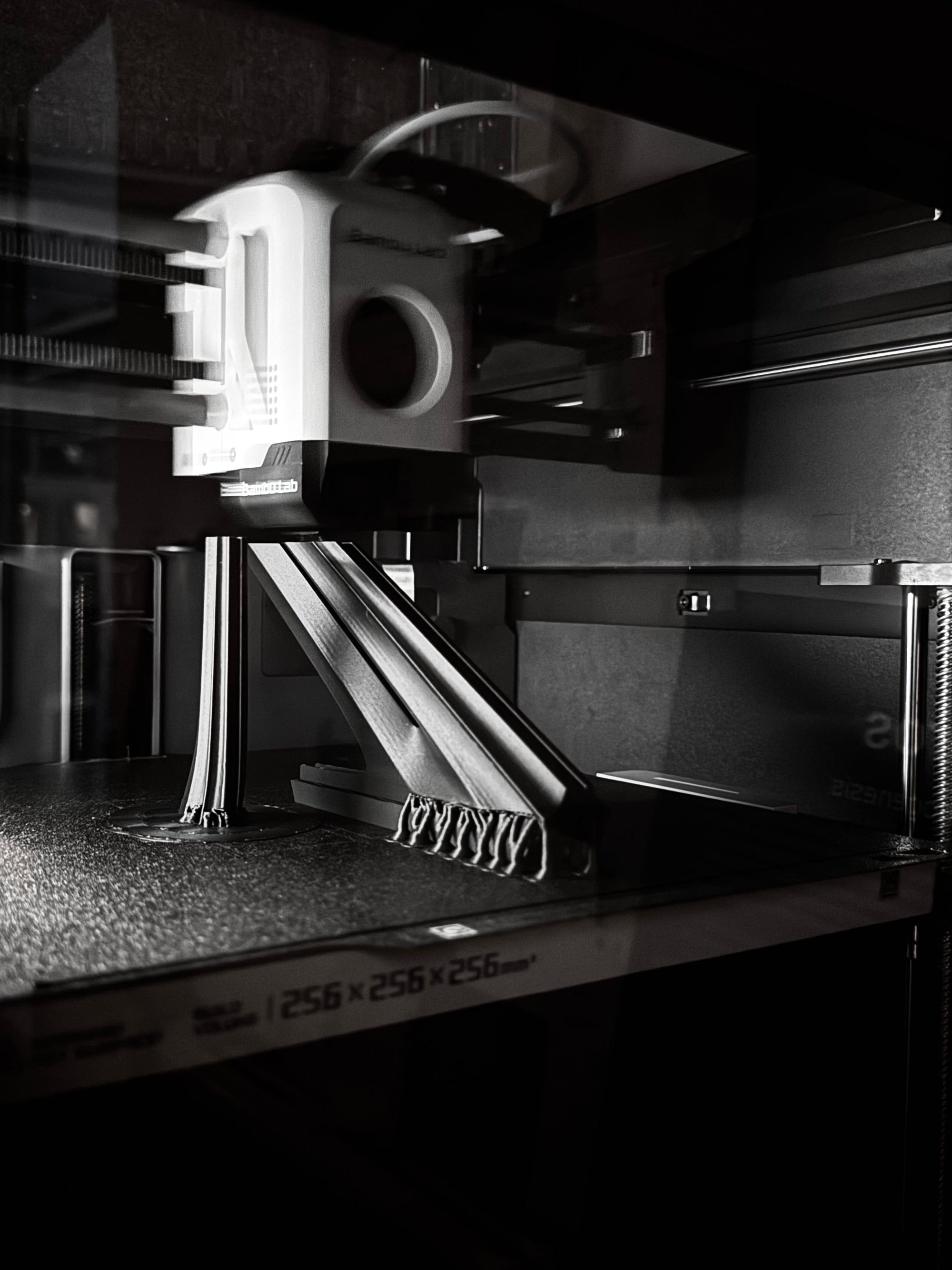
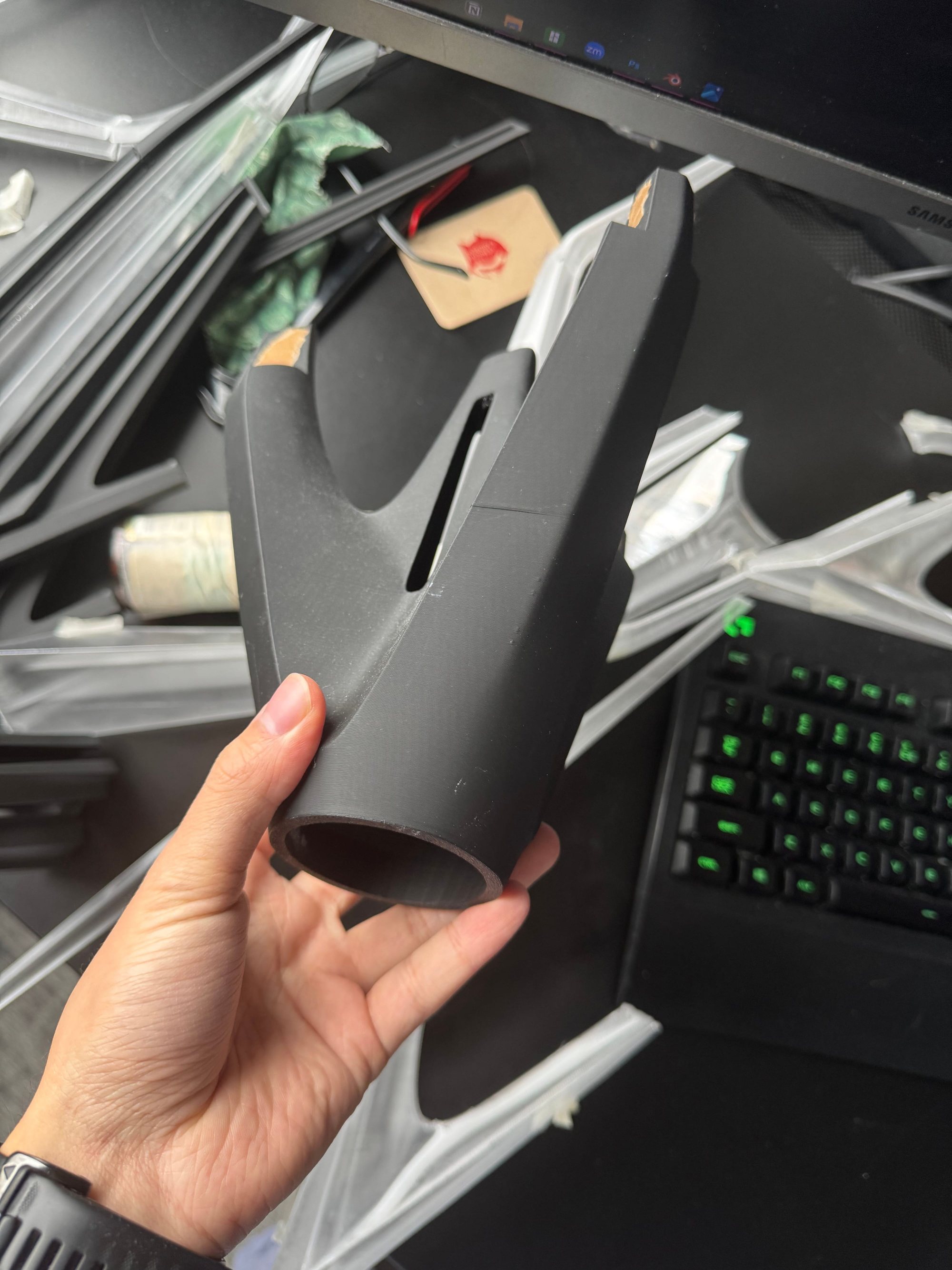
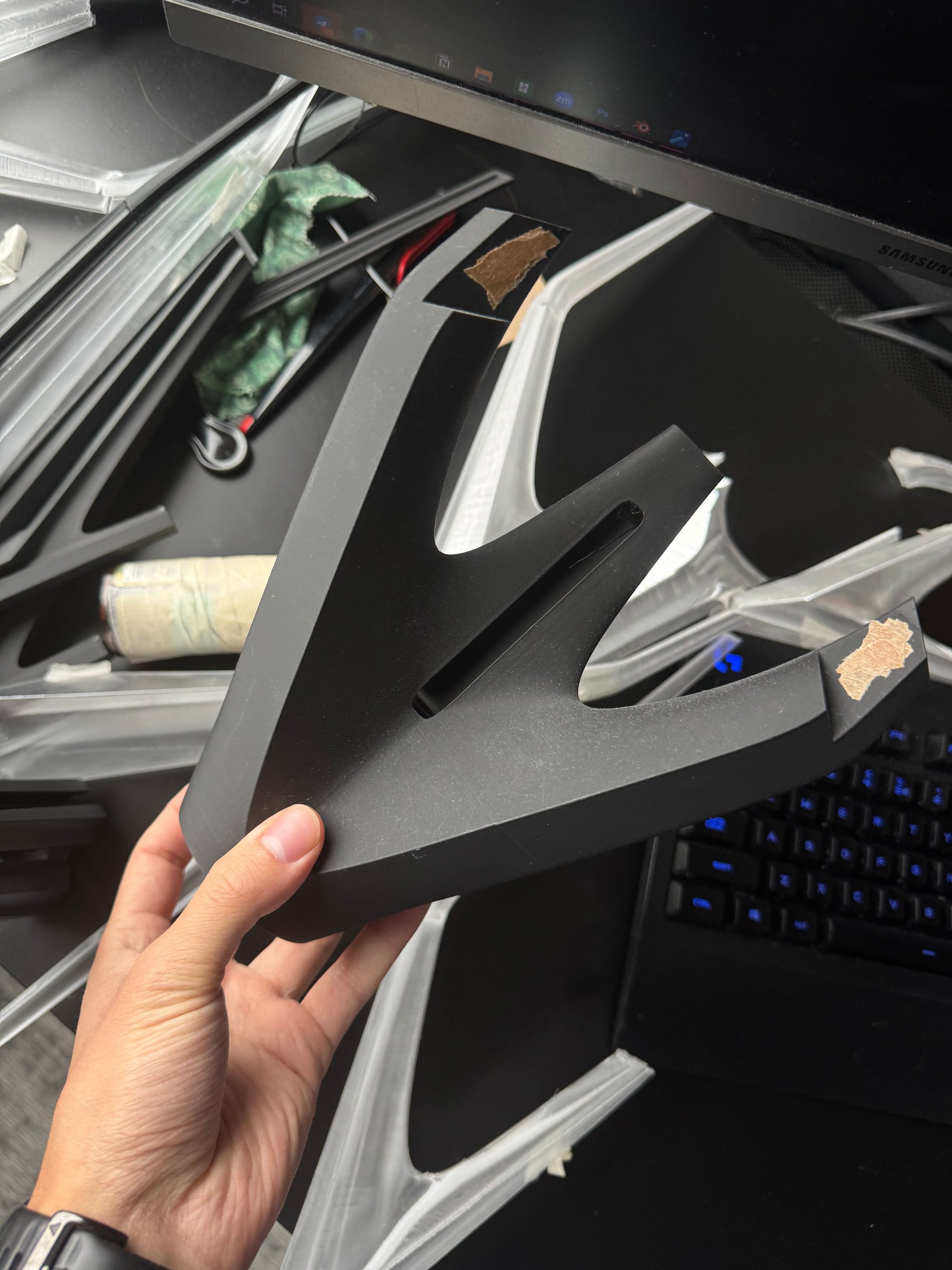
Fabricated on a Bambu Lab P1S with a combination of Matte Black PLA and Translucent PETG, the physical prototype materializes the digital model, bridging the gap between virtual concept and tangible spatial form

3d printed prototype of Vertebralone of the 3d printed parts of the Vertbral Project
Partly assembled Vertebral on Kyryll Dmytrenko's desk, with blender model on the background
3d printer is working on one of the parts of Vertebral
Vertebral, first 3d printed  prototype in the hands of Kyryll DmytrenkoVertebral, first 3d printed  prototype in the hands of Kyryll DmytrenkoVertebral, first 3d printed  prototype in the hands of Kyryll Dmytrenko
First prototype of Vertebral
LoopLoopLoop