Kyryll DmytrenkoLondon, UK --:--:--
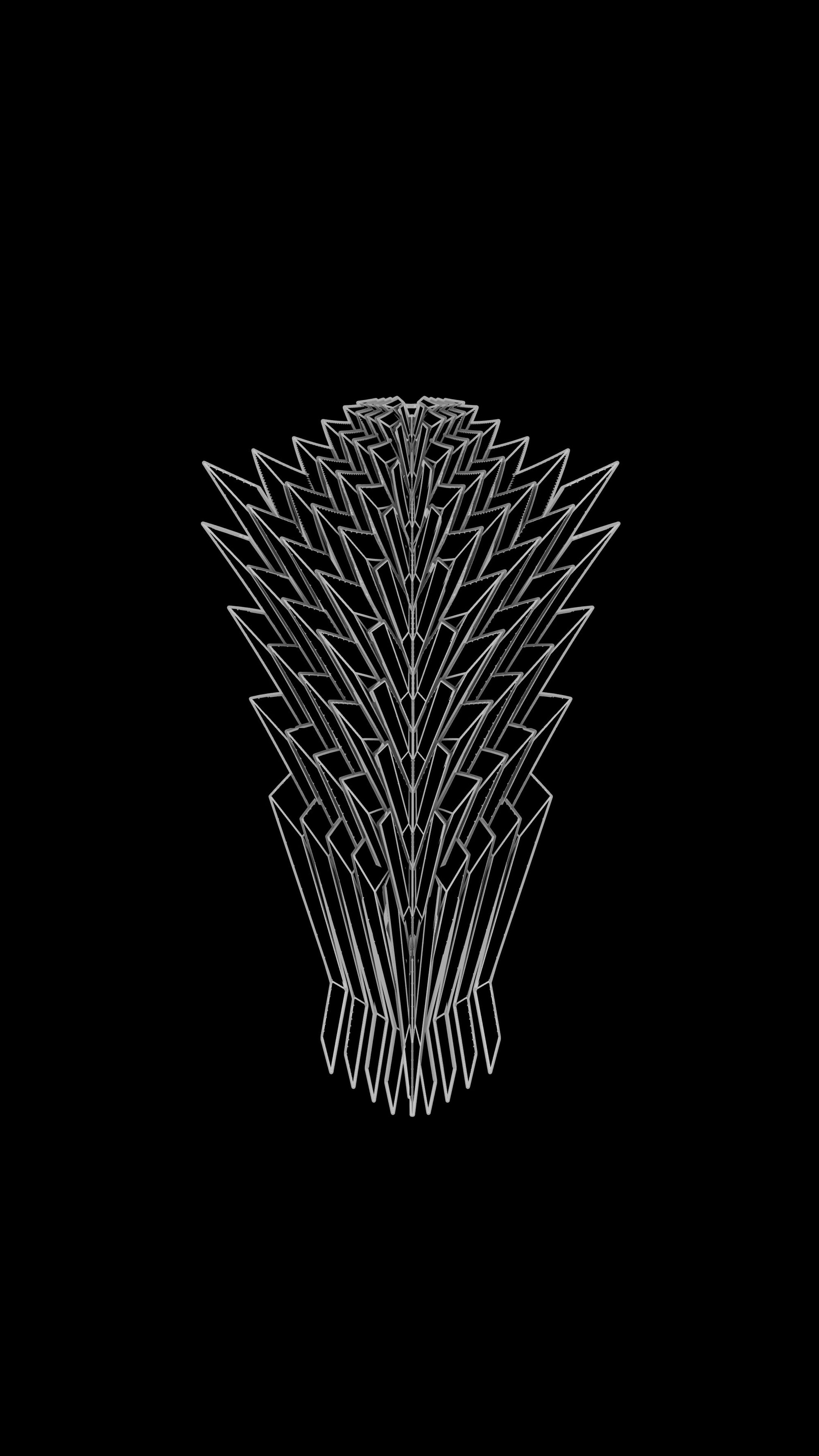
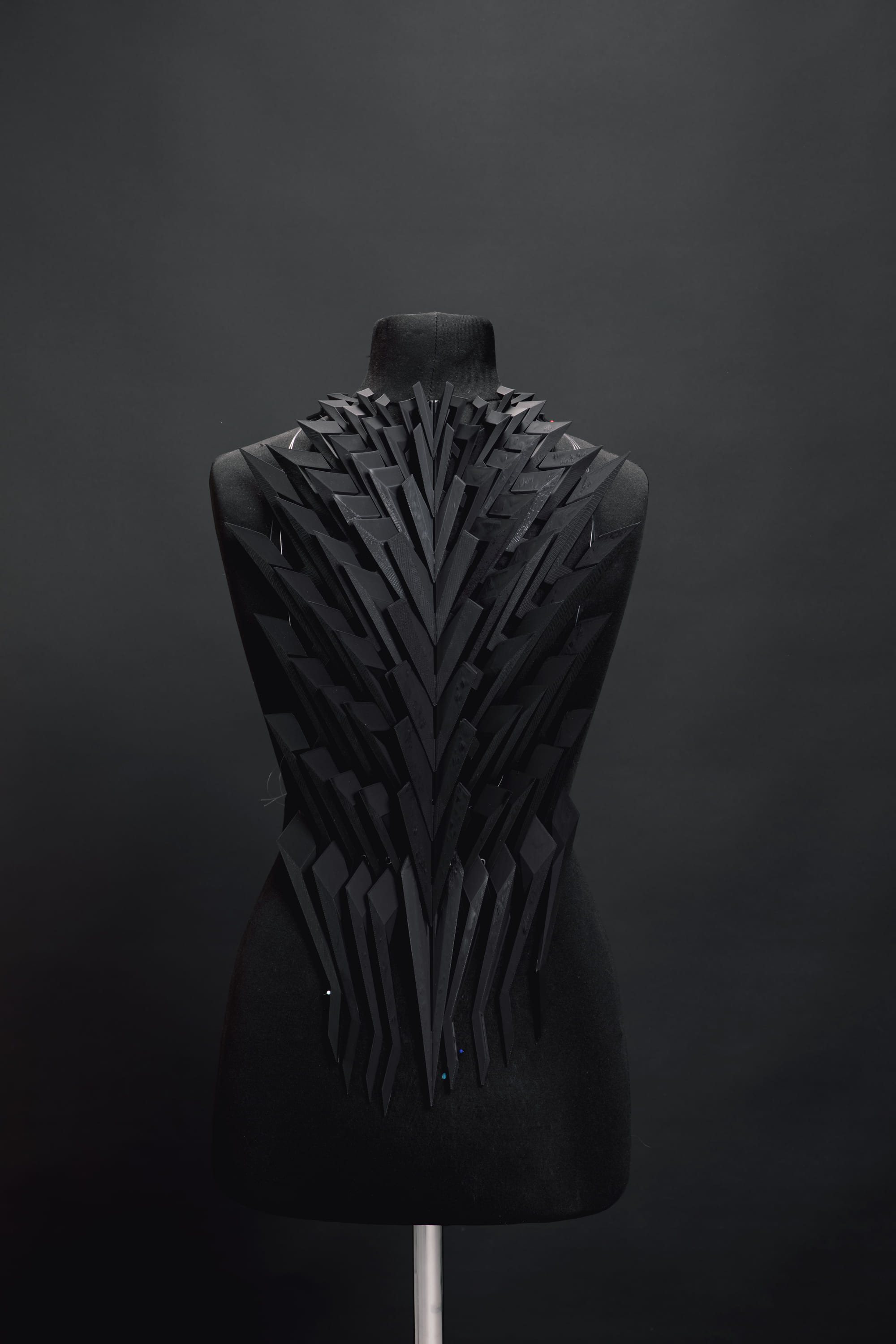
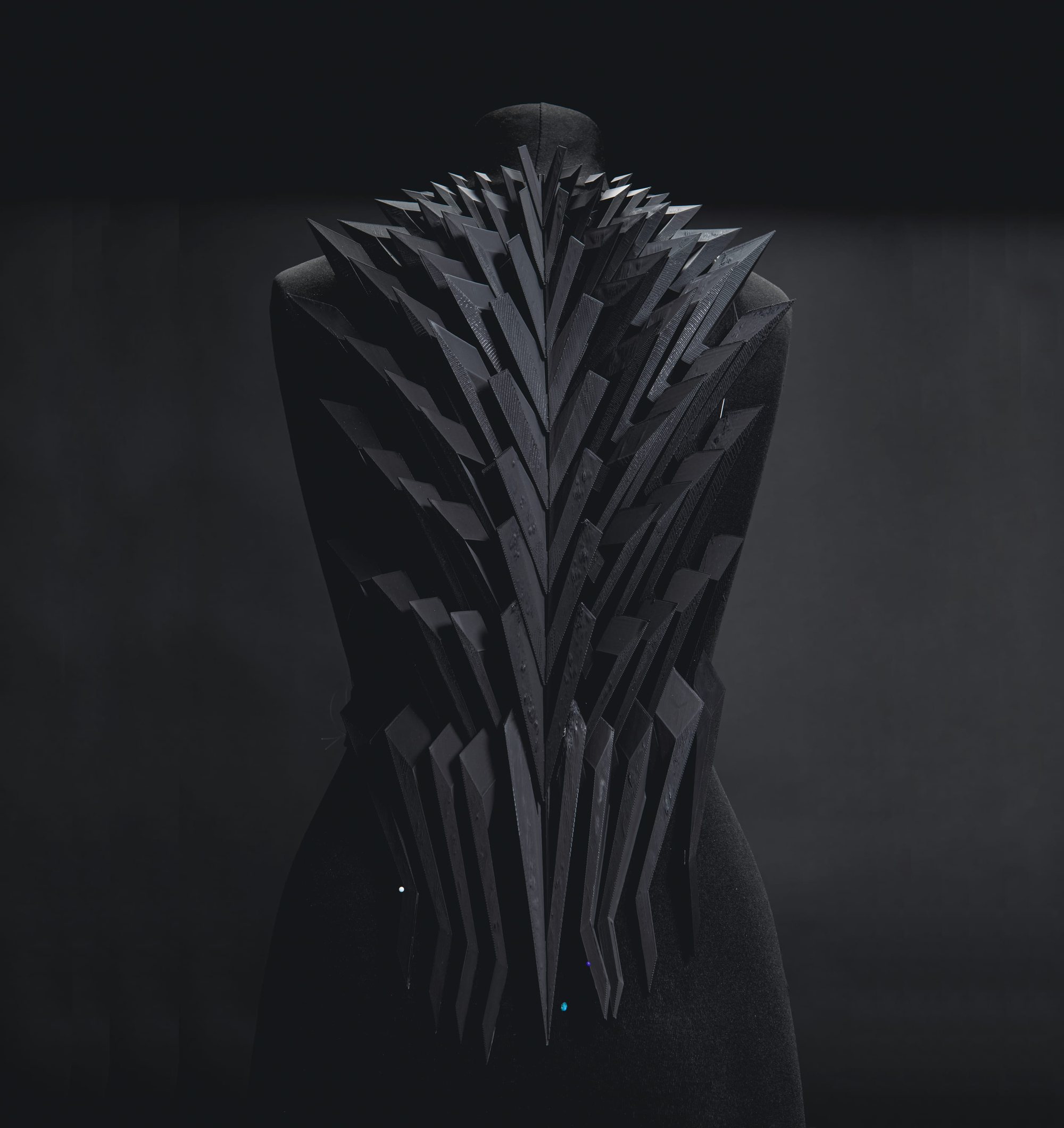
Occultatum Periculum — 3D-printed modular back armour, backlit against black
01 / 10

Premise

In a world plagued by political instabilities and an increasing focus on military endeavors, the need for accessible, protective, and comfortable body armor has never been more urgent.

What if there was an armor that combined expanded coverage area with higher flexibility? Moreover, imagine if this armor could be swiftly 3D printed or repaired on the spot, precisely when it is needed the most? Could it save more lives?

Traditional body armor designs consist of flat steel plates that only partially shield the torso. While these plates offer a formidable defense, weighing approximately 15 kilograms, they come at the cost of mobility, flexibility, and fatigue.

Drawing inspiration from the natural world and applying the principles of biomimicry, this project delves into the possibilities of designing an armor system based on the seahorse's remarkable adaptability. By deconstructing the rigid plate into smaller modular units, the envisioned armor provides a significantly larger protection area for the body. It incorporates shock-absorbing properties to mitigate impacts, all while remaining flexible and lightweight.

One of the most intriguing aspects of this design is its potential for rapid 3D printing and repair capabilities directly in the heat of warfare. Within a matter of hours, the armor can be produced or restored on-site, ensuring widespread accessibility and high reusability.
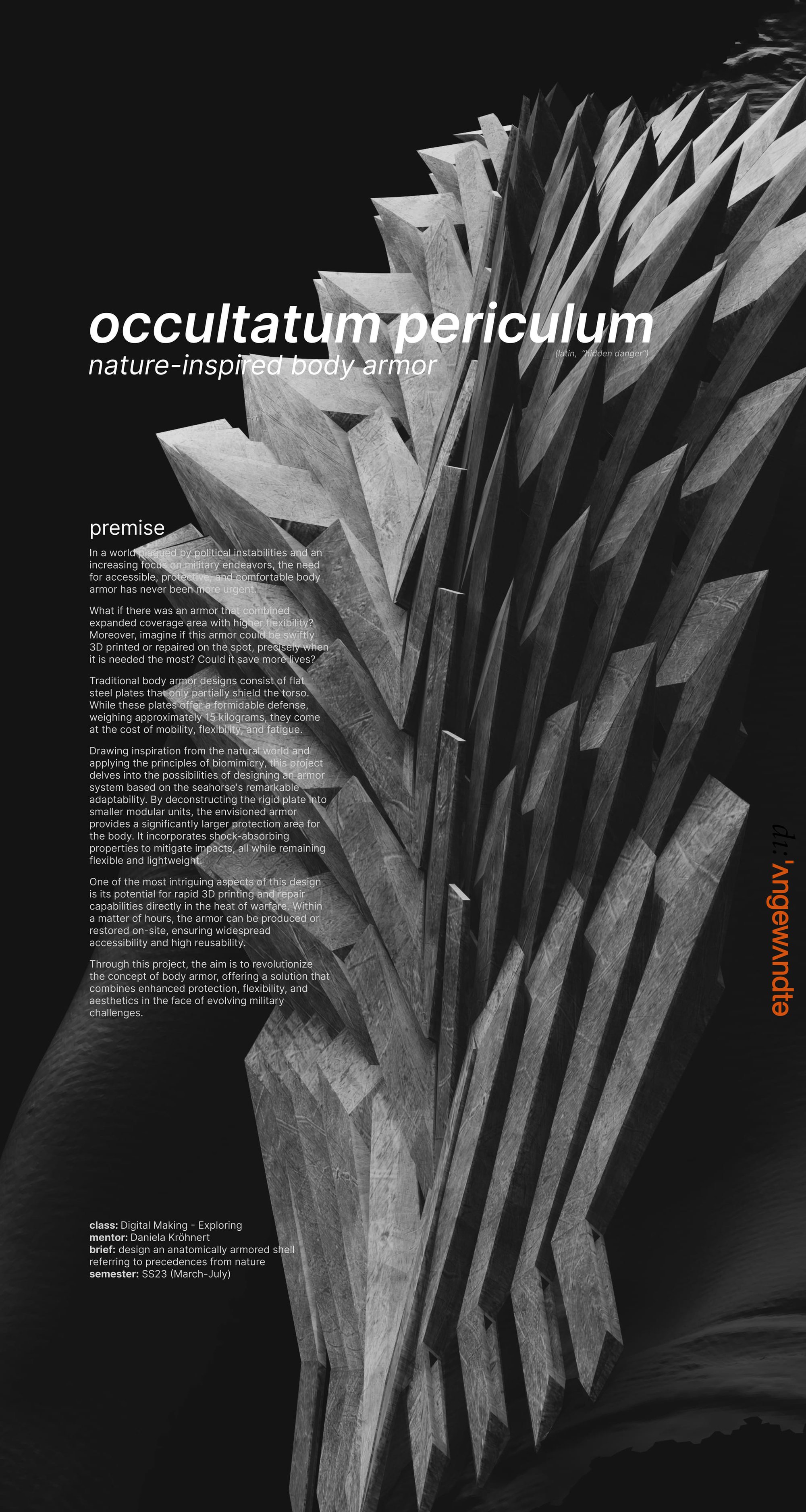
Title board: Occultatum Periculum, with the premise text
02 / 10

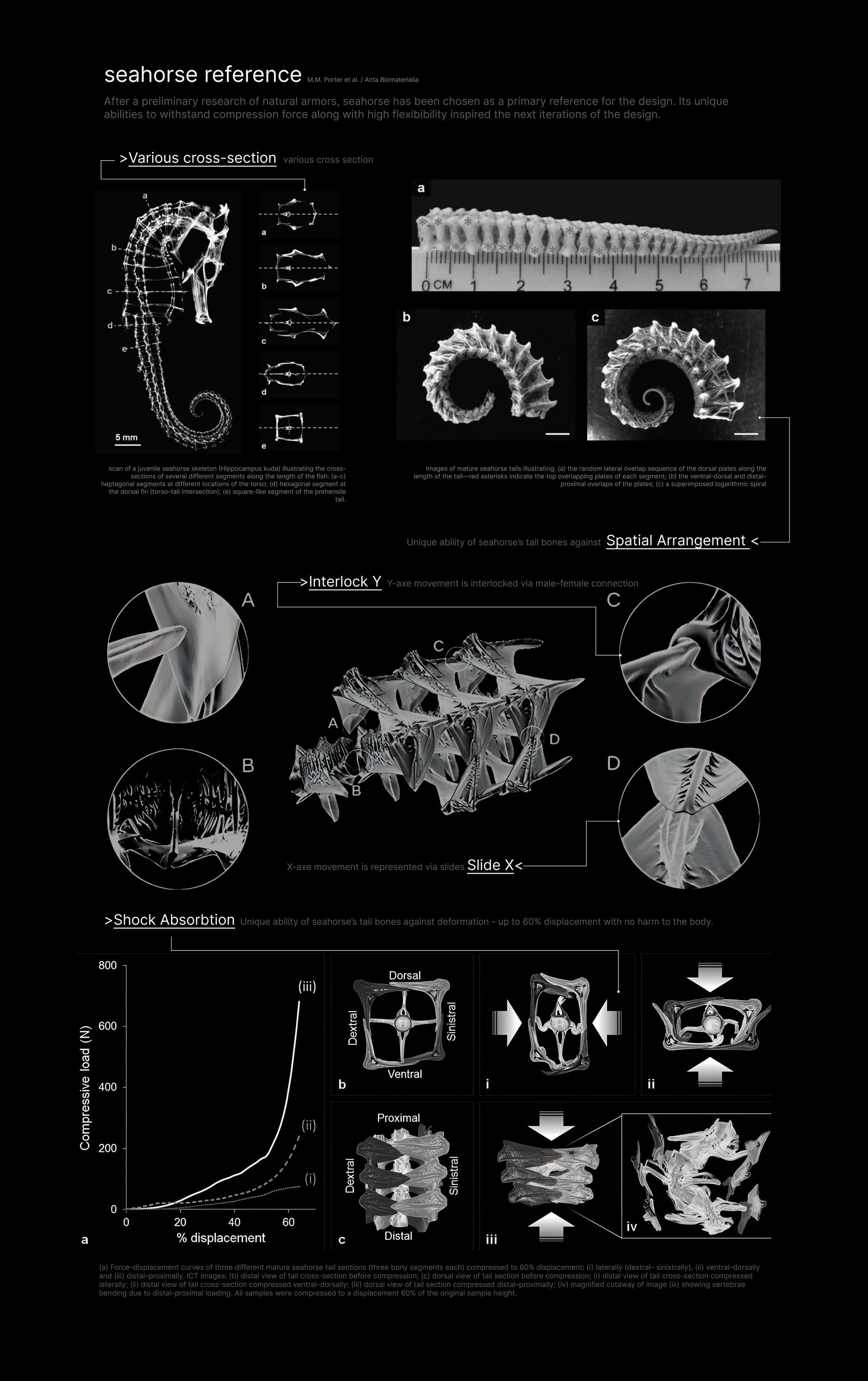
Seahorse reference

After a preliminary research of natural armors, seahorse has been chosen as a primary reference for the design. Its unique abilities to withstand compression force along with high flexibility inspired the next iterations of the design.

Research board on the seahorse's segmented exoskeleton
LoopLoop
03 / 10

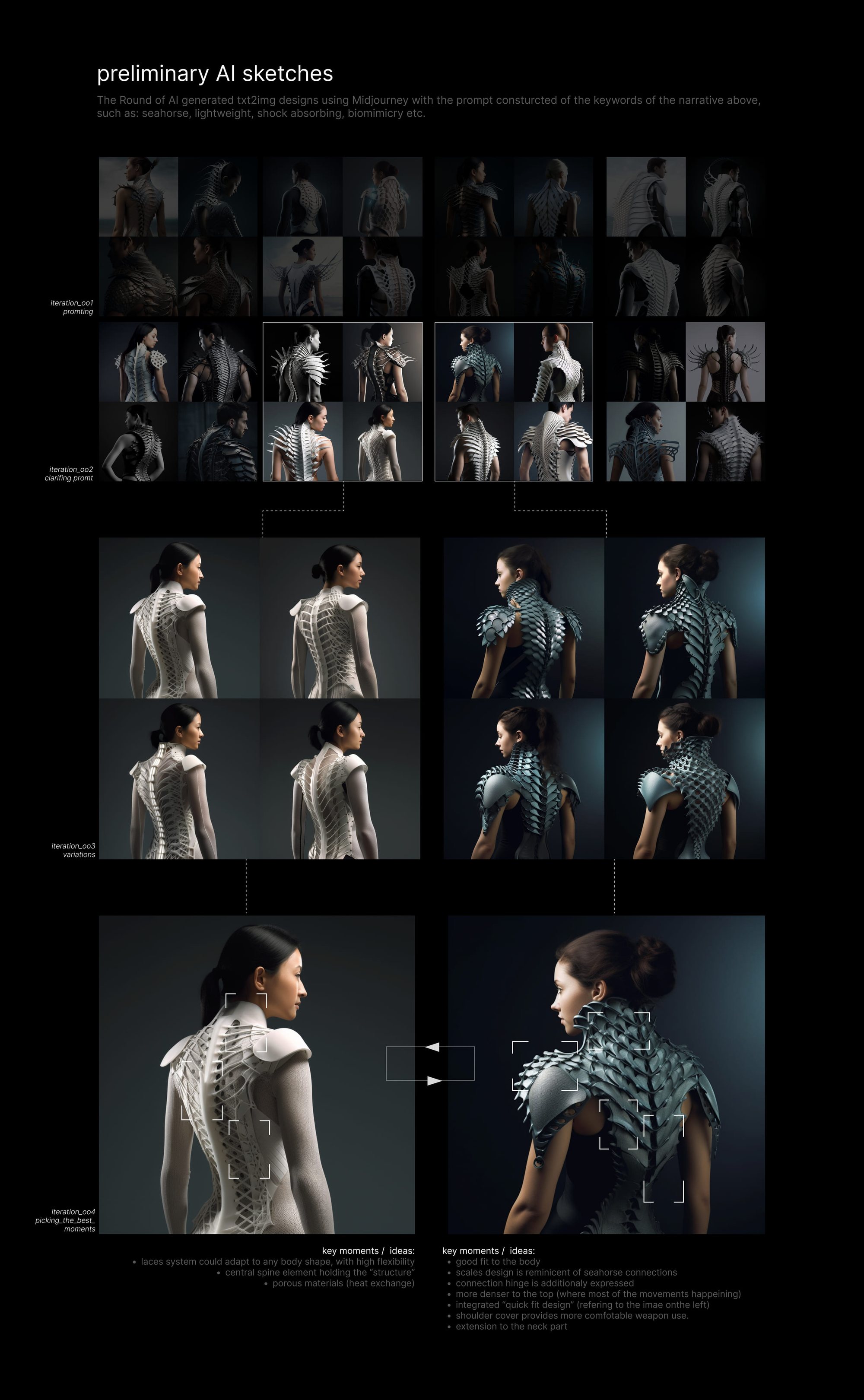
Preliminary AI sketches

The round of AI generated text-to-image designs using Midjourney, with the prompt constructed of the keywords of the narrative above, such as: seahorse, lightweight, shock absorbing, biomimicry.
Board of Midjourney studies exploring seahorse-like armour
04 / 10

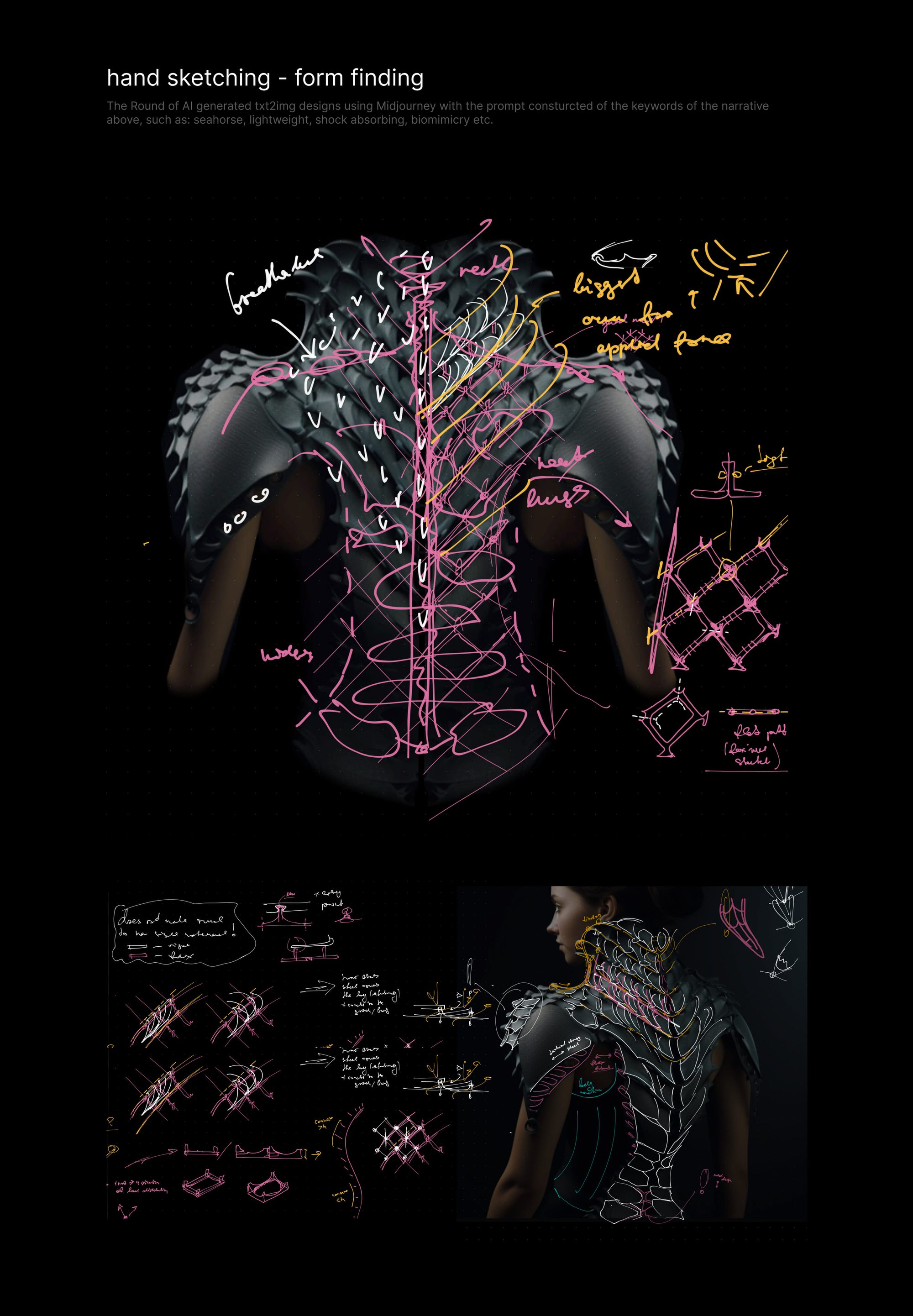
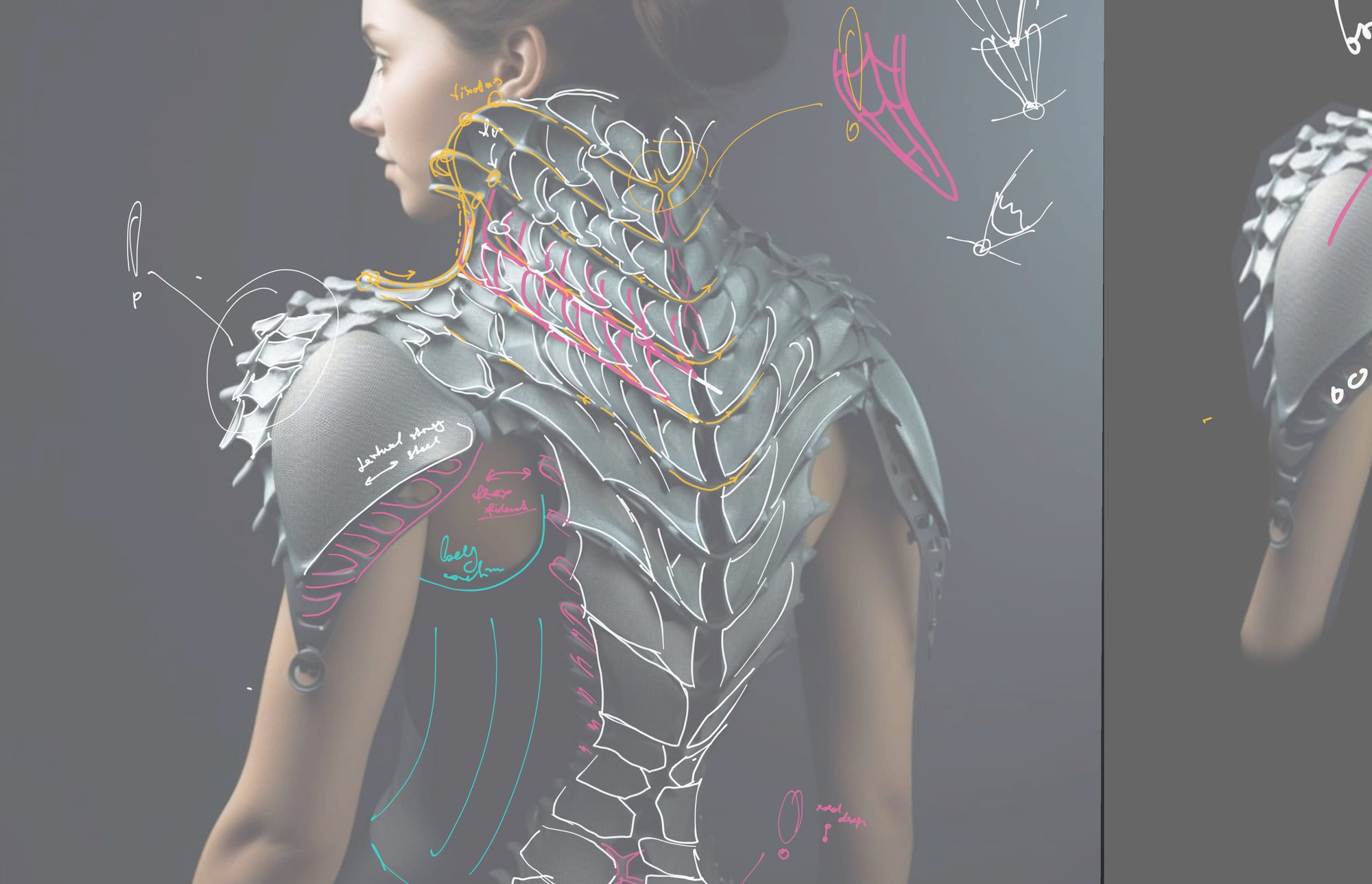
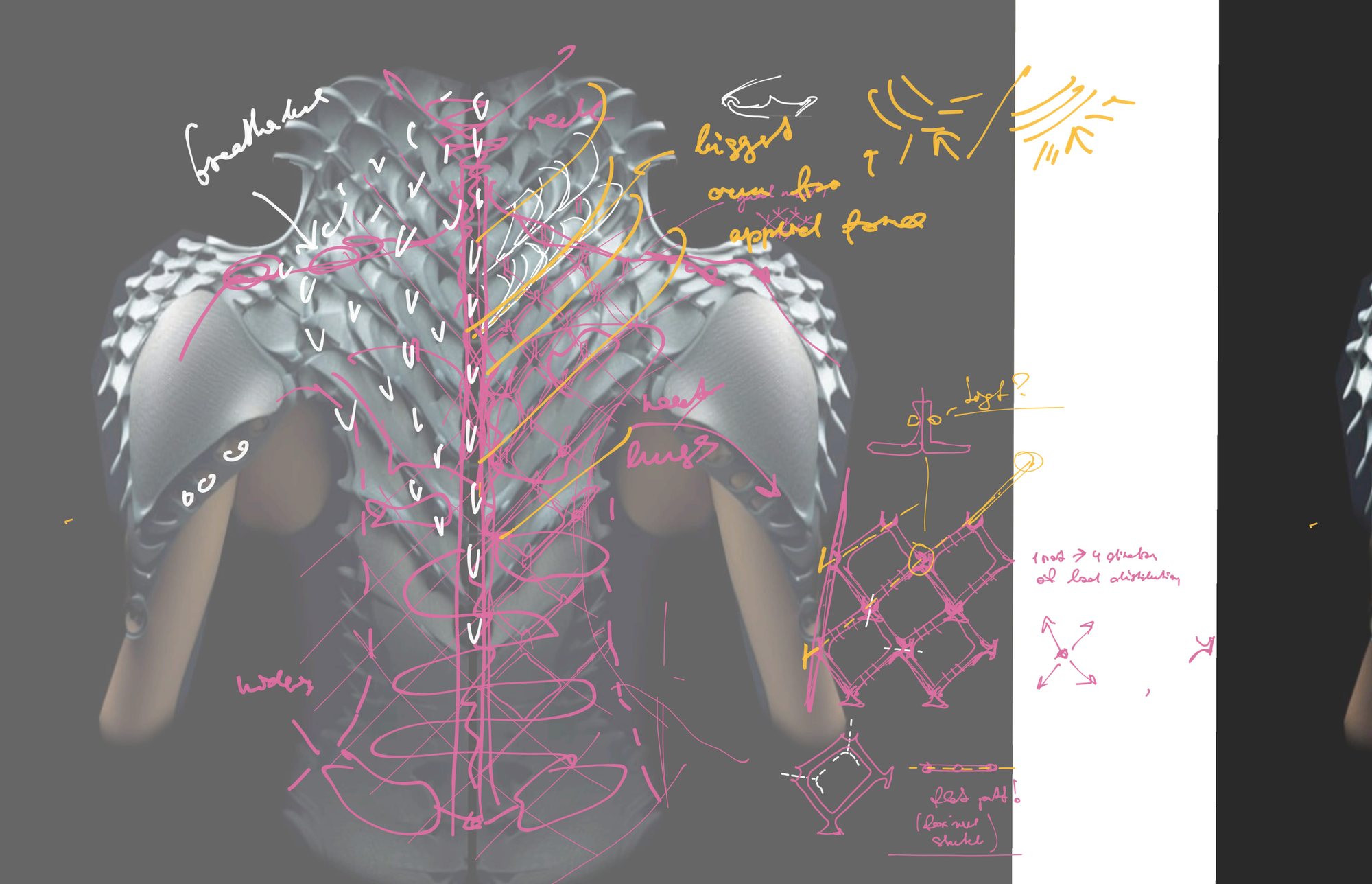
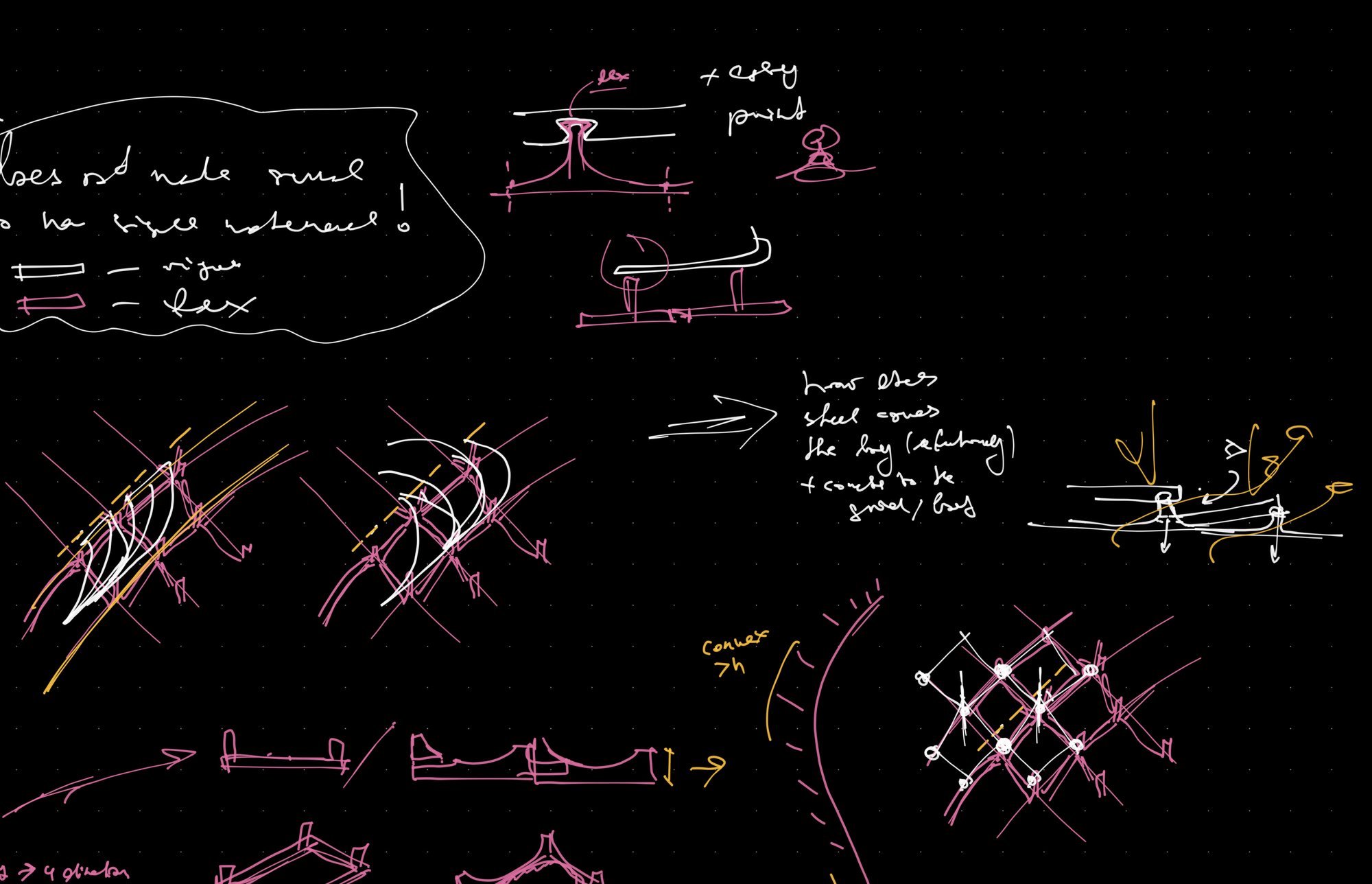
Hand sketching — form finding

Board of hand sketches searching for the module form
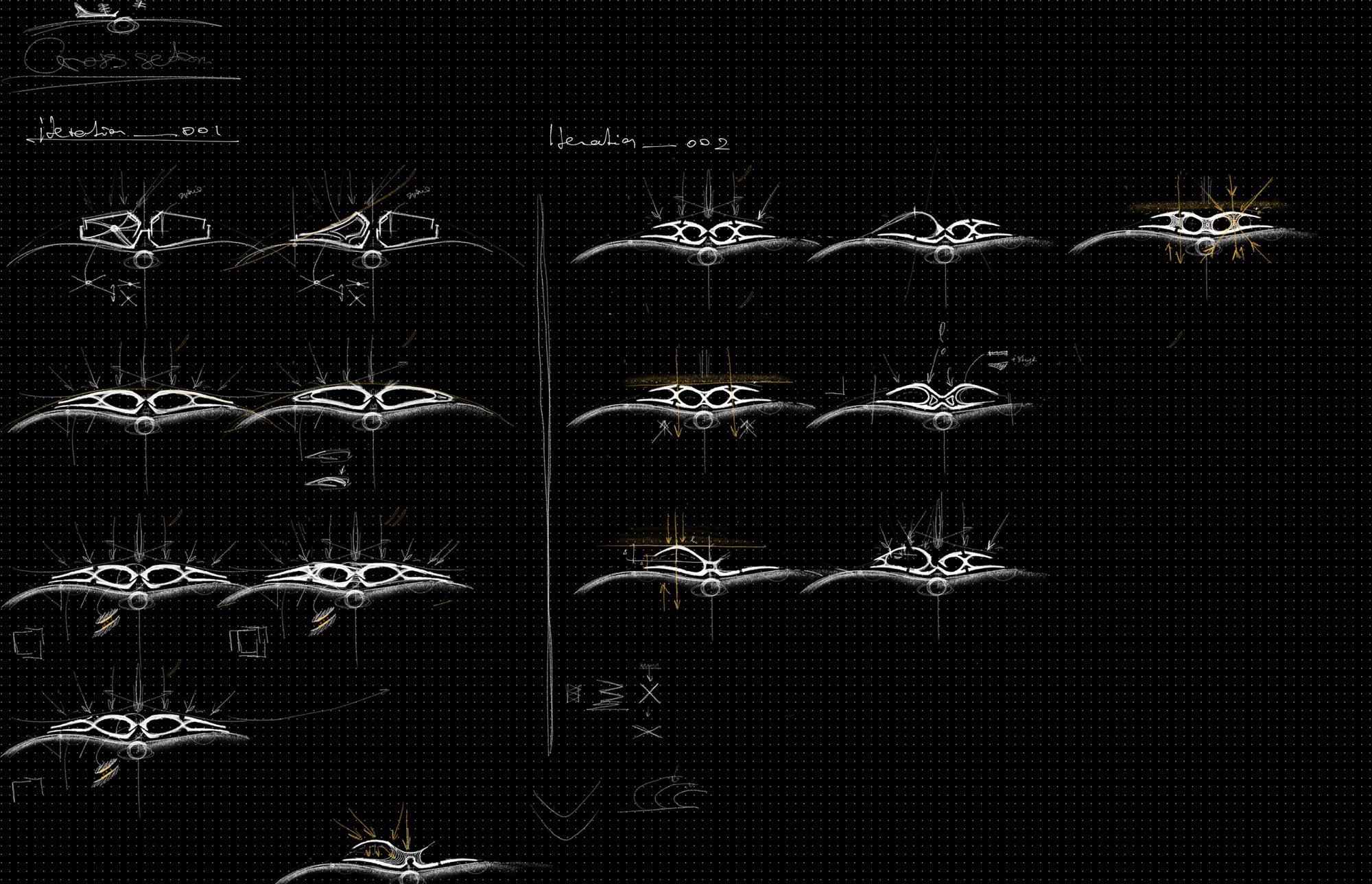
Cross-section iterations of the module, drawn white on blackFurther cross-section iterations of the module
Sketch studies of the interlocking geometrySketch studies of the spine and lacing
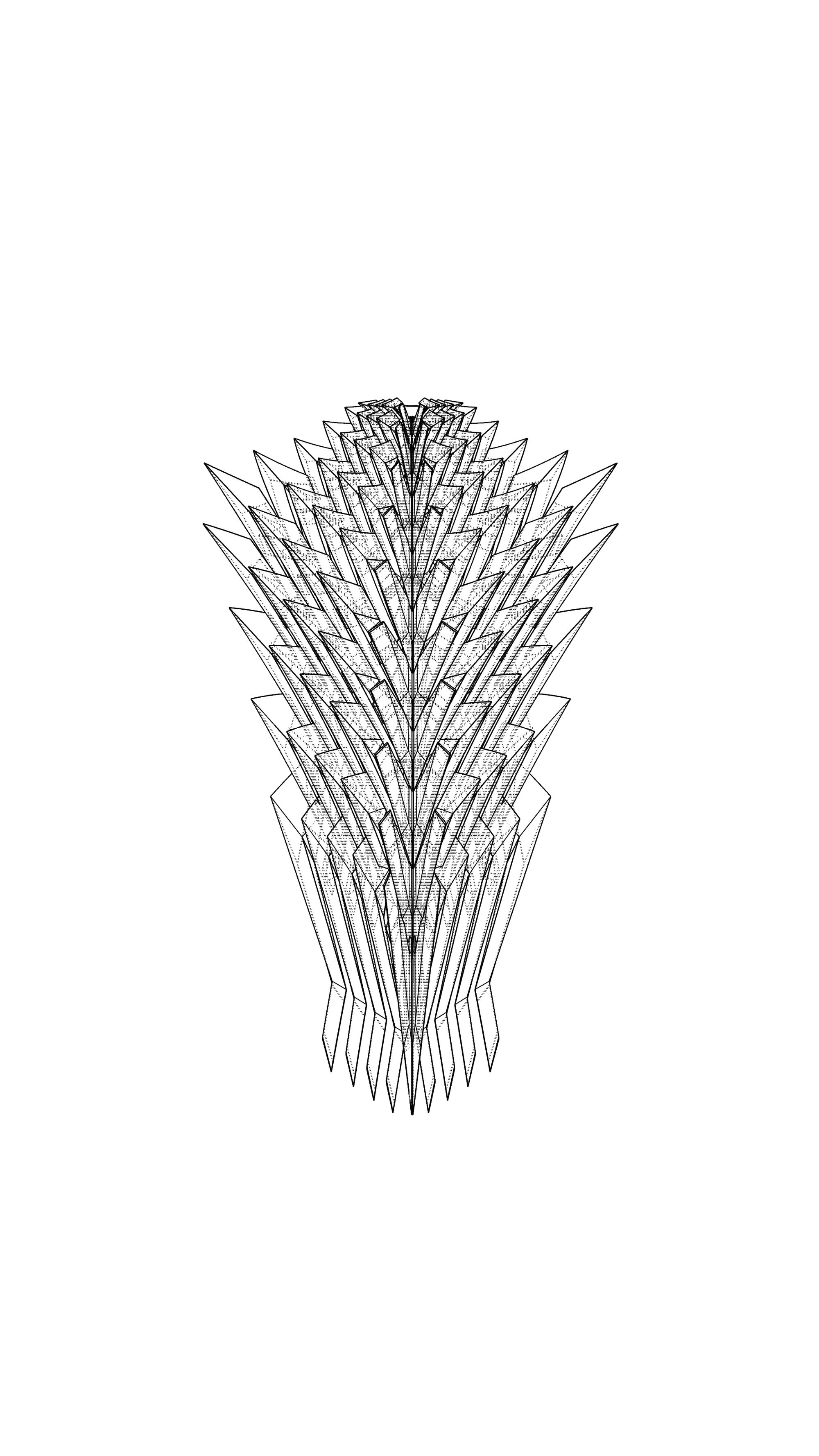
Drawing board of the armour
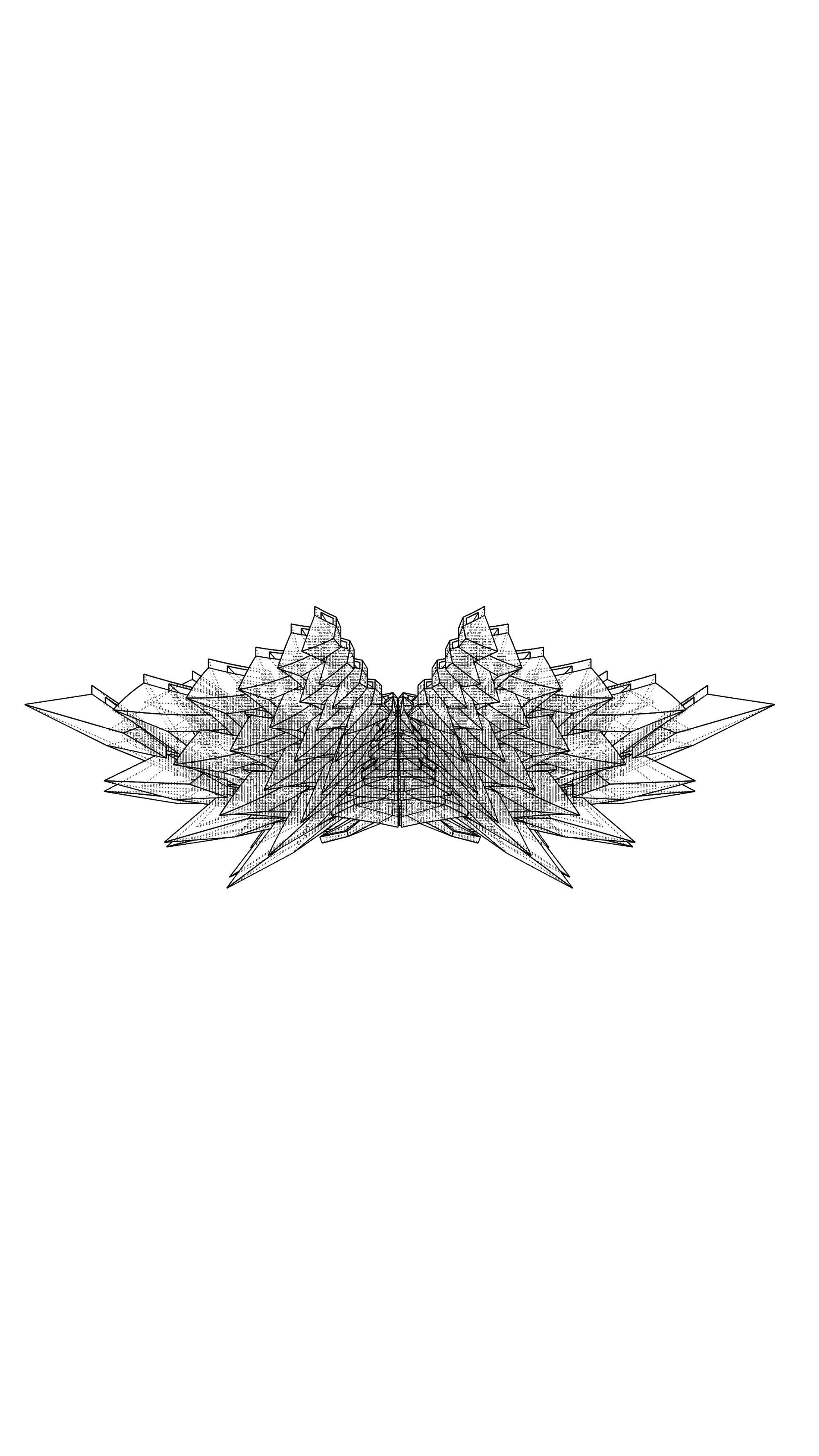
Orthographic drawing, front and backOrthographic drawing, rendered versionOrthographic drawing, top view
05 / 10

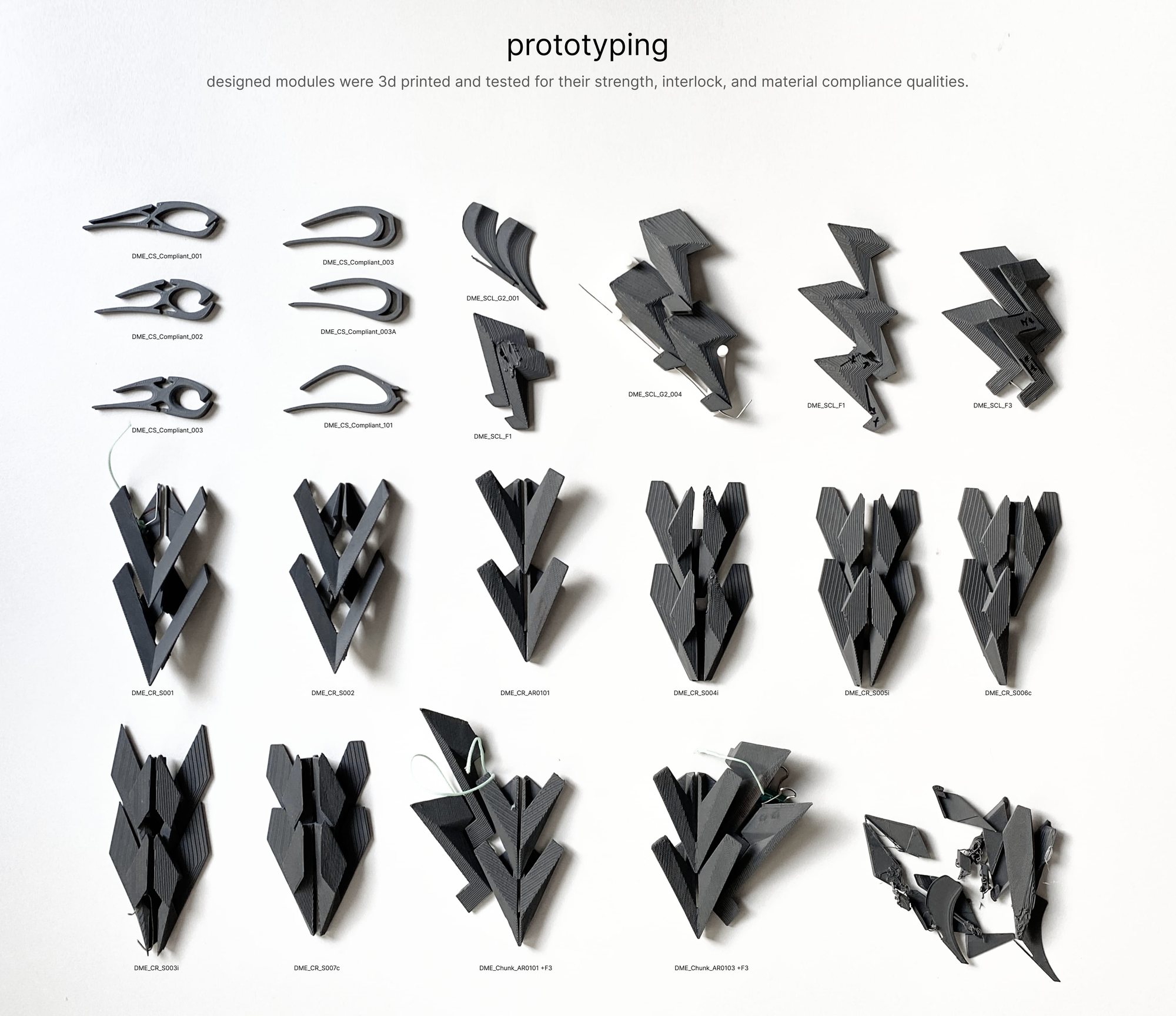
Prototyping

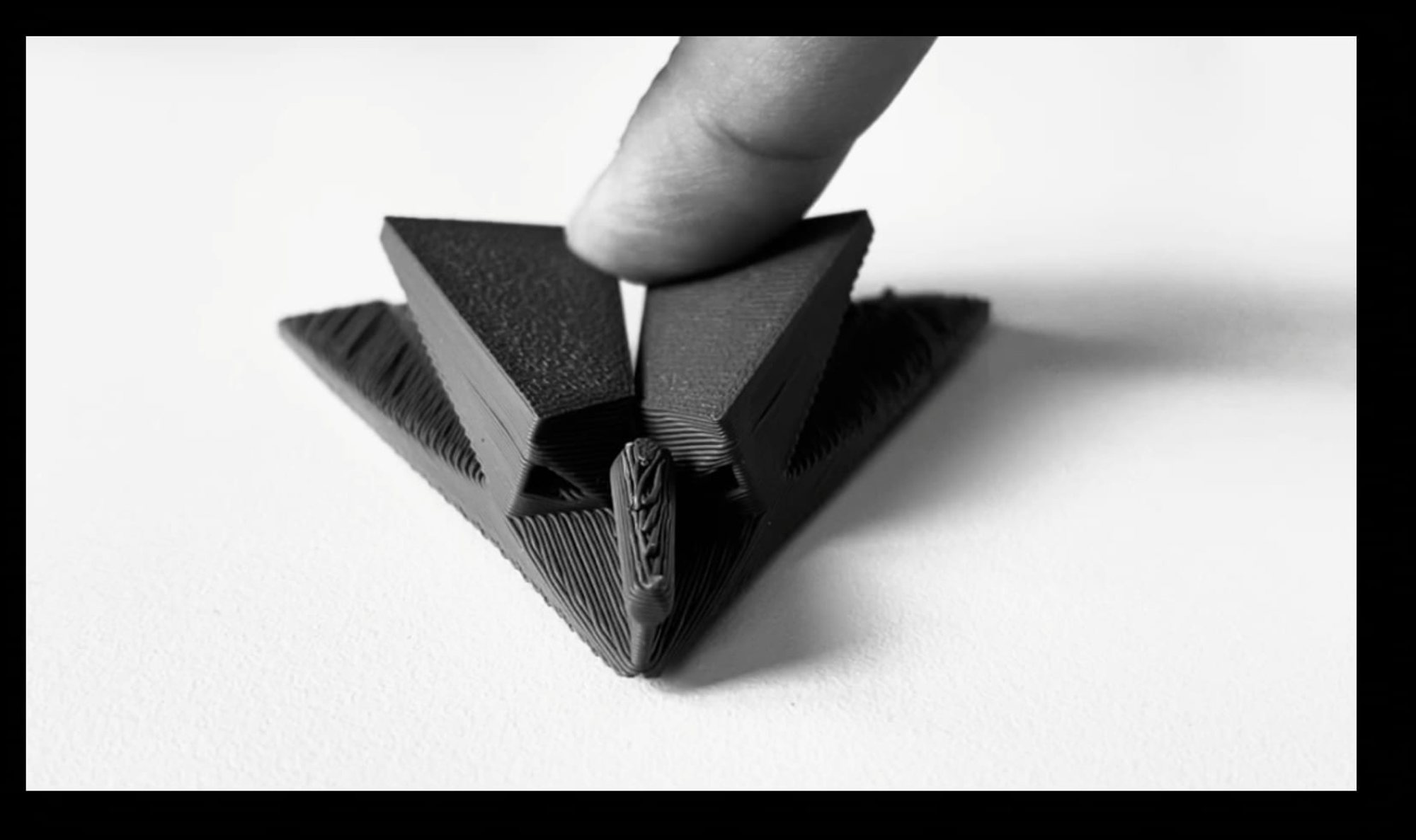
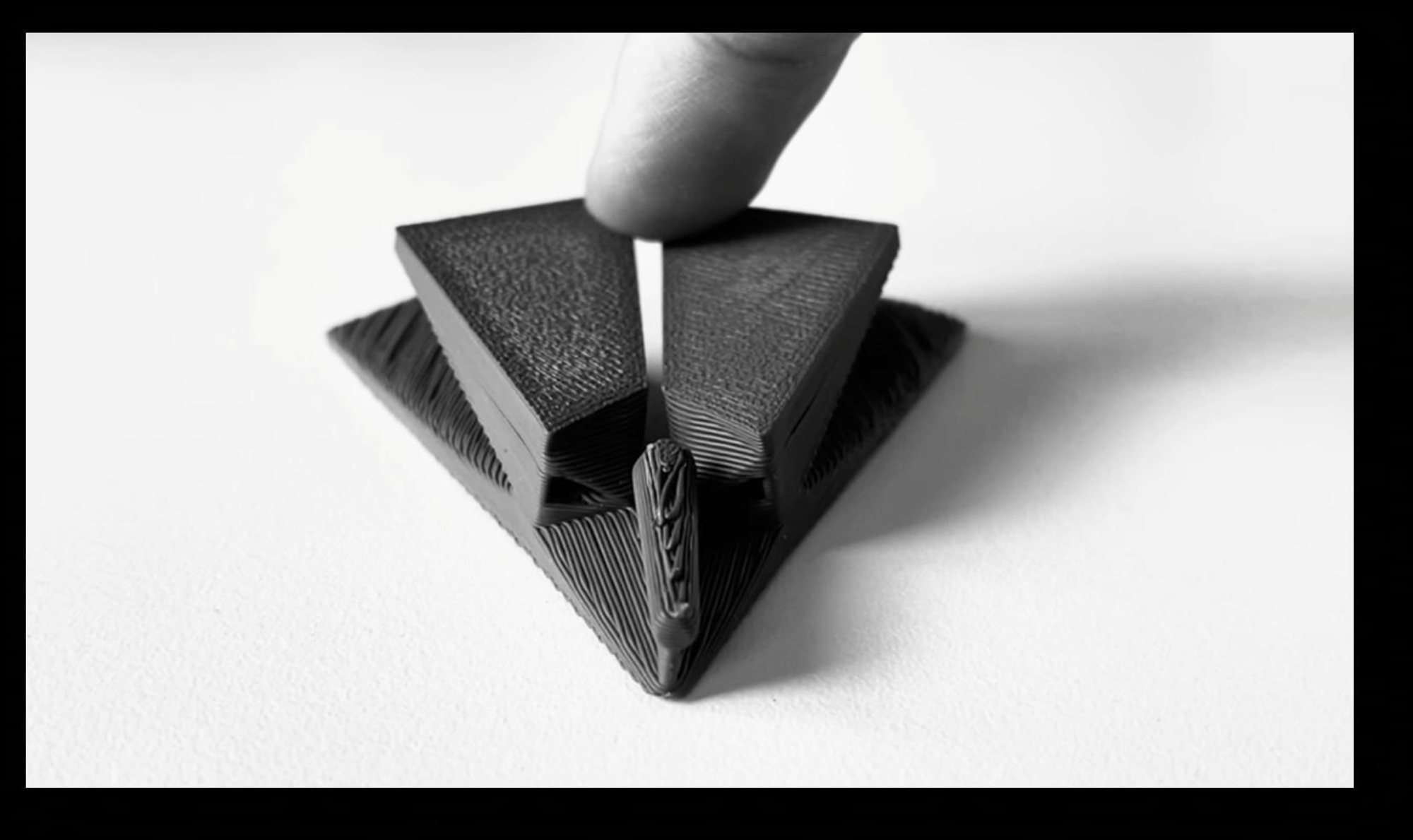
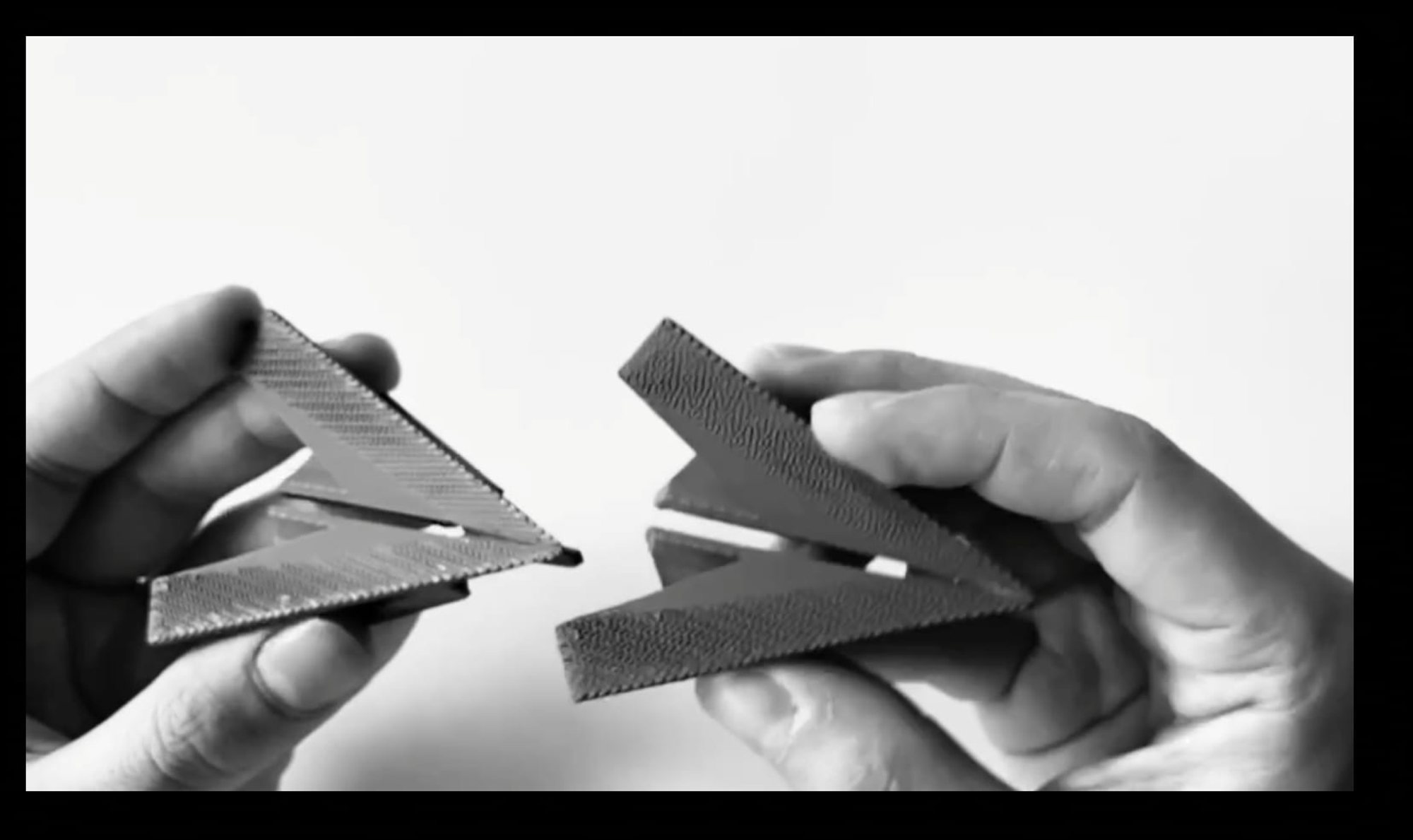
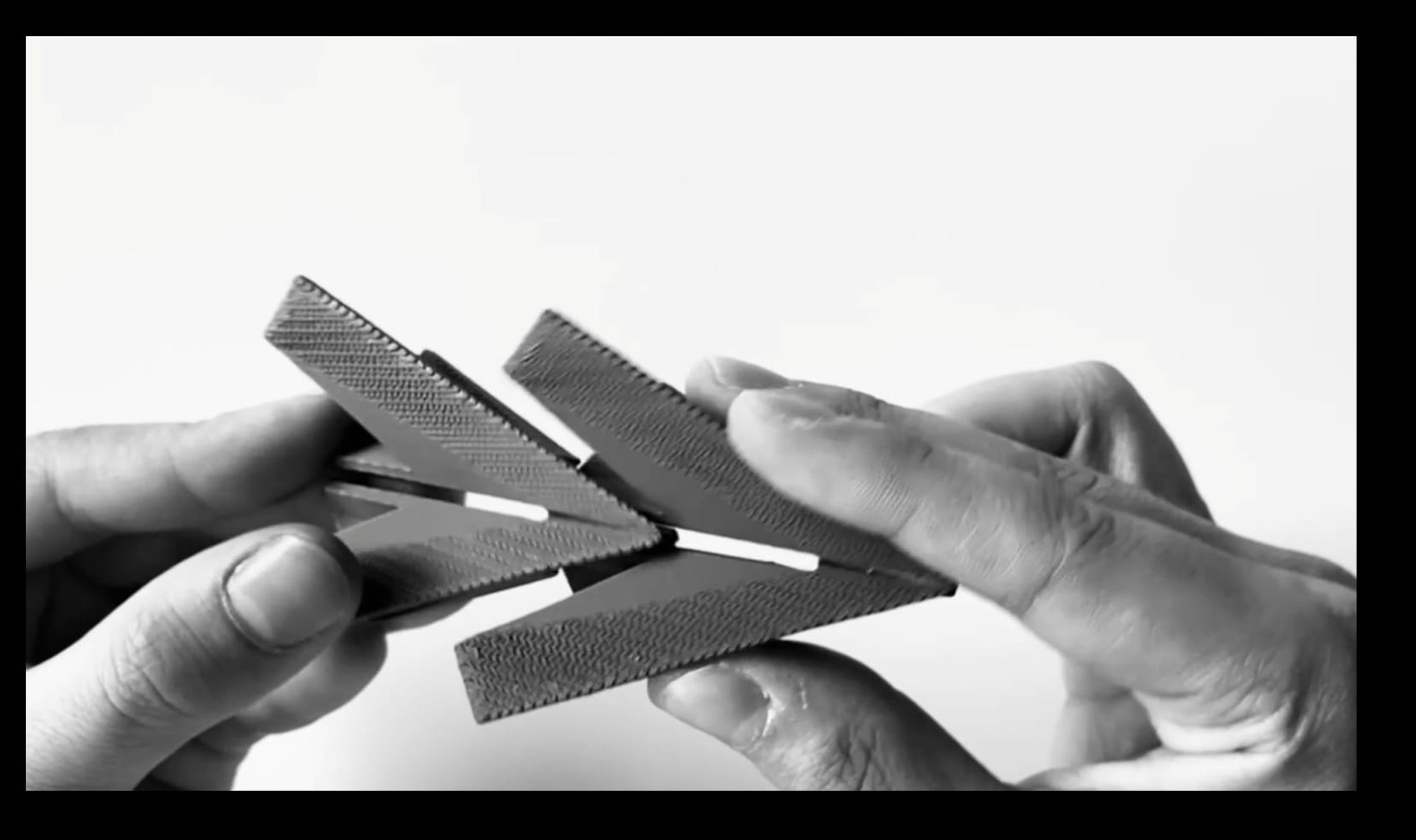
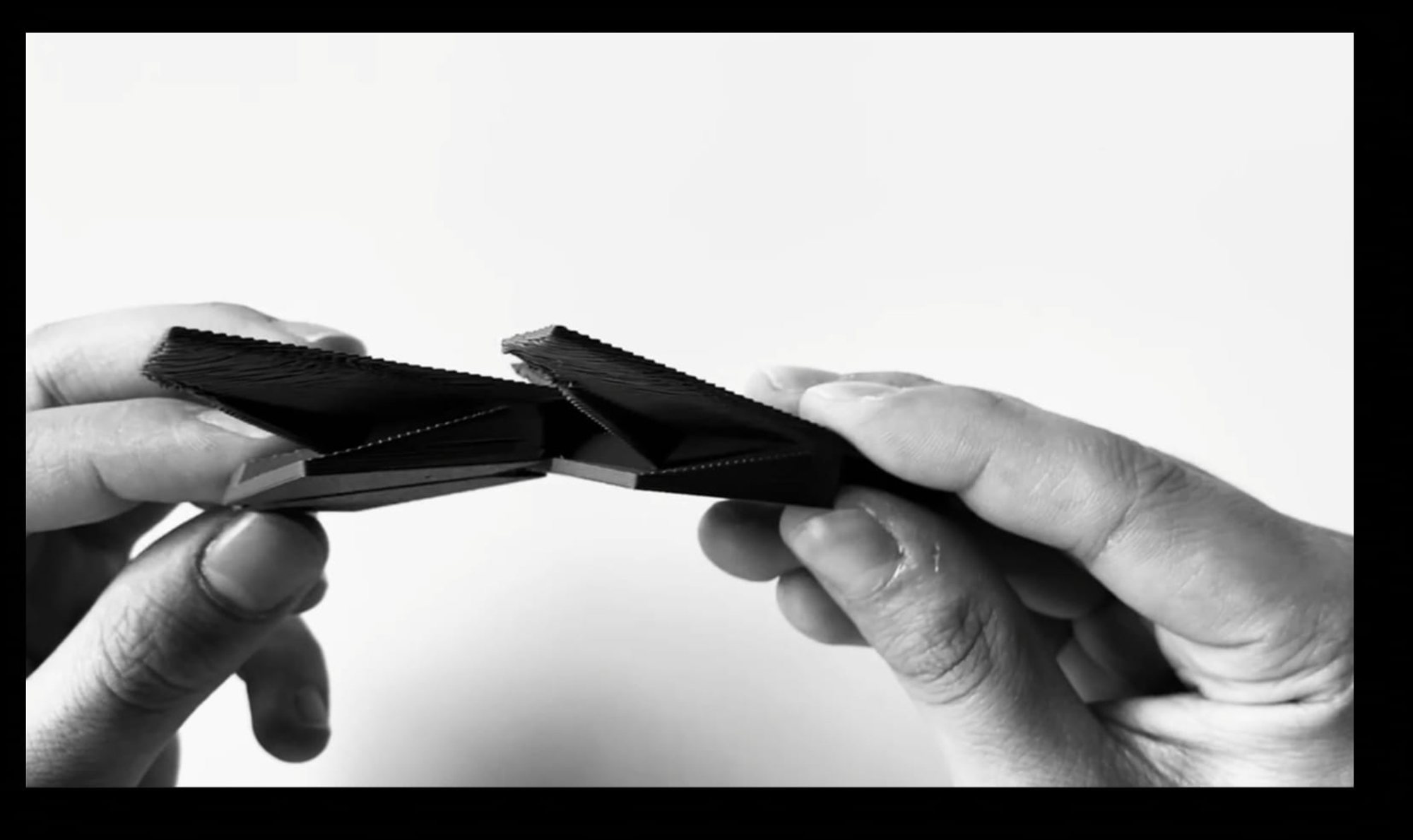
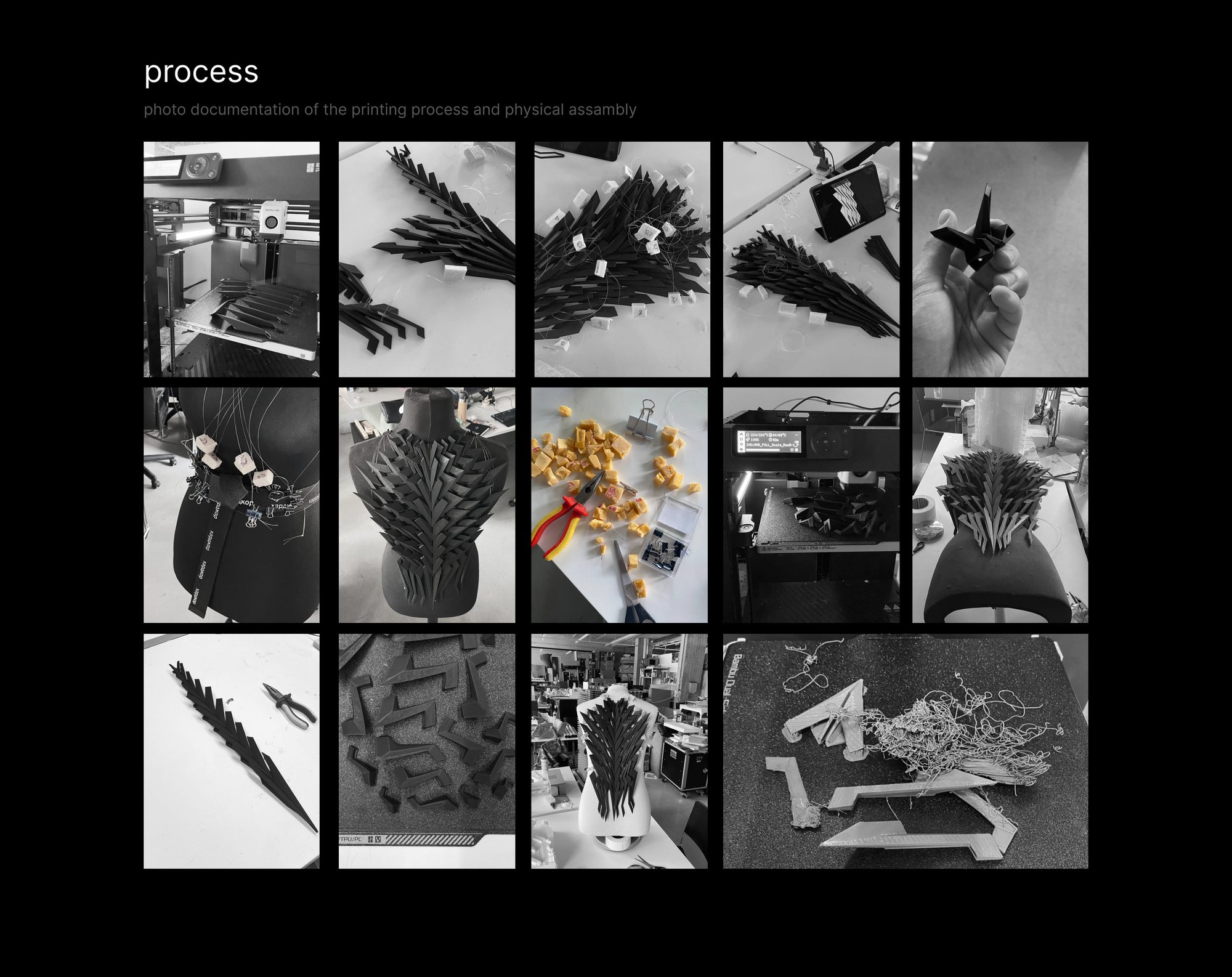
Designed modules were 3D printed and tested for their strength, interlock, and material compliance qualities.
Board of 3D-printed module prototypes
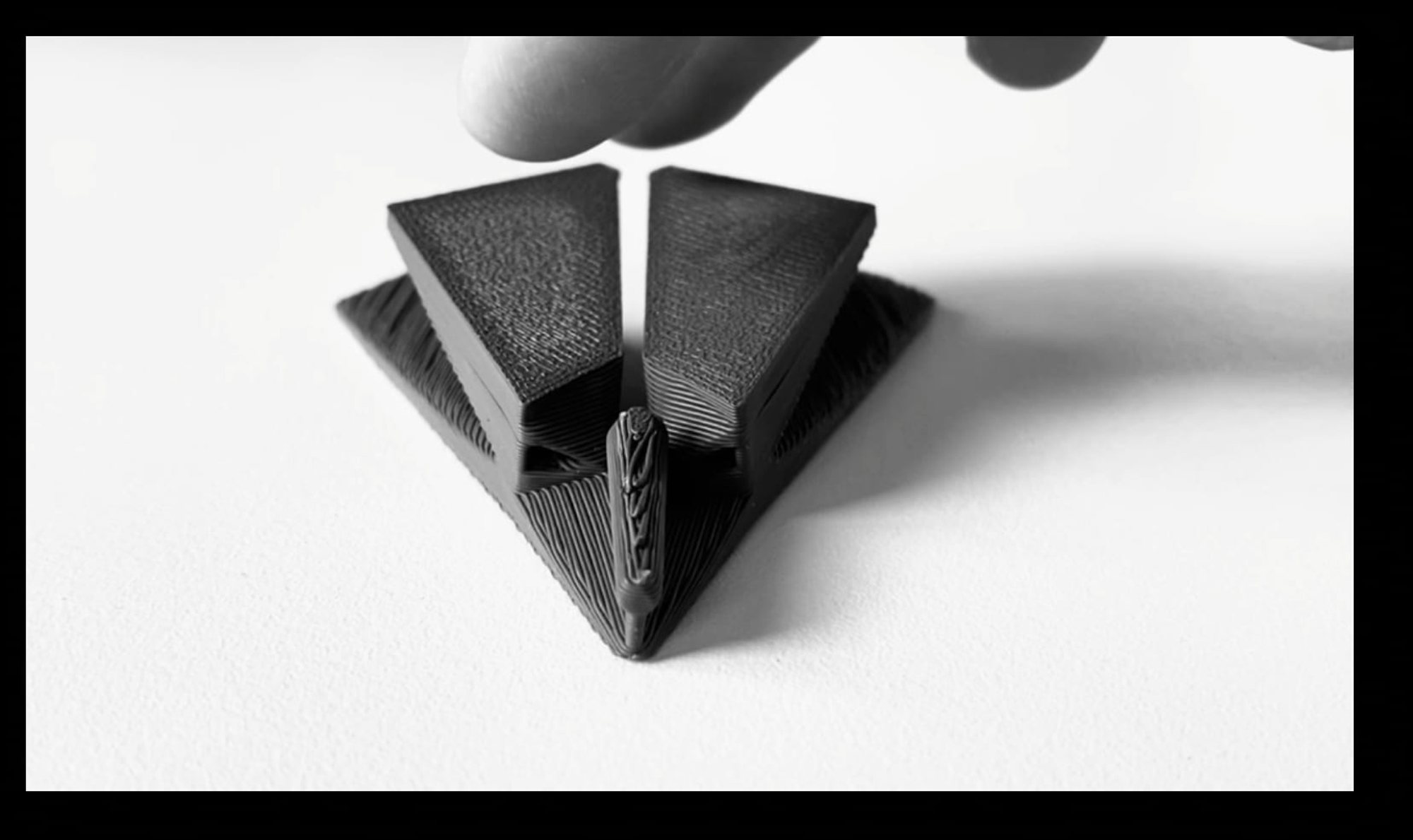
Two printed modules being interlocked by handPrinted module held between fingersClose-up of the printed layer texture
Modules assembled into a short chainFlexibility of the assembled chainInterlock detail of the assembled modules
LoopLoop
LoopLoop
Compliance tests, front and back
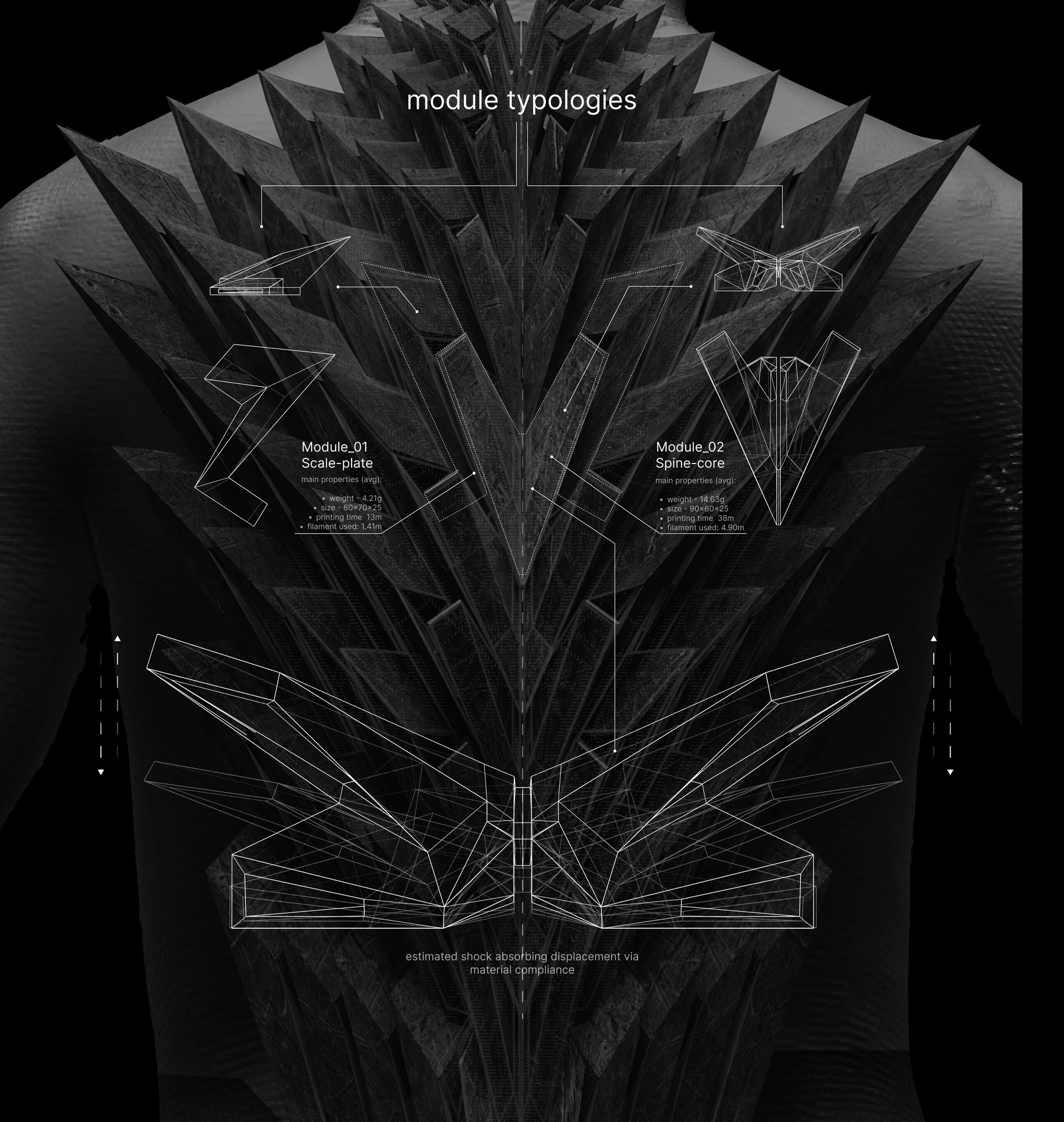
Board of the three module typologies
06 / 10

Parametric approach

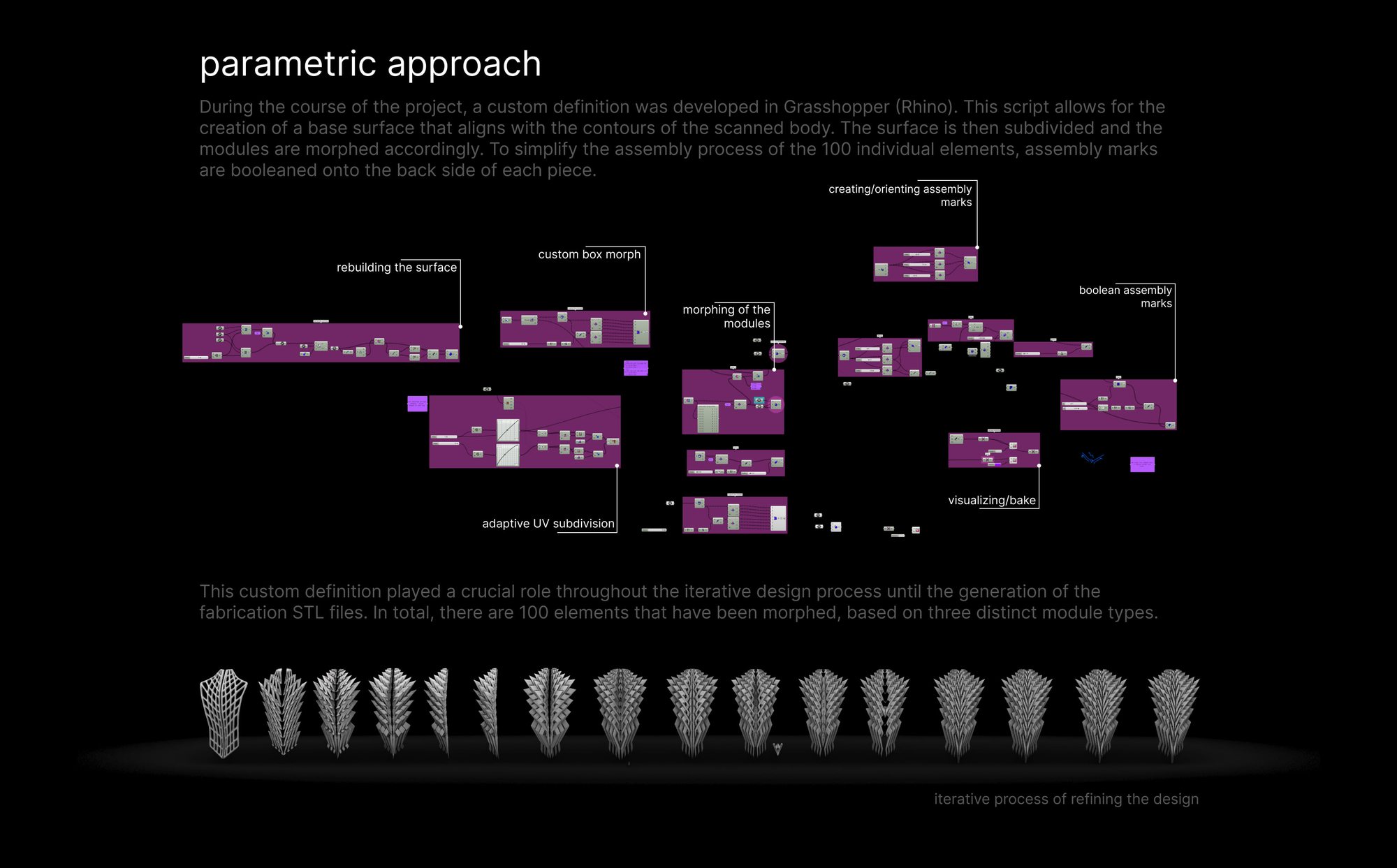
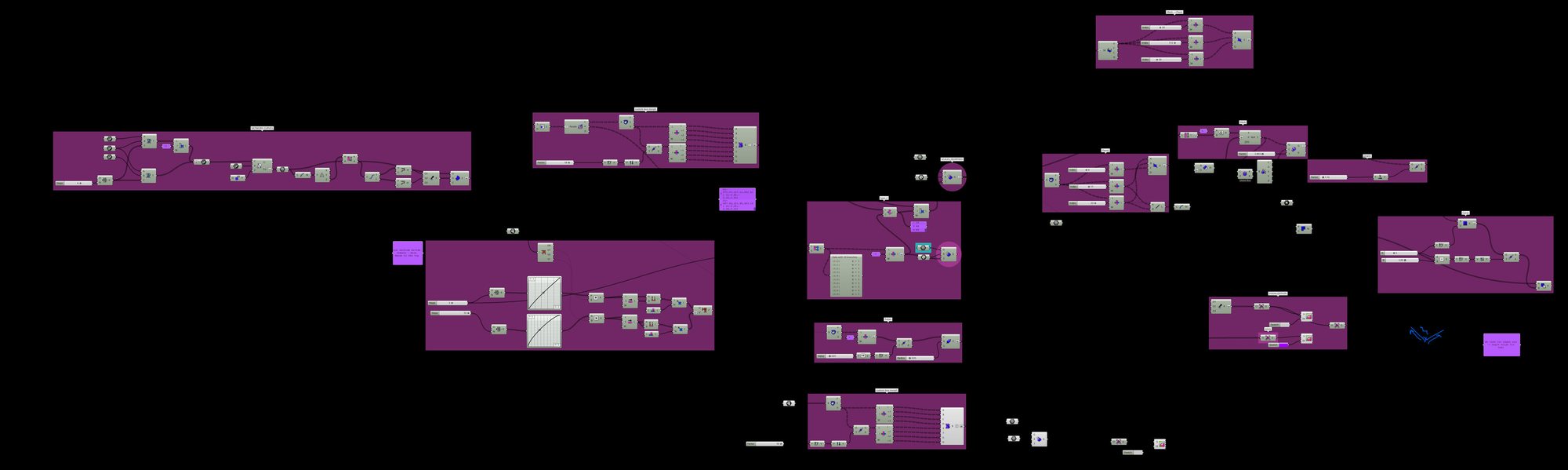
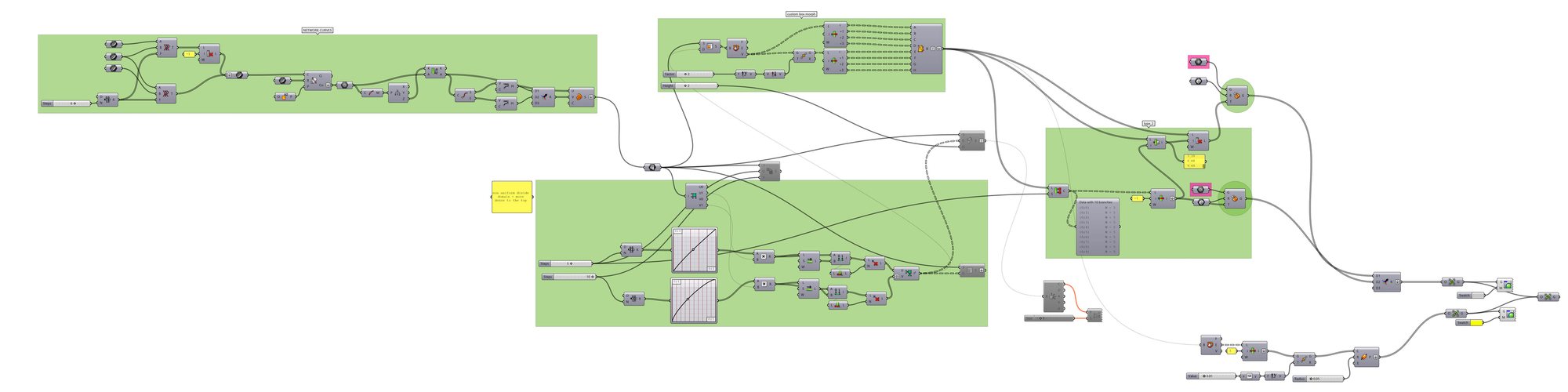
During the course of the project, a custom definition was developed in Grasshopper (Rhino). This script allows for the creation of a base surface that aligns with the contours of the scanned body. The surface is then subdivided and the modules are morphed accordingly. To simplify the assembly process of the 100 individual elements, assembly marks are booleaned onto the back side of each piece.

This custom definition played a crucial role throughout the iterative design process until the generation of the fabrication STL files. In total, there are 100 elements that have been morphed, based on three distinct module types.

Diagram of the parametric workflow
The Grasshopper definition in full
The hundred morphed elements laid out in sequence
07 / 10

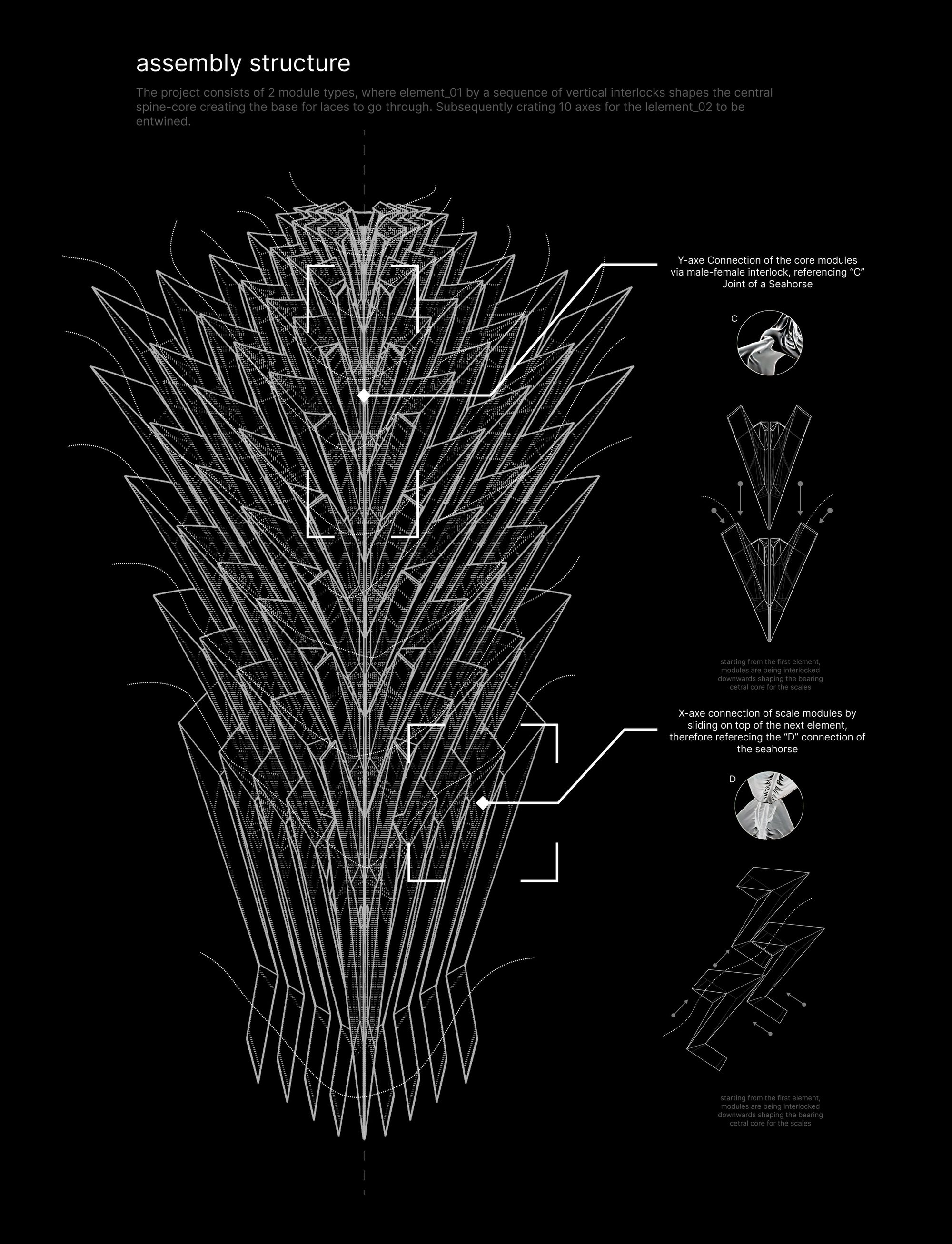
Assembly structure

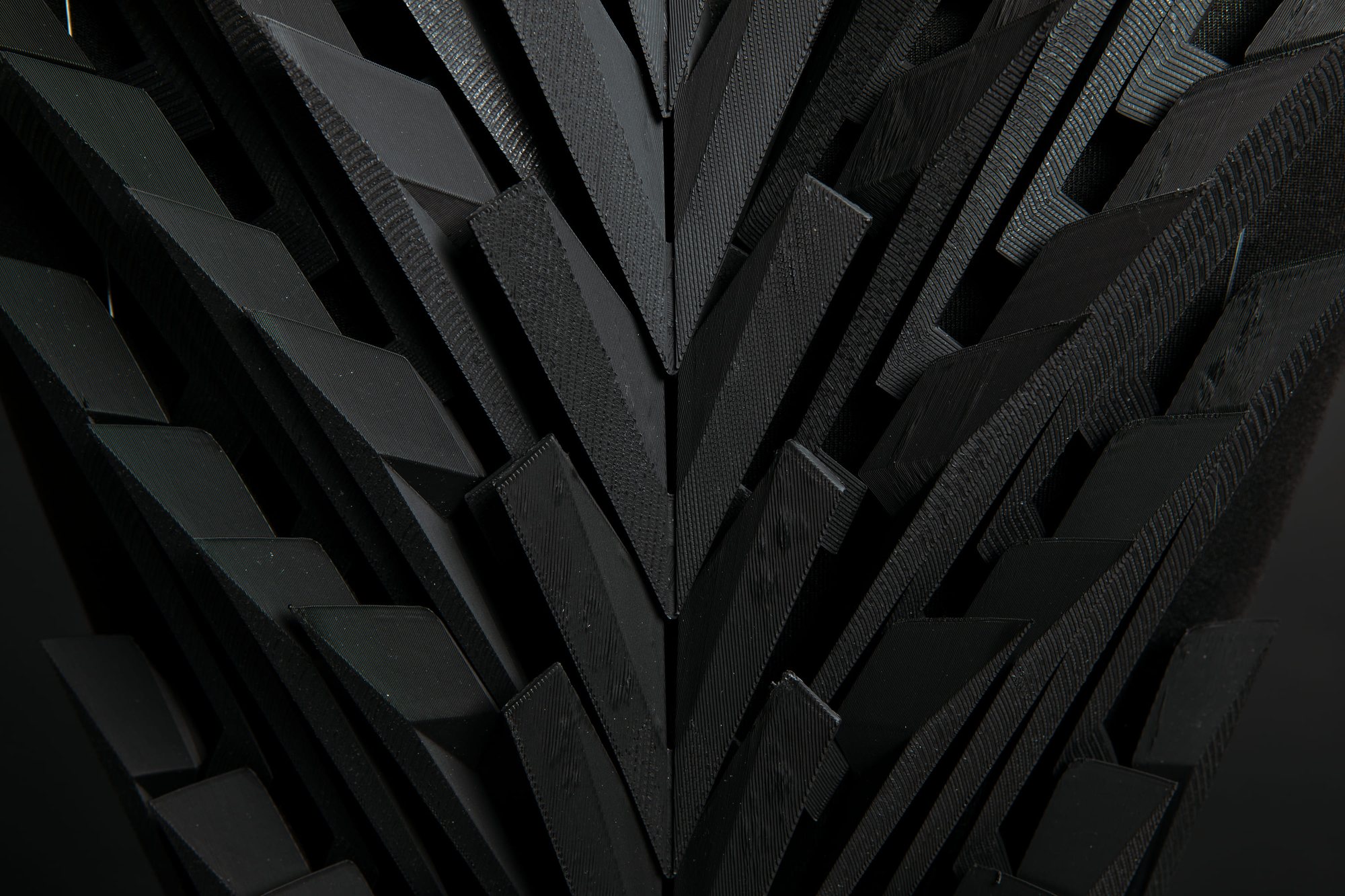
The project consists of two module types, where element 01, by a sequence of vertical interlocks, shapes the central spine-core creating the base for laces to go through — subsequently creating ten axes for element 02 to be entwined.

Loop
Loop
Board showing the assembly process
08 / 10

Fabrication

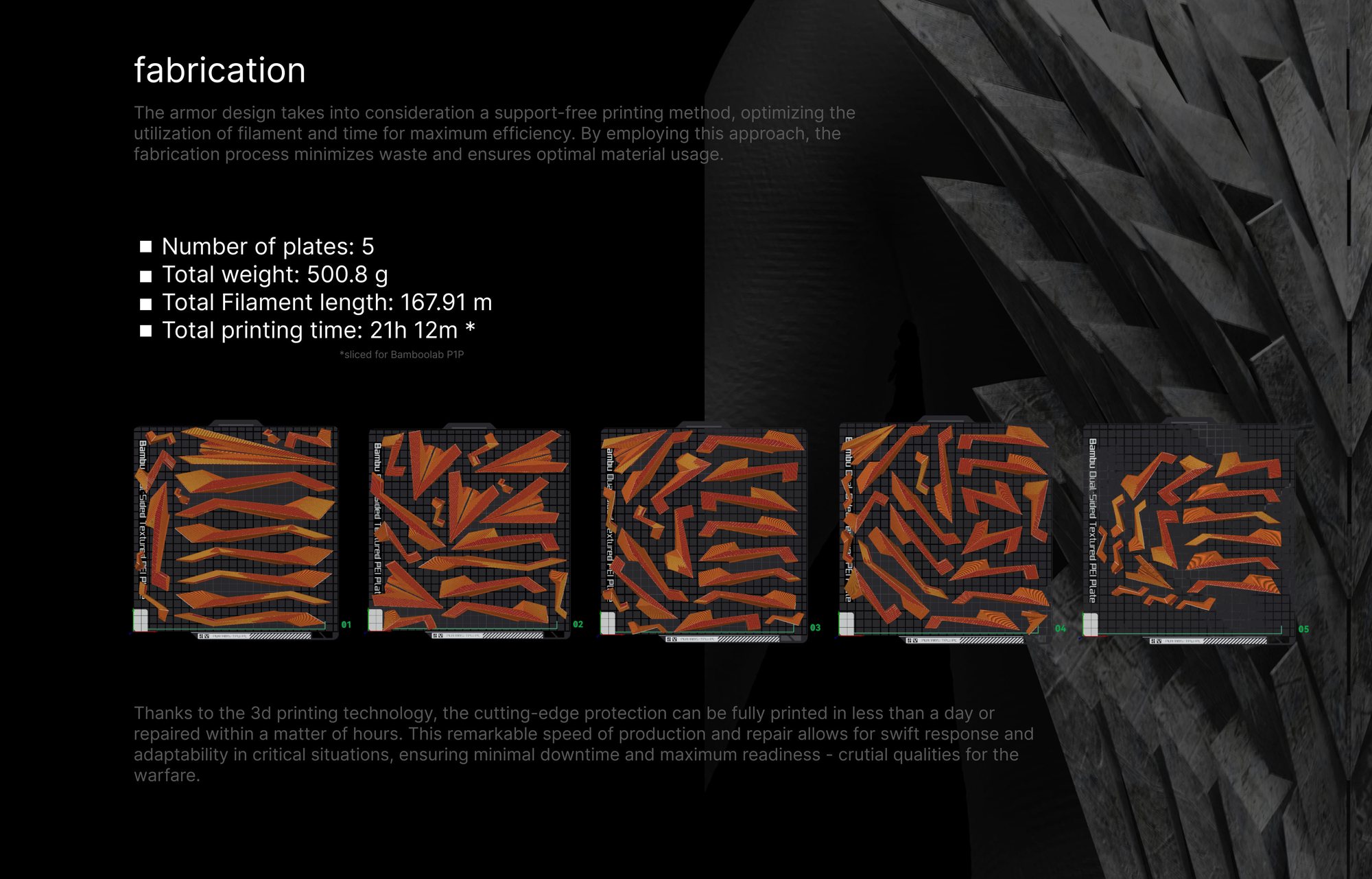
The armor design takes into consideration a support-free printing method, optimizing the utilization of filament and time for maximum efficiency. By employing this approach, the fabrication process minimizes waste and ensures optimal material usage.

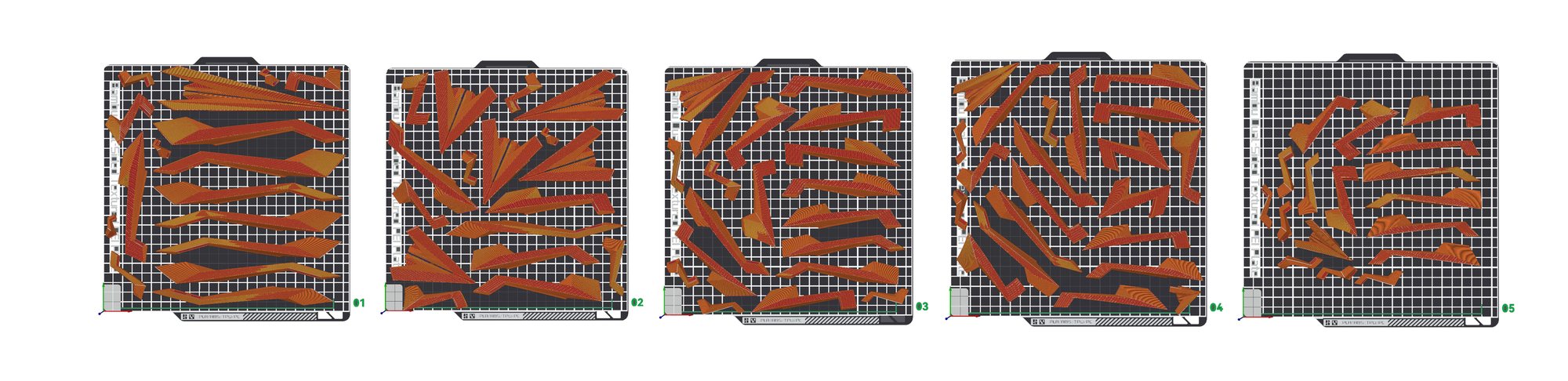
Five plates. 500.8 g. 167.91 m of filament. 21 h 12 m of printing.

Thanks to the 3D printing technology, the protection can be fully printed in less than a day or repaired within a matter of hours. This speed of production and repair allows for swift response and adaptability in critical situations — crucial qualities in warfare.

Board describing the support-free printing method
The five printing plates holding all hundred elements
09 / 10

Renderings

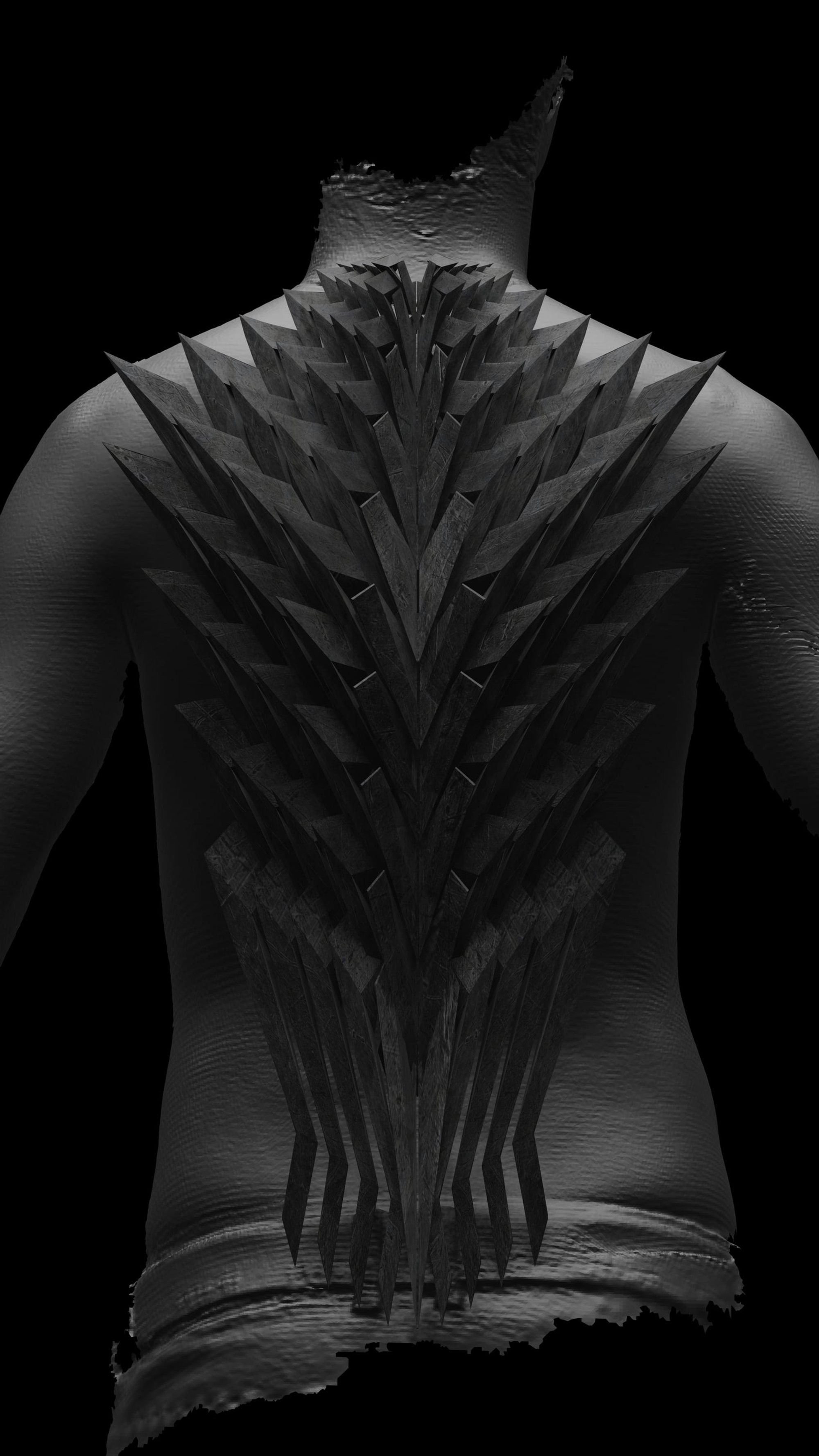
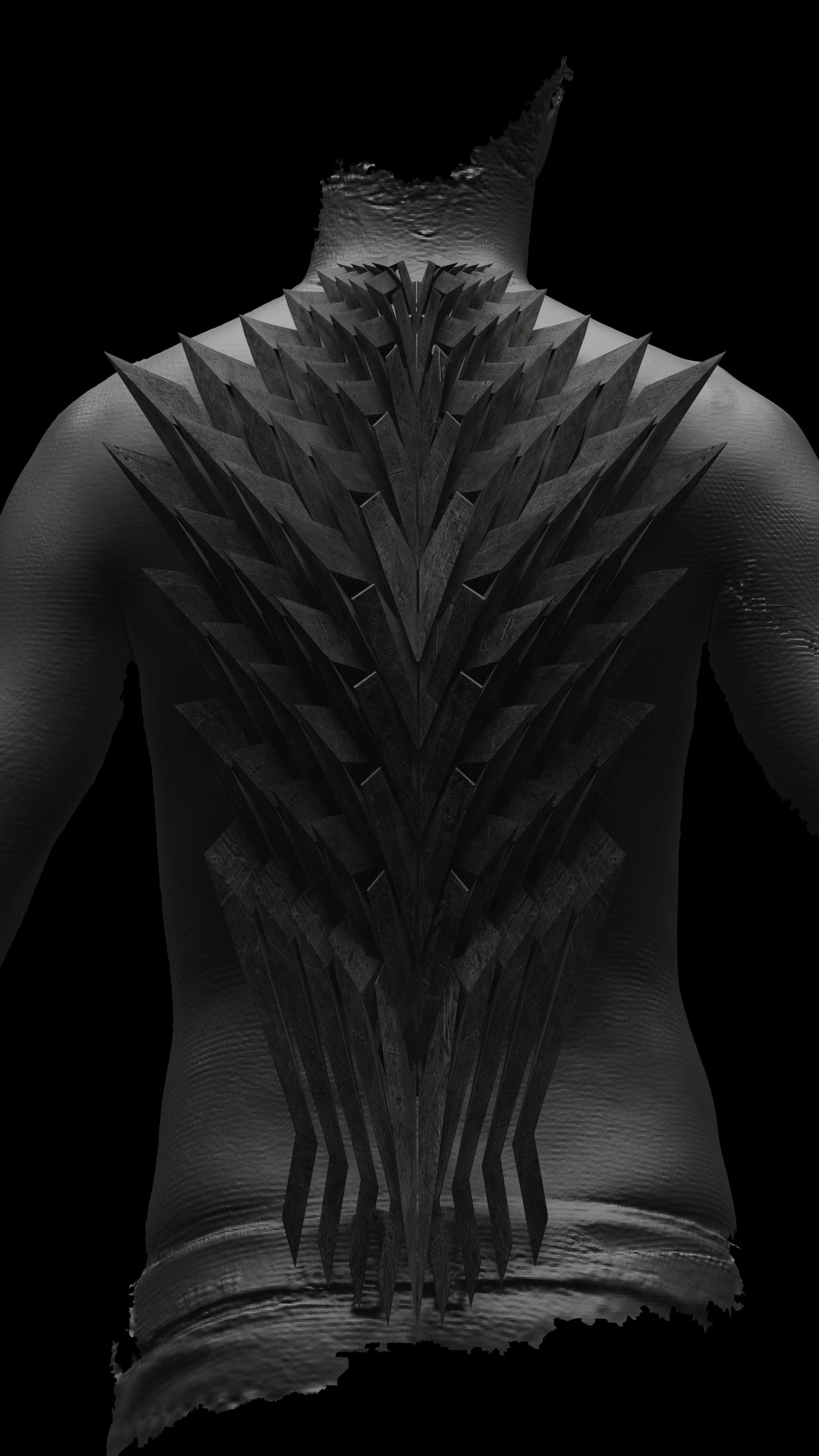
The armour worn, backlit against black
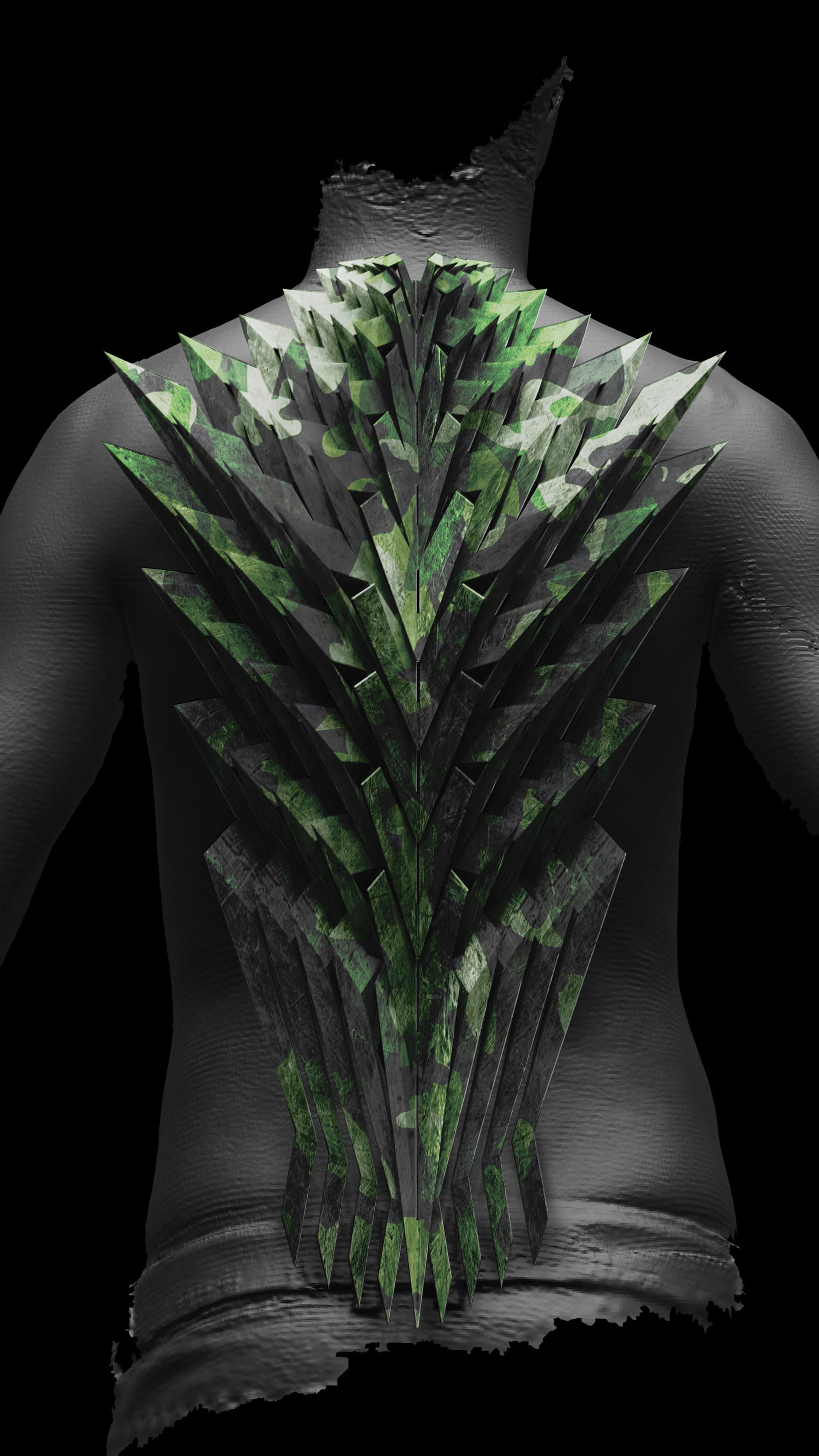
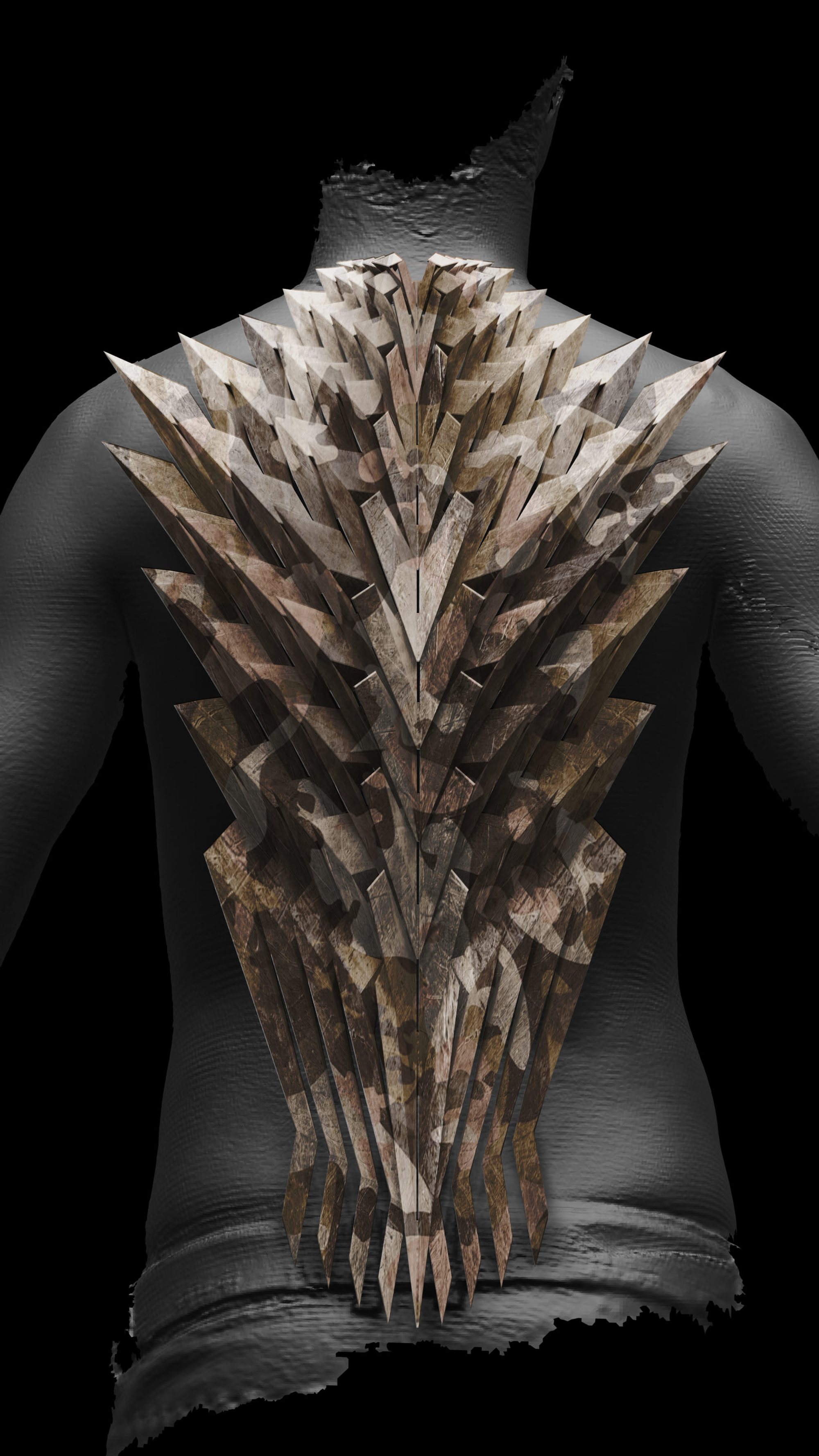
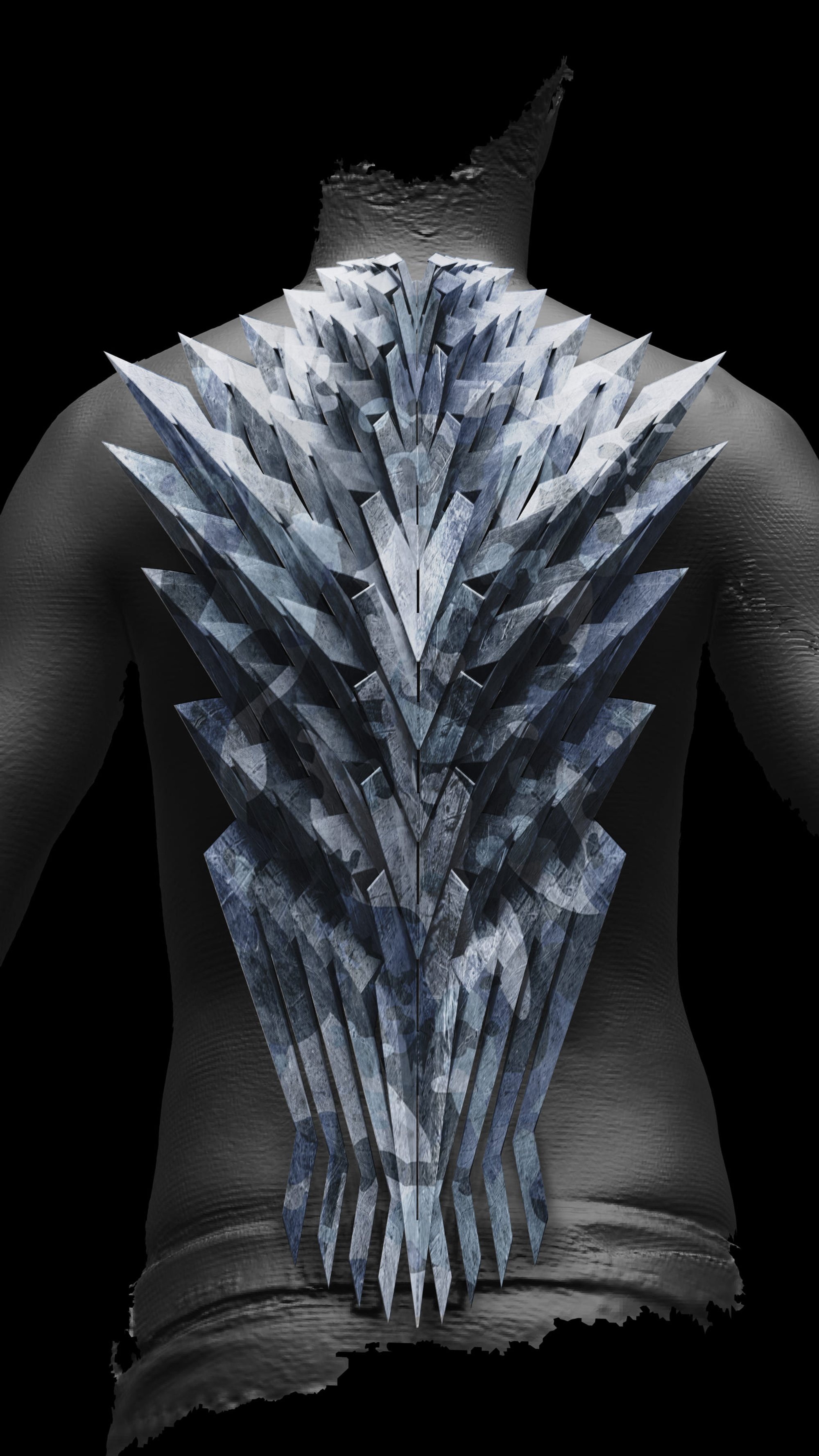
The armour in a grass camouflage patternThe armour in a sand camouflage patternThe armour in a water camouflage pattern
Camouflage studies
10 / 10

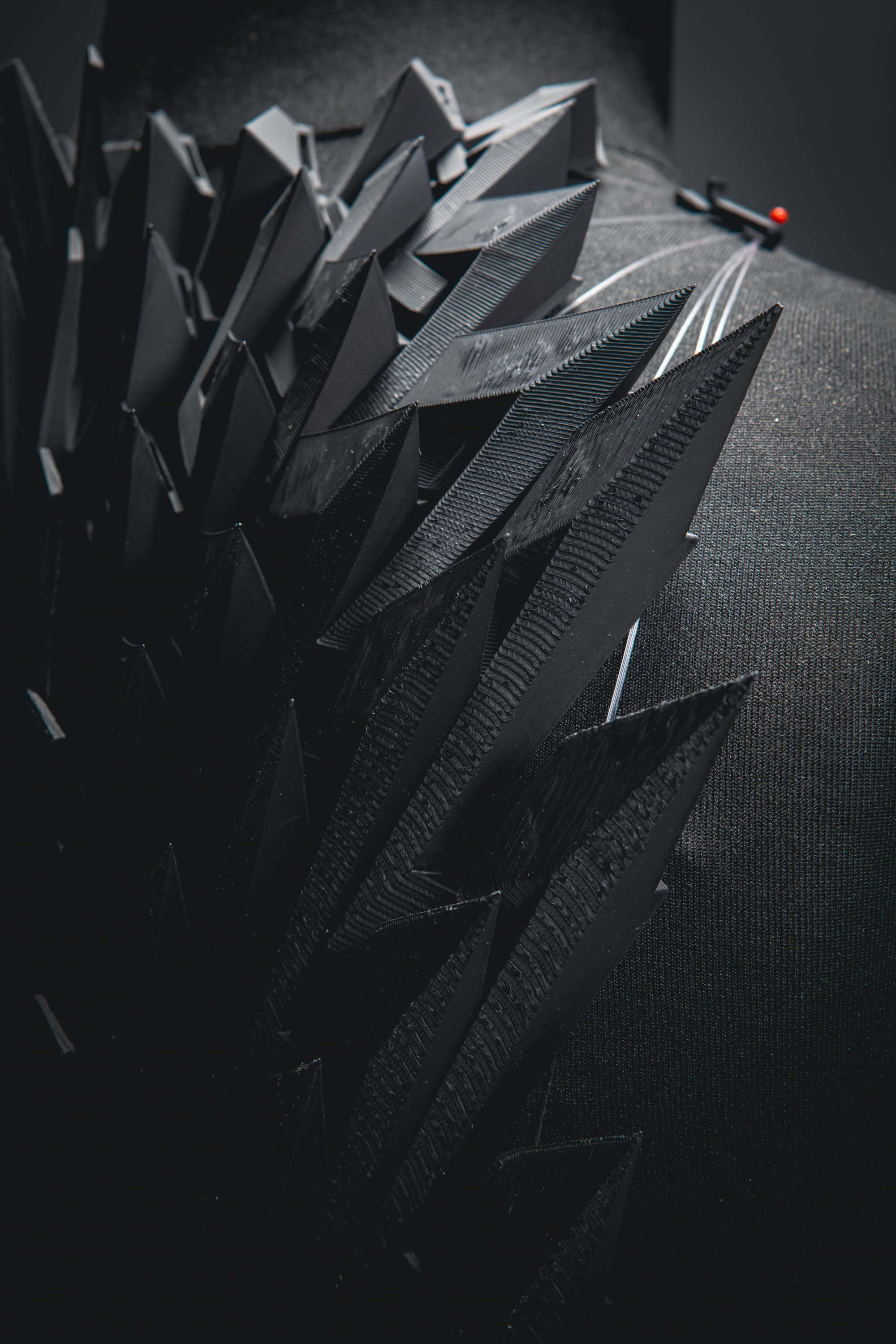
Photo session

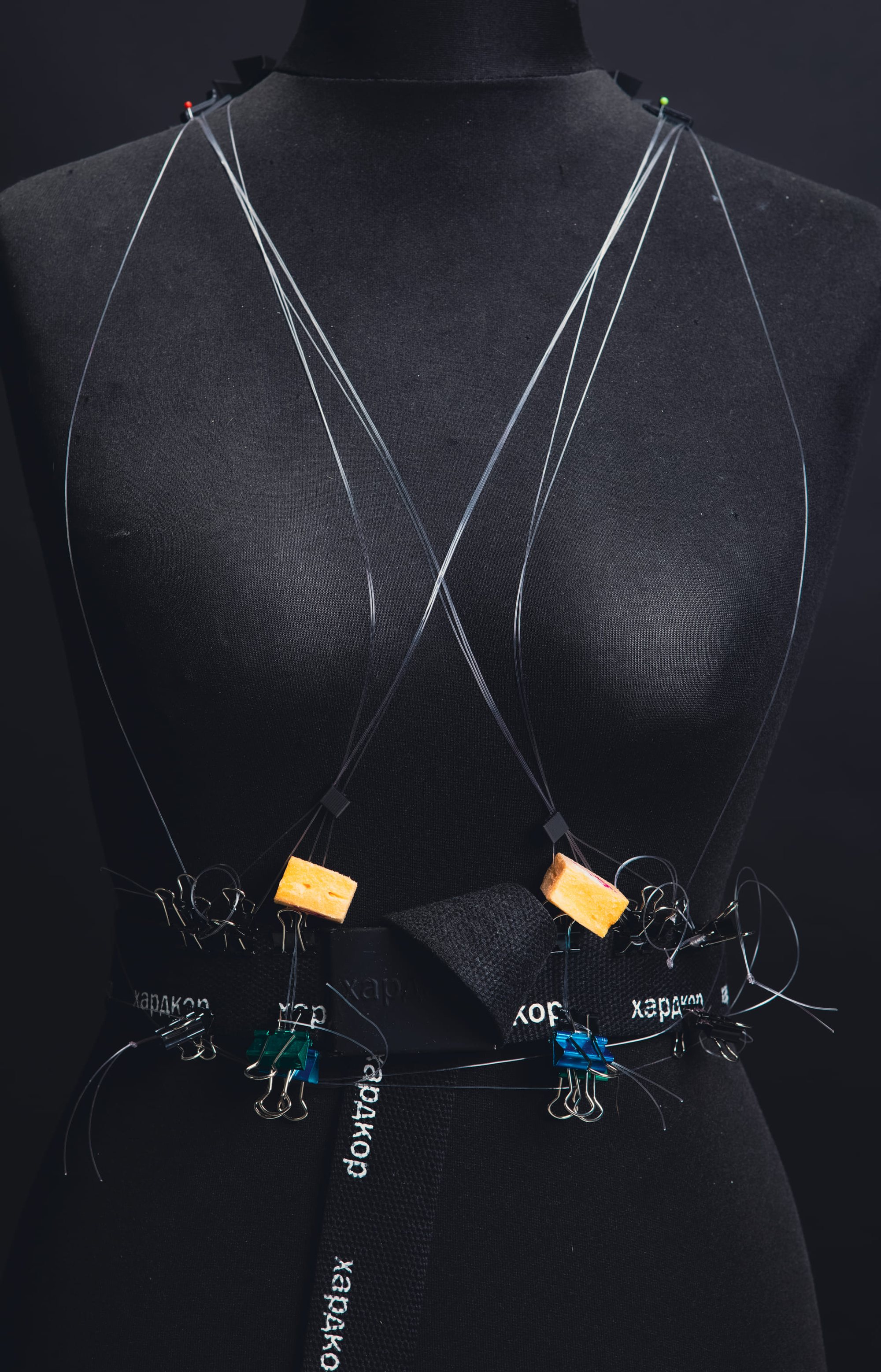
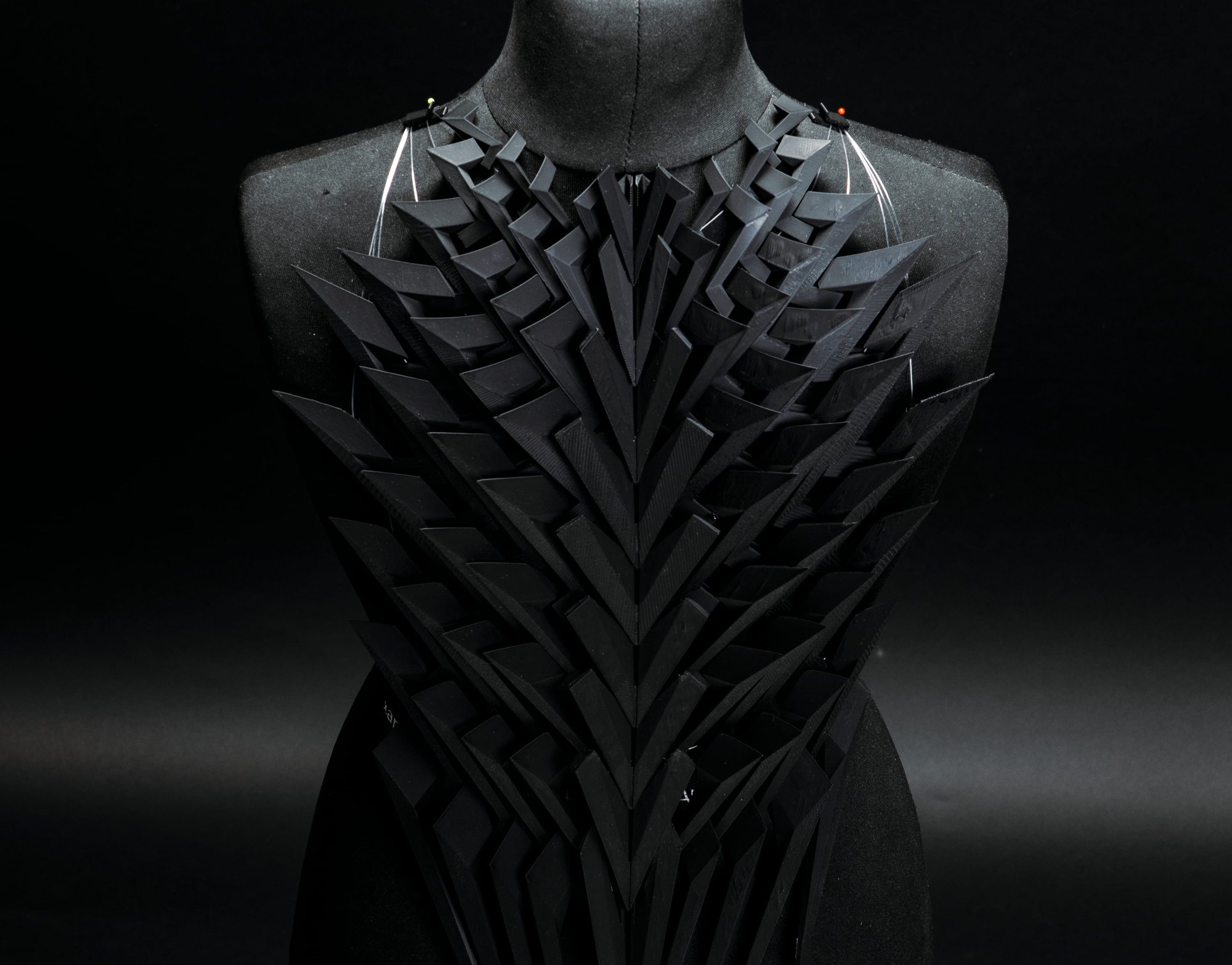
The armour worn, photographed from the front
Photo session with Lukas Hof, Angewandte Fotowerkstatt
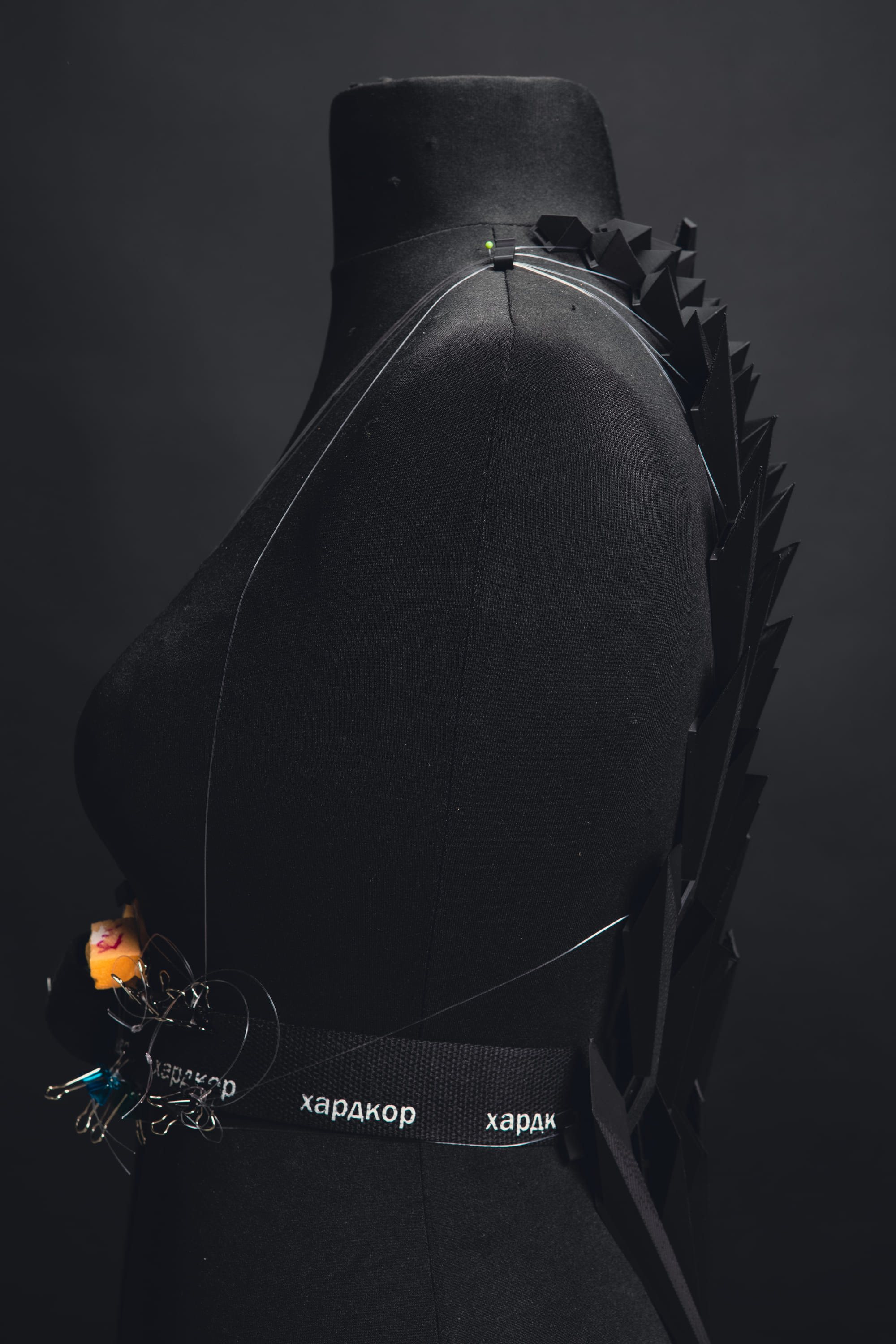
The armour photographed from the sideThe armour photographed in profile
The lacing across the back of the armourClose-up of the lacing and interlocks
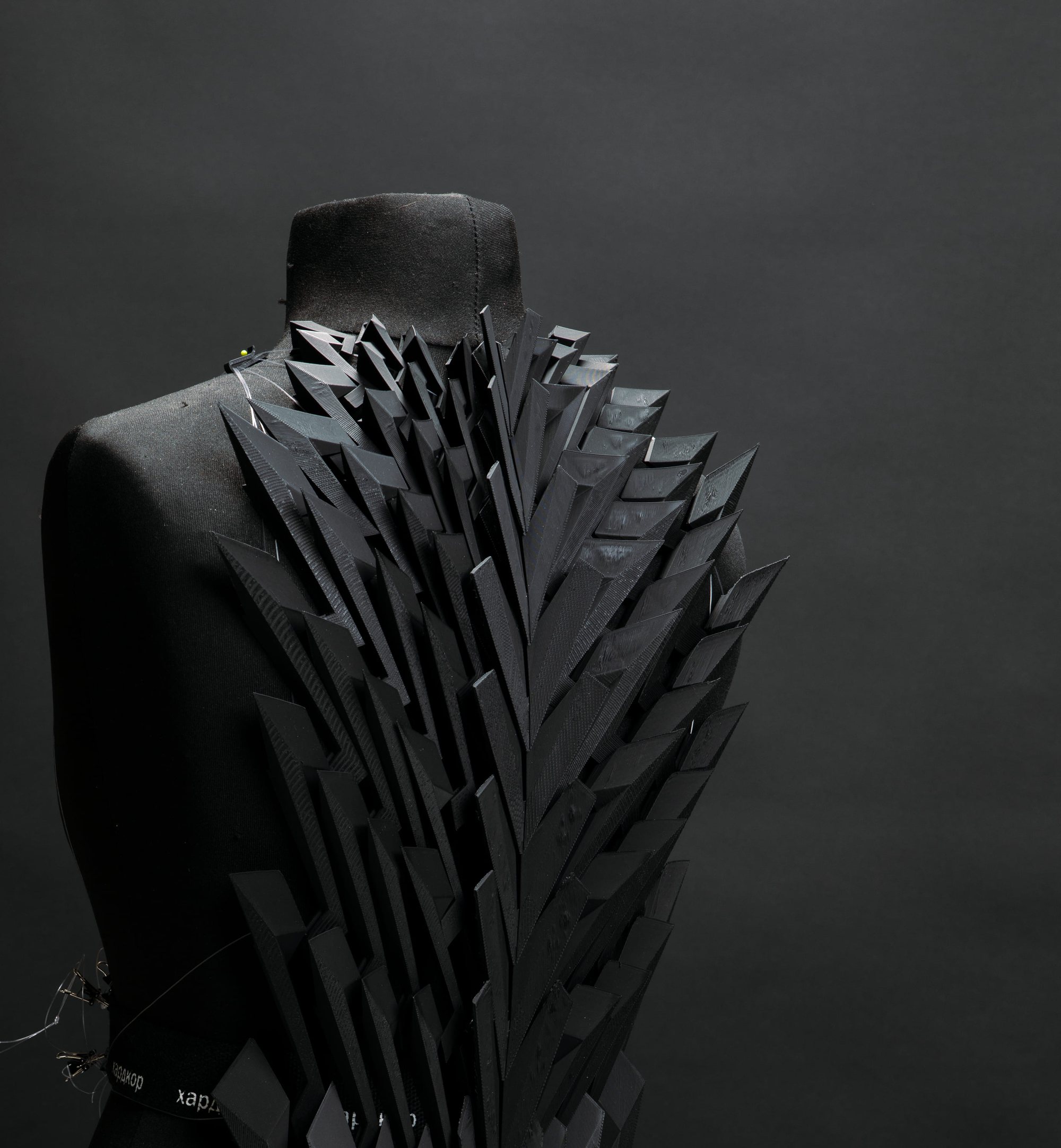
The armour seen from aboveThe armour seen from belowClose-up of the modules along the side
Close-up of the armour across the shoulders